
Harees (Ramadan And Eid Wheat And Meat Porridge)
The Quirky Foodster Team
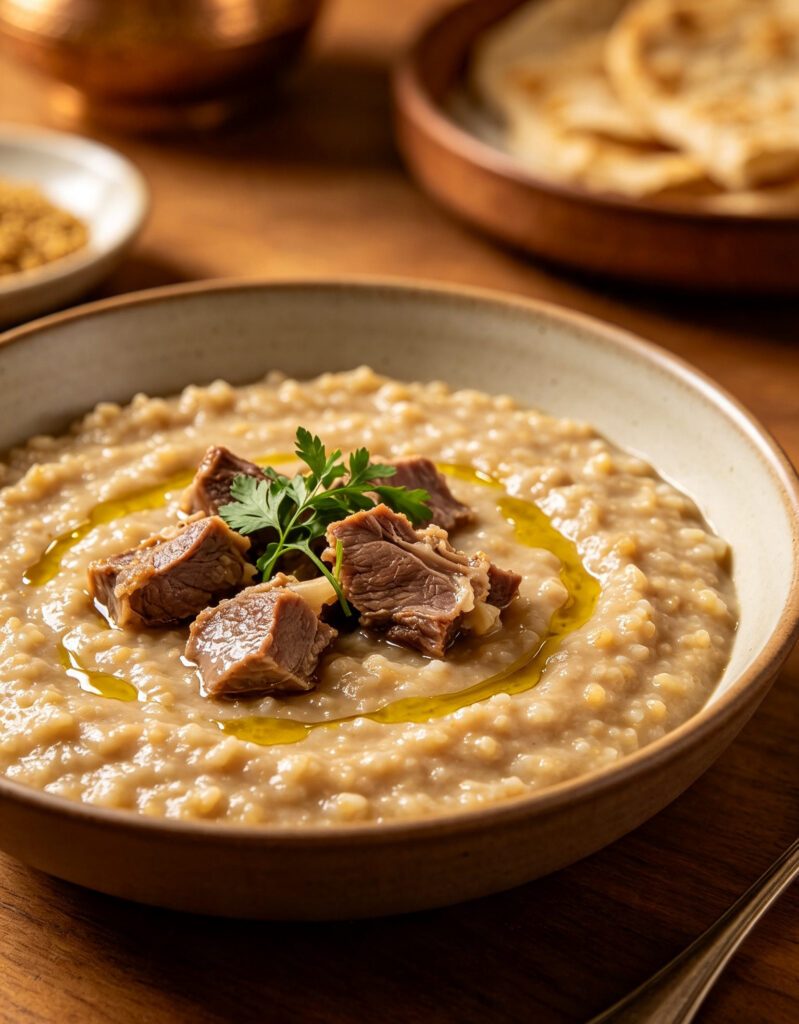
Ingredients
- Whole wheat grains (or cracked wheat), soaked overnight — 400 g (2 cups)
- Chicken or lamb, bone-in — 800 g (1.75 lb)
- Water, plus more as needed — 2 L (8 cups)
- Ground turmeric — 1 tsp
- Cinnamon stick — 1
- Salt, — to taste
- Ghee or butter, plus extra for serving — 3 tbsp
- Ground cinnamon, for garnish
Method
- Drain the soaked wheat and place it in a large pot along with the meat, water, turmeric, cinnamon stick, and salt.
- Bring to a boil, then reduce heat and simmer, partially covered, for 3–4 hours, stirring occasionally and adding more hot water as needed to keep the mixture from drying out, until the wheat and meat are extremely tender and starting to break down.
- Remove the meat from the pot, discard any bones, and shred the meat finely. Remove the cinnamon stick.
- Return the shredded meat to the pot and continue cooking, mashing and stirring vigorously with a wooden spoon (or using a hand mixer) for a further 30–45 minutes, until the mixture becomes a smooth, thick, porridge-like consistency, with the wheat and meat fully broken down and combined.
- Stir in the ghee or butter, and adjust salt to taste.
- Ladle into serving bowls, top with an extra drizzle of ghee, and a sprinkle of ground cinnamon before serving hot.
Introduction: Harees is a smooth, savory porridge made by slow-cooking wheat with meat until it forms a thick, creamy consistency, traditionally beaten or mashed together into a comforting paste-like texture.
Cultural Background: Harees is a smooth, savory porridge made by slow-cooking wheat with meat until it forms a thick, creamy consistency, traditionally beaten or mashed together into a comforting paste-like texture. Deeply tied to Ramadan and Eid celebrations across the UAE, harees is often prepared in large communal batches and shared among neighbors and family, reflecting the spirit of generosity central to these occasions.
Tips: Soaking the wheat overnight significantly reduces the overall cooking time and helps it break down more easily. The mashing stage is essential to harees's signature smooth, creamy texture; be patient and thorough during this step. Keep a kettle of hot water nearby to add as needed throughout the long cooking process, since the mixture will need topping up.
Variations: Use beef instead of chicken or lamb for a heartier version. Some versions top the finished harees with fried onions or a drizzle of date syrup for a sweet-savory twist. Vegetarian version: omit the meat, use a rich vegetable stock, and add extra ghee or butter for richness, though this departs from the traditional dish.
Storage: Store in an airtight container in the refrigerator for up to 4 days, or freeze for up to 2 months.
Reheating: Reheat gently in a pot over low heat, stirring frequently and adding a splash of water or stock as needed to loosen the consistency, for 8–10 minutes until heated through.
FAQs:
Q: Why is harees associated with Ramadan and Eid?
A: Its long, slow cooking and communal preparation make it a traditional centerpiece for these occasions, often shared generously among family and neighbors.
Q: Can I use a pressure cooker to speed up harees?
A: Yes, a pressure cooker can significantly reduce the initial cooking time for softening the wheat and meat, though the final mashing stage still requires attention on the stovetop.
Q: What gives harees its smooth, porridge-like texture?
A: The extended mashing and stirring process breaks down the cooked wheat and meat fibers, creating the dish's characteristic creamy consistency.
- Whole wheat grains (or cracked wheat), soaked overnight — 400 g (2 cups)
- Chicken or lamb, bone-in — 800 g (1.75 lb)
- Water, plus more as needed — 2 L (8 cups)
- Ground turmeric — 1 tsp
- Cinnamon stick — 1
- Salt, — to taste
- Ghee or butter, plus extra for serving — 3 tbsp
- Ground cinnamon, for garnish
Please log in to leave a comment.