
Lunches
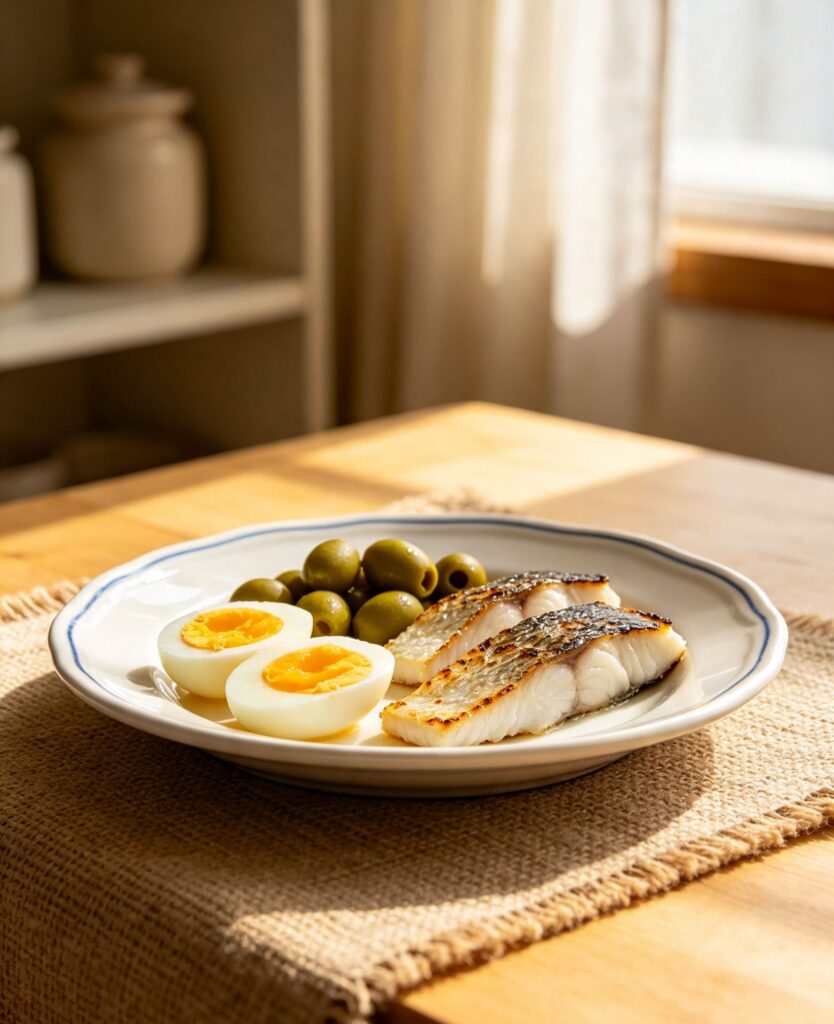
Gustatio Frigida (Cold Egg, Olive and Fish Platter)
The Quirky Foodster Team
Ingredients
- 4 large eggs
- 150g Mixed green and black olives
- 150g Cooked flaked fish, such as mackerel or sardine
- 1 small cucumber, sliced
- 30ml Olive oil
- 15ml White wine vinegar
- 1 tsp dried oregano
- Salt, to taste
Method
- Place the eggs in a small saucepan, cover with cold water and bring to the boil. Simmer for 9-10 minutes, then cool under cold running water and peel.
- Halve the eggs and arrange on a serving platter with the olives, flaked fish and cucumber slices.
- Whisk together the olive oil, vinegar, oregano and a pinch of salt.
- Spoon the dressing over the platter just before serving.
- Serve at room temperature with bread on the side.
Native Name: Gustatio Frigida
Cultural Background: Prandium, the Roman midday meal, was usually light and often eaten cold or standing up, made up of leftovers from the night before. A platter of hard-boiled eggs, olives and salted fish was a common prandium in both modest and comfortable households, needing no cooking fire to reheat.
Tips: This dish is meant to be composed, not tossed – keep each element visible on the platter rather than mixing everything together.
Variations: Swap the fish for salted anchovies for a saltier, more traditional garum-adjacent flavour.
Vegetarian / Vegan Note: Not suitable as written; omit the fish and add extra olives and roasted chickpeas for a vegetarian version.
Storage: Store components separately, covered, in the refrigerator for up to 2 days; dress just before serving.
Reheating: Not applicable – this is a cold platter.
Nutrition: Approx. 260 kcal, 18 g protein, 5 g carbohydrate, 19 g fat per serving.
FAQs:
Q: Why is it served cold?
A: Roman households often didn't relight the cooking fire at midday, so prandium made use of what was already prepared.
Q: What fish works best?
A: Any small oily fish preserved in salt or oil – mackerel and sardines are the closest modern equivalents to Roman salt-fish.
Please log in to leave a comment.