
Goep
The Quirky Foodster Team
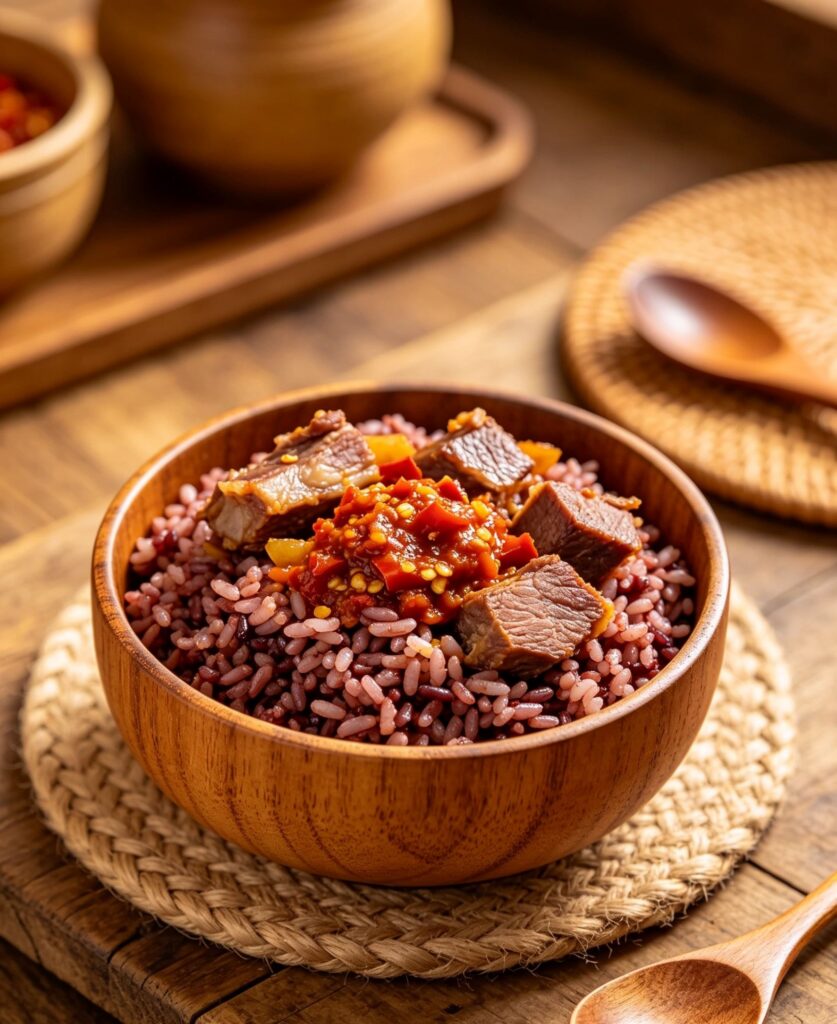
Ingredients
- Beef tripe, cleaned and sliced — 500 g (1.1 lb)
- Whole Dried red chilies — 5
- Medium Radish, sliced — 2
- Whole Garlic cloves, sliced — 3
- Fresh ginger, sliced — 1 tbsp
- Water (2 cups) — 500 ml (2 cups)
- Salt (to taste) — 1 tsp
- Vegetable oil — 1 tbsp
Method
- Parboil the cleaned tripe in water for 10 minutes, then drain and rinse to remove any strong odour.
- Heat the oil in a pot and sauté the garlic and ginger until fragrant.
- Add the dried chilies and tripe, and stir to combine.
- Pour in the water, cover, and simmer for 1 hour until the tripe is tender.
- Add the radish and simmer for a further 20 minutes.
- Season with salt and simmer uncovered for 5 more minutes to reduce the sauce.
Introduction: Goep, a tripe stew simmered with chilies and radish, is a festival dish reflecting Bhutan’s tradition of using the whole animal after a special-occasion slaughter.
Cultural Background: Goep, a tripe stew simmered with chilies and radish, is a festival dish reflecting Bhutan’s tradition of using the whole animal after a special-occasion slaughter. It requires time and care to prepare properly and is typically served at larger gatherings, weddings and community celebrations rather than as an everyday meal.
Tips: Parboiling and rinsing the tripe thoroughly is essential to remove any strong odour before the main simmer. Tripe needs a long, slow simmer to become properly tender; do not rush this step.
Variations: Add crumbled datshi cheese near the end for a creamier festival variation. Use a pressure cooker to reduce the tripe cooking time significantly.
Vegetarian/Vegan: No authentic vegetarian version exists; this dish is centred on tripe.
Storage: Refrigerate in an airtight container for up to 2 days.
Reheating: Reheat gently on the stovetop over low heat, adding a splash of water if needed.
FAQs:
Q: How do I prepare tripe properly?
A: Clean thoroughly and parboil before the main cooking step to remove odour and soften the texture.
Q: Is Goep an everyday dish?
A: No, it is generally reserved for festivals, weddings and larger community gatherings.
- Beef tripe, cleaned and sliced — 500 g (1.1 lb)
- Whole Dried red chilies — 5
- Medium Radish, sliced — 2
- Whole Garlic cloves, sliced — 3
- Fresh ginger, sliced — 1 tbsp
- Water (2 cups) — 500 ml (2 cups)
- Salt (to taste) — 1 tsp
- Vegetable oil — 1 tbsp
Please log in to leave a comment.