
Holidays & Special Occasions
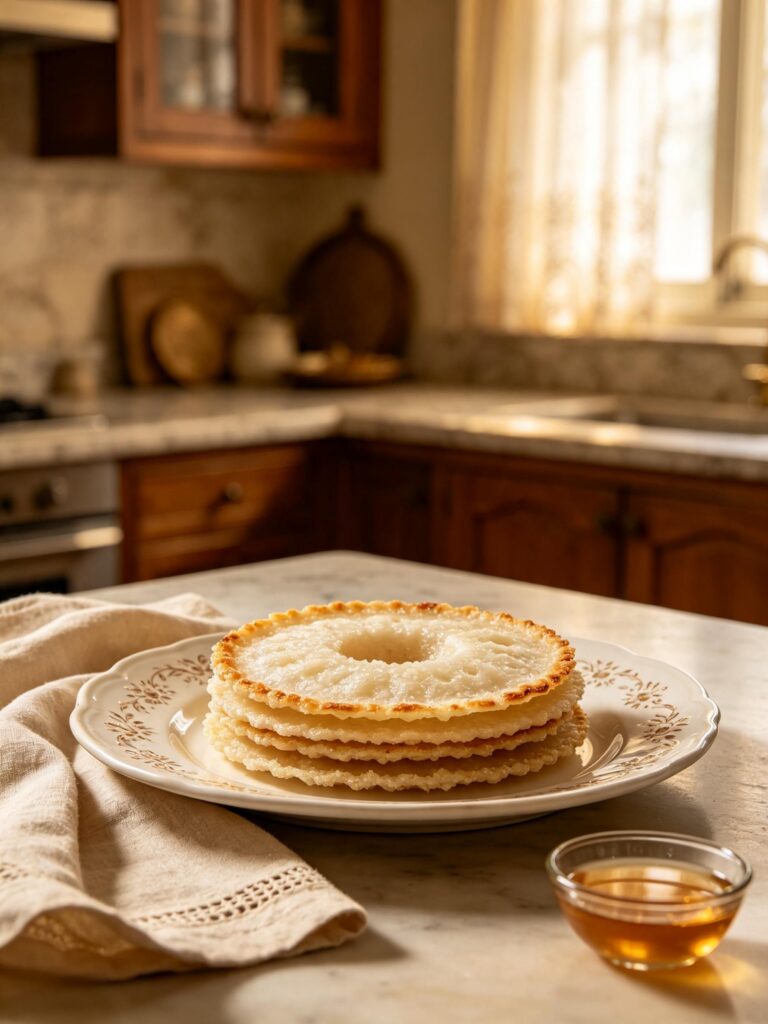
Ghevar
The Quirky Foodster Team
Ingredients
- For the batter:
- 250 g (2 cups) plain flour (maida)
- 100 g (1/2 cup) chilled ghee
- 4-5 ice cubes
- 500 ml (2 cups) chilled milk
- 250 ml (1 cup) chilled water, plus more as needed
- A pinch of saffron (for colour, optional)
- For the sugar syrup:
- 300 g (1 1/2 cups) sugar
- 200 ml (3/4 cup) water
- 1/4 tsp cardamom powder
- For frying and topping:
- Ghee, for deep-frying (about 1 litre)
- 3 tbsp condensed milk or thickened sweetened cream, for topping
- 2 tbsp pistachios, slivered
- 2 tbsp almonds, slivered
- A few saffron strands, to garnish
Method
- Whisk the chilled ghee vigorously with the ice cubes in a large bowl until it turns light, fluffy and almost white, about 5-6 minutes.
- Gradually whisk in the chilled milk, a little at a time, keeping the mixture light and aerated.
- Sift in the flour gradually, whisking continuously and alternating with the chilled water, to form a very thin, completely lump-free batter, similar to a crepe batter. Keep the batter and all utensils well chilled throughout.
- Make the sugar syrup: heat the sugar and water in a saucepan until dissolved, simmer for 5 minutes to a one-string consistency, then stir in the cardamom powder. Keep warm.
- Heat the ghee in a deep, narrow pot until hot but not smoking (about 180°C/350°F).
- Pour a small ladle of batter into the centre of the hot ghee from a height; it will sizzle and spread, forming holes as it sets. Once the initial layer sets (about 30 seconds), pour another ladle directly into the centre, letting it rise up through the holes.
- Continue layering batter every 30-40 seconds, using a skewer to keep the central hole open, until the ghevar has built up into a tall, honeycombed disc, about 12-15 minutes total.
- Once fully set and golden, carefully lift out with two long skewers or spider strainers and drain briefly on a rack.
- While still warm, dip or spoon the warm sugar syrup generously over the ghevar so it soaks into the holes. Cool slightly.
- Top with a drizzle of condensed milk or sweetened cream, and garnish with pistachios, almonds and saffron before serving.
Introduction: Ghevar is an intricate, honeycomb-textured disc of deep-fried batter, soaked in sugar syrup and topped with
rich rabri or nuts, traditionally made in Rajasthan for the monsoon festival of Teej. Its batter is made purely
from flour, ghee and cold water, with no ingredients that fall outside Jain dietary practice, making it a natural
festive centrepiece.
Cultural Background: Ghevar is an intricate, honeycomb-textured disc of deep-fried batter, soaked in sugar syrup and topped with
rich rabri or nuts, traditionally made in Rajasthan for the monsoon festival of Teej. Its batter is made purely
from flour, ghee and cold water, with no ingredients that fall outside Jain dietary practice, making it a natural
festive centrepiece.
Tips: Everything — the bowl, ghee, milk and water — should be kept as cold as possible throughout, as this is what helps the batter form its signature honeycomb holes. Pour the batter from a height in a thin stream, which helps create the airy structure rather than a dense pancake.
Variations: Serve plain with just sugar syrup for a lighter, less rich version (sada ghevar). Top with a generous layer of rabri (thickened sweetened milk) for the classic malai ghevar.
Storage: Plain (un-topped) ghevar keeps in an airtight container at room temperature for up to 5 days; add cream and
nut toppings just before serving.
Reheating: Not applicable — served at room temperature.
Nutrition (approximate, per serving)
Approx. 380 kcal, 5g protein, 22g fat, 42g carbohydrate, 1g fibre per serving.
Vegetarian / Vegan
Vegetarian as written; a plant-based milk and vegan butter substitute for ghee can be used, though the
traditional texture is harder to replicate.
FAQs:
Q: Why didn't my ghevar form holes?
A: This is almost always because the batter or ghee wasn't cold enough, or the ghee for frying wasn't hot enough when the batter was poured in.
Q: Do I need a special ghevar pot?
A: A traditional tall, narrow pot helps the layers build height, but any deep, narrow, heavy pot can work with practice.
Please log in to leave a comment.