
Gavurdağı Salatası (Walnut and Tomato Salad)
The Quirky Foodster Team
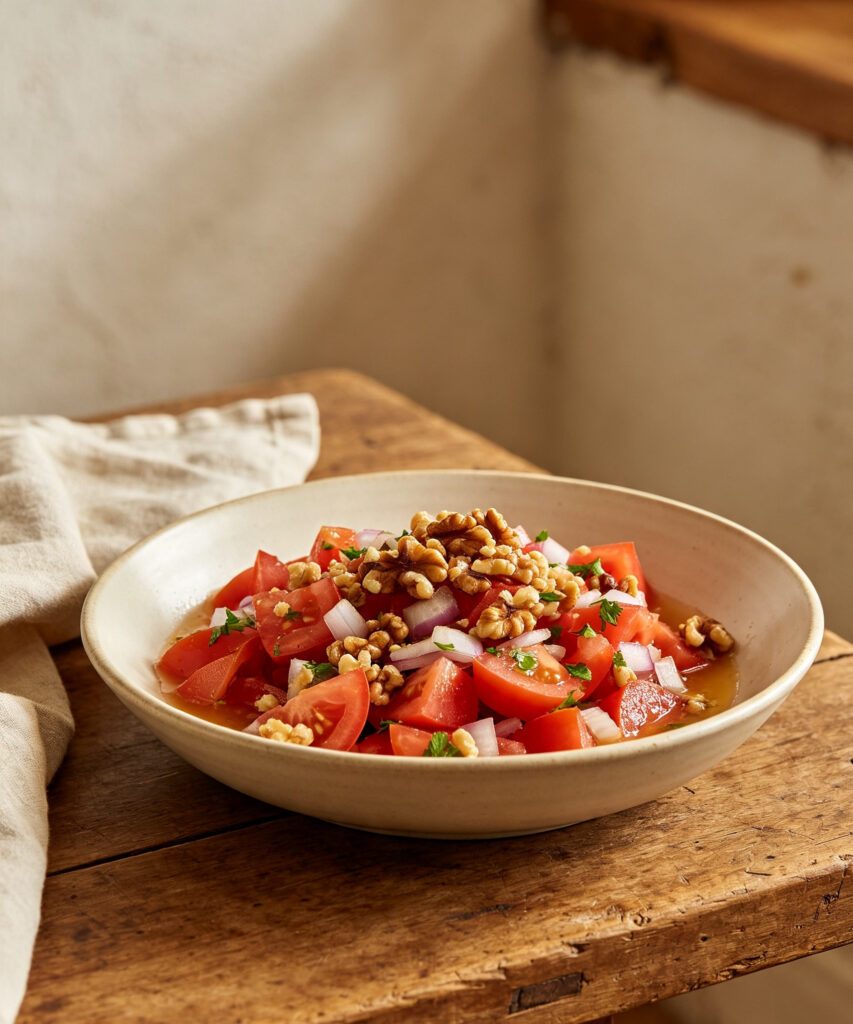
Ingredients
- Large ripe tomatoes, cut into chunks — 4
- Green pepper, diced — 1
- Red onion, finely chopped — 1/2
- Walnuts, roughly chopped — 60 g (1/2 cup)
- Fresh parsley, chopped — 2 tbsp
- Olive oil — 3 tbsp (45 ml)
- Pomegranate molasses — 1 1/2 tbsp
- Salt — 1/2 tsp
- Aleppo pepper or sumac — 1/2 tsp
Method
- Cut the tomatoes into rustic chunks and place in a large mixing bowl.
- Add the diced green pepper, chopped onion, walnuts and parsley.
- Whisk together the olive oil, pomegranate molasses, salt and Aleppo pepper.
- Pour the dressing over the salad and toss gently to combine.
- Let sit for 5 minutes before serving to let the flavours meld.
Introduction: Named after the Gavur Mountains in southeastern Turkey, this salad combines chunky tomatoes and
walnuts with pomegranate molasses for a distinctive sweet-tart, nutty character, popular in the Gaziantep
region known for its rich culinary tradition.
Cultural Background: Named after the Gavur Mountains in southeastern Turkey, this salad combines chunky tomatoes and
walnuts with pomegranate molasses for a distinctive sweet-tart, nutty character, popular in the Gaziantep
region known for its rich culinary tradition.
Tips: Roughly chop the walnuts rather than finely — larger pieces give better texture contrast. If your pomegranate molasses is very tart, add a small pinch of sugar to balance it.
Variations: Add pomegranate seeds on top for extra sweetness and colour. Use pecans in place of walnuts. Naturally vegan and vegetarian.
Storage: Best eaten fresh; can be refrigerated for a few hours if needed.
Reheating: Not applicable — served cold.
FAQs:
Q: What is pomegranate molasses?
A: A tangy, syrupy reduction of pomegranate juice widely used in Turkish and Middle Eastern cooking, available at most Middle Eastern grocers.
Q: Can I substitute the molasses?
A: A mix of lemon juice and a little honey or pomegranate juice reduced on the stove can approximate it.
Q: Where does the name come from?
A: It's named after the Gavur Mountains near Gaziantep, a region famous for its cuisine.
- Large ripe tomatoes, cut into chunks — 4
- Green pepper, diced — 1
- Red onion, finely chopped — 1/2
- Walnuts, roughly chopped — 60 g (1/2 cup)
- Fresh parsley, chopped — 2 tbsp
- Olive oil — 3 tbsp (45 ml)
- Pomegranate molasses — 1 1/2 tbsp
- Salt — 1/2 tsp
- Aleppo pepper or sumac — 1/2 tsp
Please log in to leave a comment.