
Middle East
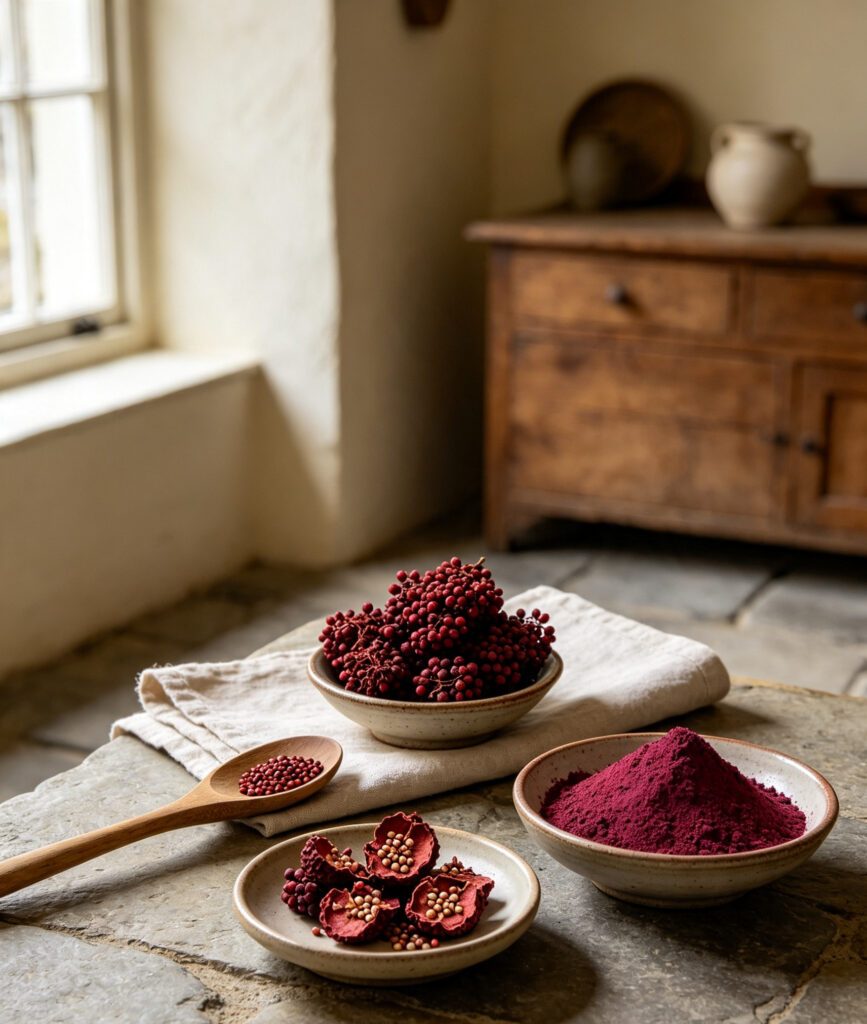
Sumac
Rhus coriaria.
Local / Regional Names
Summaq (Arabic); sumak (Turkish).
Countries / Cuisines
Levant broadly – Syria, Lebanon, Jordan, Palestine, Turkey, Iran.
Flavor & Aroma
Bright, tart, lemony without the wetness of citrus juice.
Culinary Uses
Souring agent and finishing spice; a core component of za'atar.
Classic Dishes
Fattoush; musakhan (sumac-onion chicken flatbread); grilled meats.
Pairings
Za'atar herb, olive oil, onions, grilled meat and fish.
Timing
Add at the end of cooking or as a finishing sprinkle – heat can mute its tartness.
Storage
Keeps a year or more sealed and dark; quality-graded sumac (deep red, not brownish) holds flavor longest.
Substitutions
A mix of lemon zest and a touch of salt approximates the tartness without the exact fruity depth.
Cultural / History Notes
One of the very few acidic spices used in dried, ground form rather than as a juice or paste – a distinguishing trait worth noting against lemon and vinegar.
Blend Cross-References
Za'atar; core to most Levantine za'atar formulations.
Please log in to leave a comment.