
Lunches
Five Grain Rice (五谷饭 (Wǔgǔ Fàn))
sjfegan
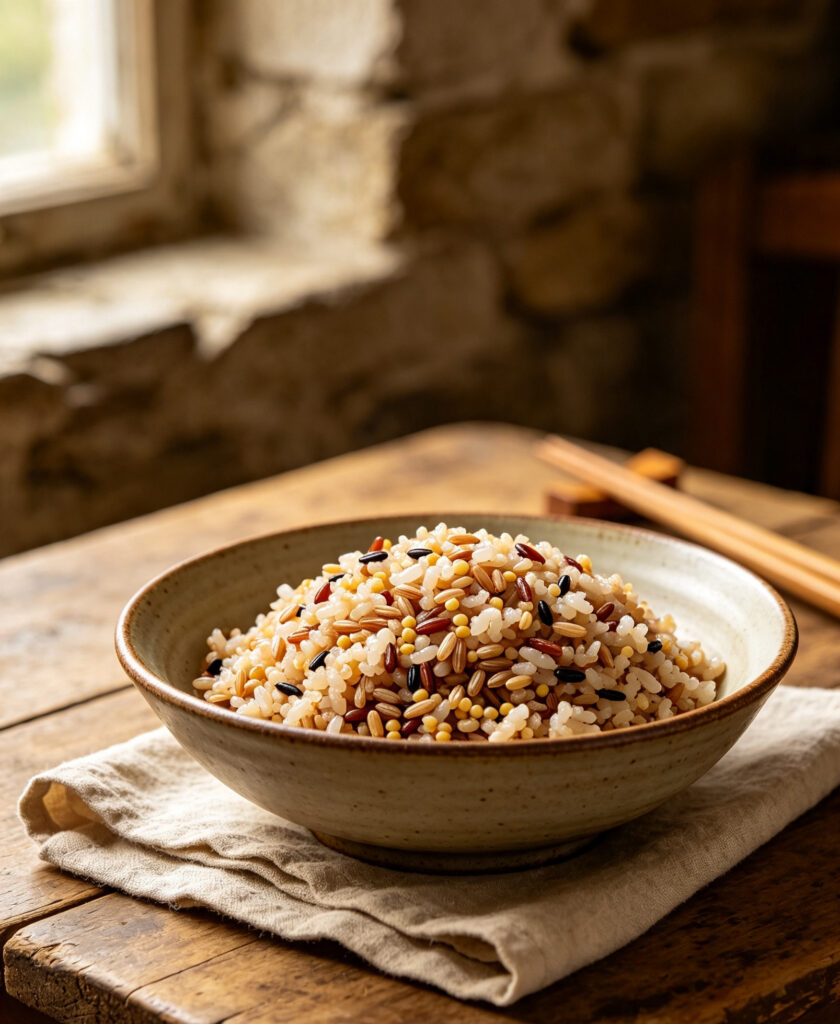
Ingredients
- 90g (1/2 cup) Rice
- 100g (1/2 cup) Millet
- 100g (1/2 cup) Barley
- 35g (1/4 cup) Soybeans, soaked overnight
- 35g (1/4 cup) Sesame seeds
- 960ml (4 cups) Water
- Pinch of salt
Method
- Rinse the rice, millet and barley together.
- Combine with the soaked, drained soybeans and water in a pot.
- Bring to a boil, then reduce to a low simmer, cover, and cook for 35–40 minutes until all the grains are tender and the water is absorbed.
- Toast the sesame seeds briefly in a dry pan until fragrant.
- Season the grain mixture with salt and scatter with the toasted sesame seeds before serving.
Introduction: A hearty mixture of five staple grains cooked together, reflecting the ancient Chinese philosophical ideal of balance found in the ‘five grains’ central to early agriculture.
Cultural Background: The concept of wngn, the ‘five grains’, appears throughout ancient Chinese texts as the foundation of the agricultural diet, and cooking them together was believed to nourish the body in harmony with the five elements of traditional Chinese cosmology.
Tips: Soaking the soybeans overnight is essential, as they require much longer cooking than the other grains if not pre-softened. Toast the sesame seeds separately just before serving to preserve their fragrance.
Variations: Adjust the ratio of grains to preference, as the exact composition of ‘five grains’ varied by region and era. Serve alongside a simple vegetable dish for a complete meal.
Storage: Refrigerate leftovers in an airtight container for up to 3 days.
Reheating: Reheat gently with a splash of water, stirring, until warmed through.
Nutrition: Per serving (approx.): 280 kcal, 10 g protein, 6 g fat, 48 g carbohydrate.
FAQs:
Q: What were the traditional ‘five grains’ of ancient China?
A: Historical texts vary, but common groupings included rice, millet, wheat, beans and hemp or barley, considered together as the foundation of agricultural sustenance.
Q: Why were the five grains considered significant?
A: They were tied to broader philosophical ideas of balance and harmony central to ancient Chinese cosmology, beyond their practical role as dietary staples.
Please log in to leave a comment.