
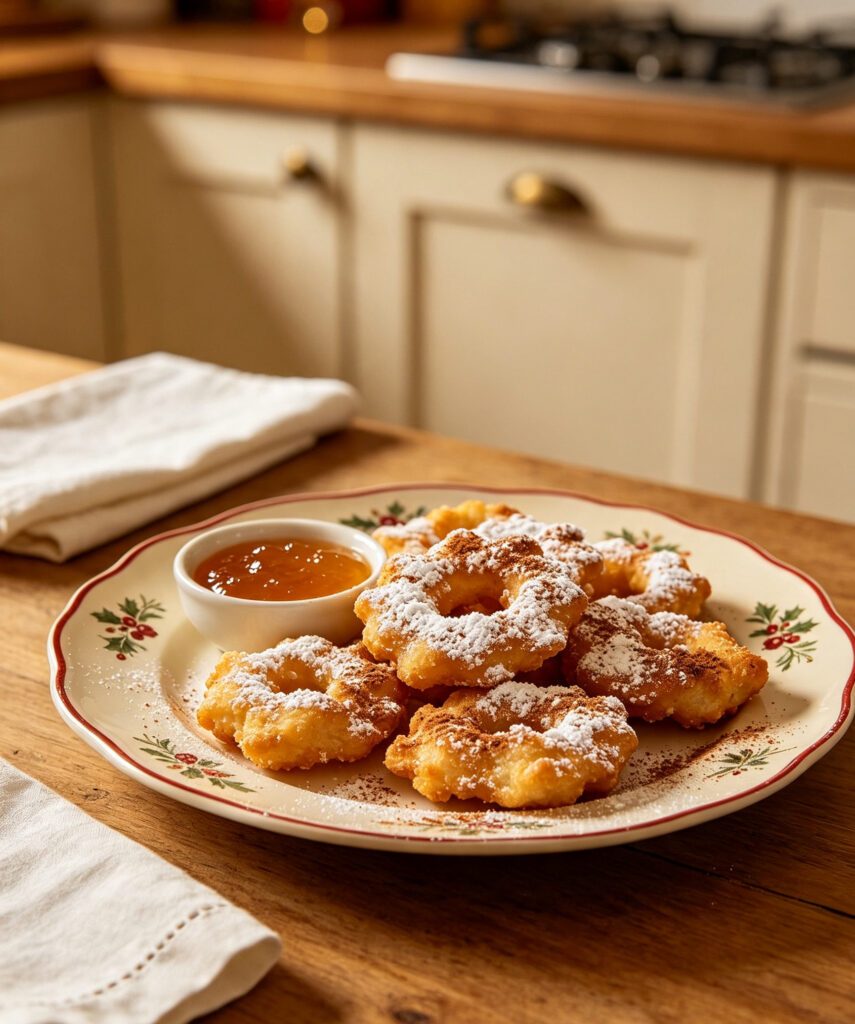
Filhós de Natal
The Quirky Foodster Team
Ingredients
- Plain flour — 500 g (1 lb 2 oz)
- Sugar — 1 tbsp
- Olive oil — 120 ml (4 fl oz)
- Orange juice — 120 ml (4 fl oz)
- White wine or brandy — 120 ml (4 fl oz)
- Orange zest — 1 tsp
- Salt — 1/2 tsp
- Oil for deep frying
- Sugar, mixed with 2 tsp cinnamon, for coating — 200 g (7 oz)
Method
- Combine the flour, sugar and salt in a bowl.
- Add the olive oil, orange juice, wine or brandy and orange zest, mixing into a smooth, firm dough.
- Knead briefly, then rest for 30 minutes.
- Divide into portions and roll each out very thinly.
- Heat oil to 175°C (350°F) in a deep pan.
- Fry the thin sheets of dough for 1–2 minutes per side until golden and crisp, they may puff and bubble attractively.
- Drain on paper towels and toss immediately in the cinnamon sugar while still warm.
Introduction: Thin, crisp fried dough pastries dusted with cinnamon sugar, a beloved traditional treat prepared for the Portuguese Christmas season.
Cultural Background: Filhós are among the many traditional fried sweets prepared across Portugal during Christmas, each region having its own variation, families often gathering to fry large batches together as part of the festive preparations.
Tips: Roll the dough as thin as possible, as this is essential for the characteristic light, crisp, bubbly texture of filhós. Fry quickly, as the thin dough cooks fast and can burn if left too long.
Variations: Shape into twisted or knotted forms, a variation found in some regions. Adjust the citrus and spice flavourings according to family tradition.
Storage: Store in an airtight container at room temperature for up to 3 days.
Reheating: Not applicable — served at room temperature.
FAQs:
Q: Are filhós the same in every region of Portugal?
A: No, there are many regional variations in shape, thickness and exact ingredients, each family and area having its own beloved version.
Q: When are filhós traditionally made?
A: During the Christmas season, often prepared in large batches as part of the festive family baking tradition.
- Plain flour — 500 g (1 lb 2 oz)
- Sugar — 1 tbsp
- Olive oil — 120 ml (4 fl oz)
- Orange juice — 120 ml (4 fl oz)
- White wine or brandy — 120 ml (4 fl oz)
- Orange zest — 1 tsp
- Salt — 1/2 tsp
- Oil for deep frying
- Sugar, mixed with 2 tsp cinnamon, for coating — 200 g (7 oz)
Please log in to leave a comment.