
Holidays & Special Occasions
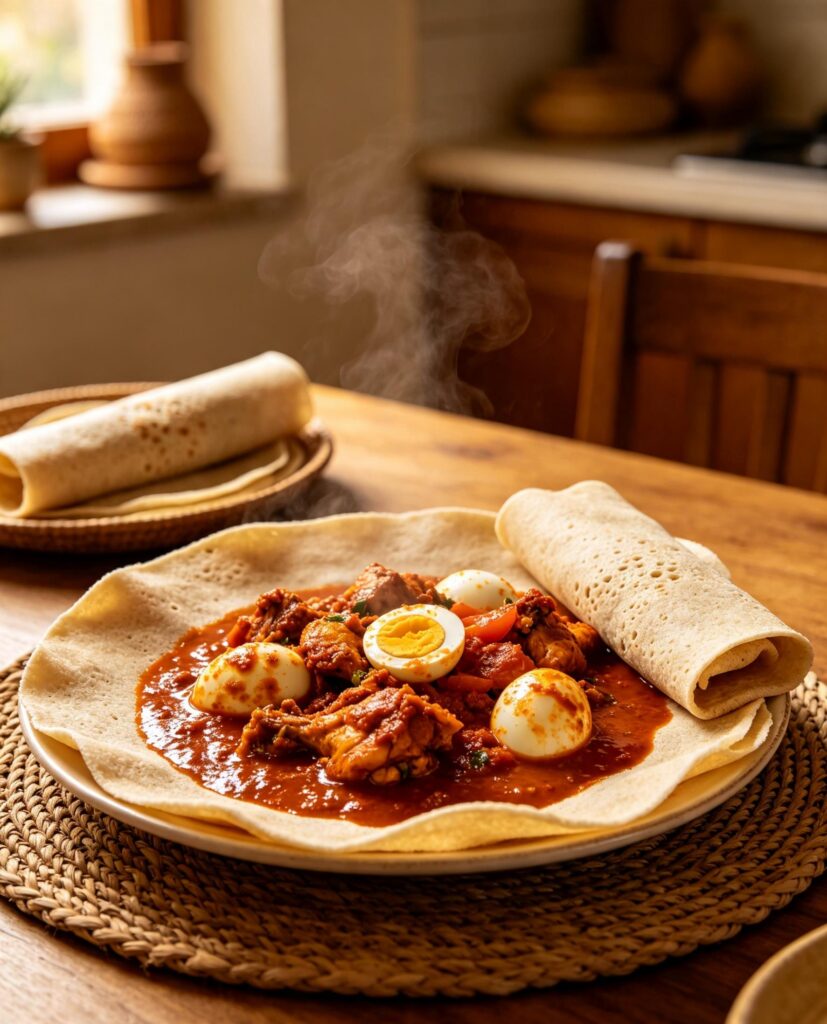
Fasika Zigni Derho
The Quirky Foodster Team
Ingredients
- 1.2 kg (2.6 lb) Chicken pieces, skin removed
- 4 large Red onions, finely chopped
- 5 Garlic cloves, minced
- 1.5 tbsp Fresh ginger, minced
- 3 tbsp Berbere spice blend
- 80 g (1/3 cup) Niter kibbeh (spiced clarified butter)
- 2 tbsp Tomato paste
- 500 ml (2 cups) Water
- 8 Hard-boiled eggs, peeled and scored
- 2 tsp Salt
Method
- Melt the niter kibbeh in a large heavy pot and cook the onions over medium heat for 25 minutes, stirring often, until deeply golden and jam-like.
- Add the garlic and ginger and cook for 2 minutes.
- Stir in the berbere and tomato paste and cook for 4 minutes, stirring constantly.
- Add the chicken pieces, coating thoroughly in the spiced base, and cook for 5 minutes.
- Pour in the water, bring to a simmer, cover, and cook over low heat for 40–45 minutes until the chicken is very tender.
- Add the scored hard-boiled eggs and simmer for a further 10–12 minutes, spooning sauce over them to colour and flavour evenly.
- Season with salt and serve hot with plenty of injera, sharing the eggs evenly among guests.
Introduction: This richly spiced chicken and egg stew is prepared for Fasika, the most significant feast of the Eritrean Orthodox calendar, marking the end of a fifty-five day fasting period during which meat, dairy and eggs are avoided.
Cultural Background: This richly spiced chicken and egg stew is prepared for Fasika, the most significant feast of the Eritrean Orthodox calendar, marking the end of a fifty-five day fasting period during which meat, dairy and eggs are avoided. Families gather to share it after the midnight Easter service.
Storage: Refrigerate for up to 3 days; the dish is traditionally enjoyed across several days after Fasika.
Reheating: Reheat gently on the stovetop over low heat, adding a splash of water, until piping hot throughout.
Tips: Use niter kibbeh rather than plain oil for the most traditional, festive depth of flavour. Prepare a day ahead if possible — the stew’s flavour deepens overnight.
Variations: Some families add whole green chilies for extra heat and visual contrast. A milder version is made for households with young children by reducing the berbere. Not vegetarian; central to breaking the extended pre-Fasika fast.
Nutrition: Calories: 430 kcal · Protein: 38 g · Carbs: 11 g · Fat: 27 g · Fiber: 2 g
FAQs:
Q: Why is this dish specifically tied to Fasika?
A: It traditionally breaks the extended pre-Easter fast during which animal products are avoided, making the rich chicken, egg and butter content especially significant.
Q: How is this different from the everyday Derho Tsebhi recipe in this book?
A: The Fasika version is typically richer, using niter kibbeh instead of oil and a larger number of eggs, reflecting its status as a festive centrepiece rather than an everyday meal.
Please log in to leave a comment.