
Farathas (Farata)
The Quirky Foodster Team
Ingredients
- Plain flour — 3 cups (375 g / 13 oz)
- Warm water — 1 cup (240 ml / 8 fl oz)
- Salt — 1/2 tsp
- Oil or ghee, plus extra for cooking — 1/4 cup (60 ml / 2 fl oz)
Method
- Combine the flour and salt in a bowl, then gradually add warm water to form a soft, smooth dough.
- Knead for 8–10 minutes until elastic, then rest for 20 minutes.
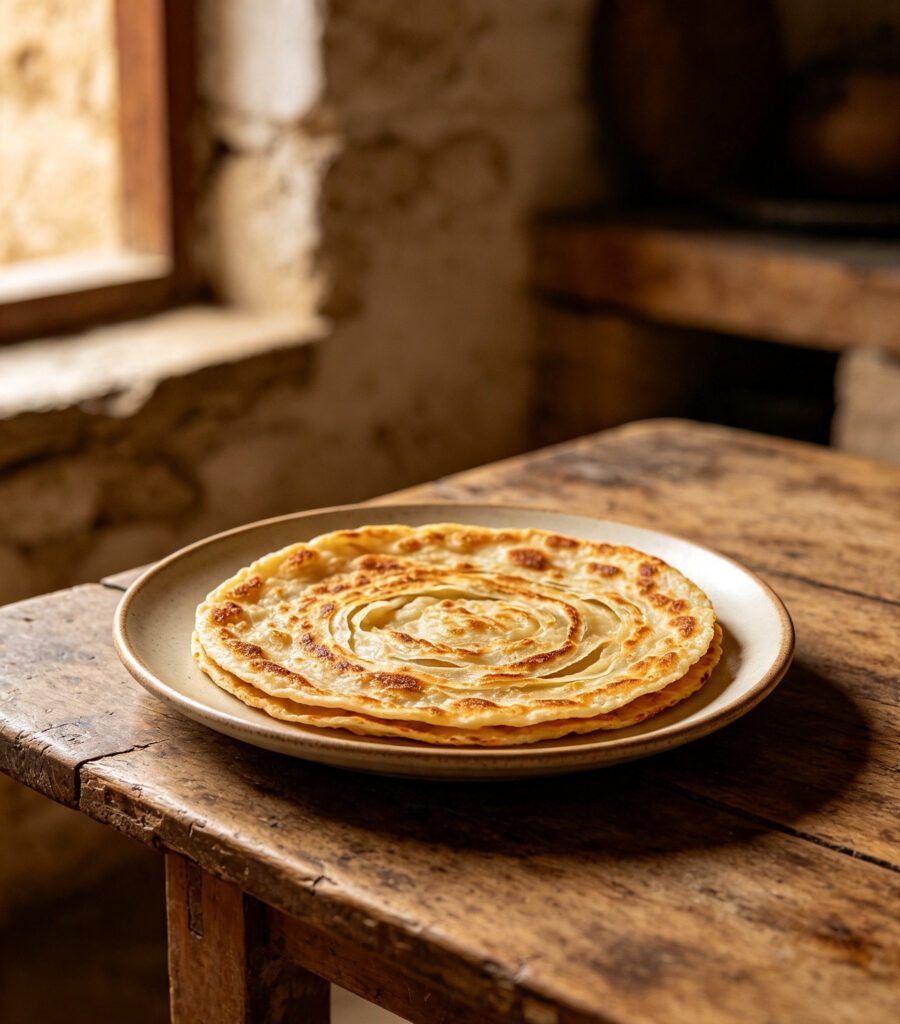
- Divide into 6 balls, roll each out thinly, brush with oil, and fold repeatedly into a coil to create layers, then roll out again into a flat round.
- Heat a griddle over medium heat and cook each faratha for 2–3 minutes per side, brushing with a little oil, until golden and flaky.
- While still hot, gently crumple each faratha between your palms to separate the layers.
Introduction: Soft, flaky layered flatbreads cooked on a griddle, often served alongside curries or rolled up with a simple filling.
Cultural Background: Faratha shares its roots with the wider South Asian paratha tradition, brought to Mauritius by Indian settlers and adapted into a household staple, prized for its flaky, buttery layers.
Tips: Rolling and folding the dough carefully is what creates the characteristic flaky layers — don’t rush this step. Crumpling the cooked faratha while hot helps release and separate the internal layers for a lighter texture.
Variations: Add a little grated coconut to the dough for a subtly sweet variation. Serve with a simple lentil curry or as a wrap for grilled meats.
Storage: Store cooled farathas in an airtight container at room temperature for up to 1 day.
Reheating: Warm briefly on a dry griddle or in a dry pan for 30 seconds per side.
Nutrition: Per serving (approx., 1 faratha): 240 kcal, 5 g protein, 9 g fat, 35 g carbohydrate.
FAQs:
Q: What is the difference between faratha and roti?
A: Faratha has a distinctive flaky, layered texture
Q: Can farathas be frozen?
A: Yes, freeze uncooked between layers of parchment, then cook directly
- Plain flour — 3 cups (375 g / 13 oz)
- Warm water — 1 cup (240 ml / 8 fl oz)
- Salt — 1/2 tsp
- Oil or ghee, plus extra for cooking — 1/4 cup (60 ml / 2 fl oz)
Please log in to leave a comment.