
Holidays & Special Occasions
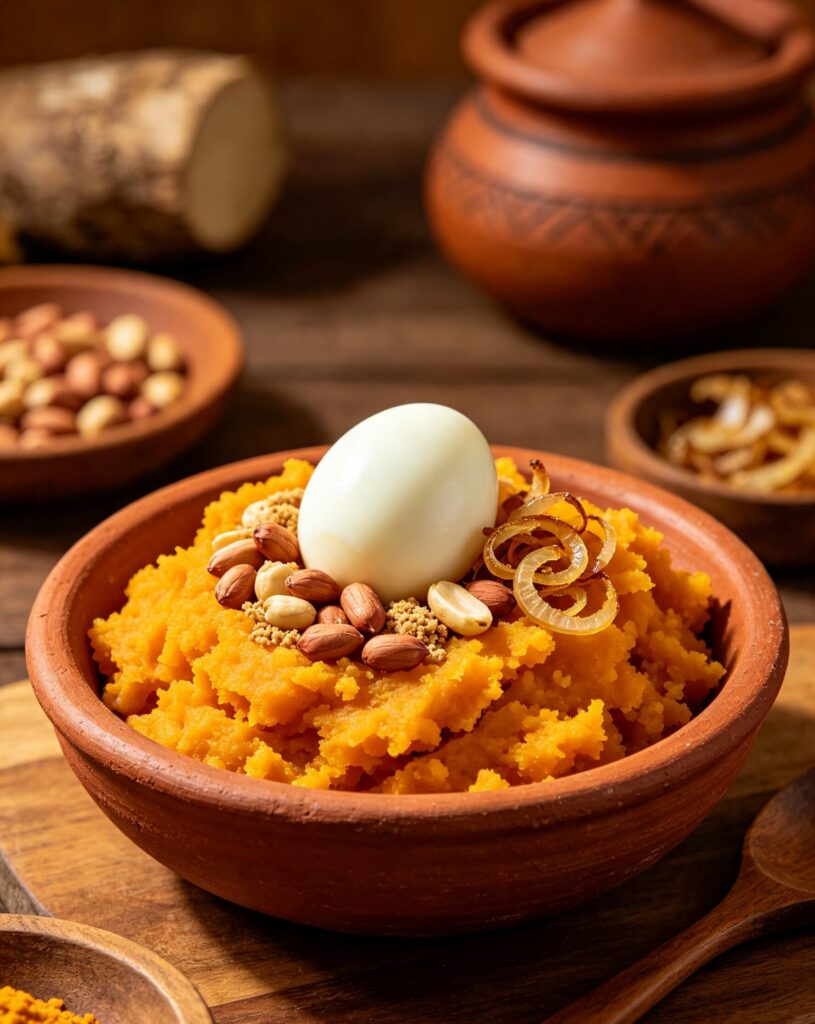
Eto (Mashed Yam and Egg for Naming Ceremonies)
The Quirky Foodster Team
Ingredients
- 1 kg (2.2 lb) yam, peeled and cut into chunks
- 4 eggs
- 60 ml (1/4 cup) red palm oil
- 1 onion, finely chopped
- 1/2 tsp ground pepper (optional)
- Salt, to taste
Method
- Boil the yam chunks in salted water for 20-25 minutes until very soft.
- Meanwhile, hard-boil the eggs for 9-10 minutes, then cool, peel and set aside.
- Drain the yam and mash thoroughly with a masher or pestle until smooth.
- Warm the palm oil gently in a small saucepan with the chopped onion until fragrant, being careful not to burn the oil.
- Fold the warm palm oil and onion through the mashed yam until evenly coloured and combined, seasoning with salt and pepper.
- Serve warm, topped or garnished with the whole boiled eggs, for the ceremonial occasion.
Introduction: Eto is a symbolic mashed yam dish studded with boiled eggs and palm oil, traditionally prepared for naming ceremonies (outdooring), weddings and other significant rites of passage in Ghana.
Cultural Background: Eto is a symbolic mashed yam dish studded with boiled eggs and palm oil, traditionally prepared for naming ceremonies (outdooring), weddings and other significant rites of passage in Ghana. The egg is often ceremonially placed in the mouth of the guest of honour as a blessing for a smooth, sweet life ahead.
Tips: Warm the palm oil gently rather than heating it to smoking point, as overheated oil can turn bitter and darken the dish unevenly.
Variations: Some families mash the boiled egg directly into the yam rather than serving it whole, especially for everyday, non-ceremonial versions.
Storage: Refrigerate for up to 2 days in an airtight container.
Reheating: Reheat in a covered pan over low heat with a splash of water, stirring gently.
Nutrition: Calories: 310 kcal, Protein: 9 g, Carbs: 52 g, Fat: 9 g, Fibre: 4 g
FAQs:
Q: Why is egg significant in eto?
A: The egg symbolises fertility, prosperity and a smooth path in life, and is traditionally offered to the guest of honour at naming ceremonies and weddings.
Q: Can eto be made without palm oil?
A: Palm oil gives eto its characteristic golden-orange colour and flavour, though vegetable oil can be substituted for a milder, paler version.
Please log in to leave a comment.