
Erwtensoep
The Quirky Foodster Team
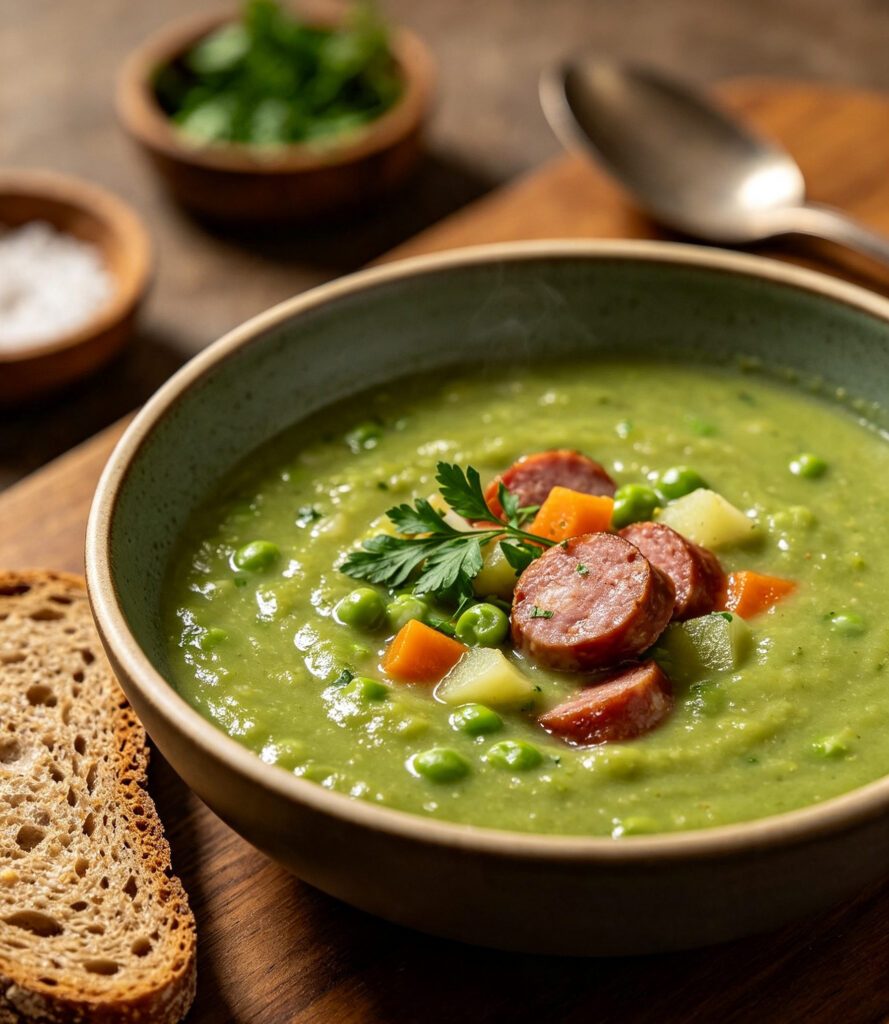
Ingredients
- Dried split peas, rinsed — 400 g (14 oz)
- Rookworst — 1 (Dutch smoked sausage)
- Bacon, diced — 150 g (5 oz)
- Leeks, sliced — 2
- Carrots, diced — 2
- Celery stalks, chopped — 2
- Onion, chopped — 1
- Water — 1.9 L (64 fl oz)
- Salt and pepper — to taste
- Rye bread, to serve
Method
- Combine the split peas, water, onion and diced bacon in a large pot.
- Bring to a boil, then reduce to a simmer and cook, partially covered, for 1–1.5 hours, stirring occasionally, until the peas break down and the soup thickens.
- Add the leeks, carrots and celery, and simmer for a further 30 minutes.
- Add the whole rookworst and simmer for 15–20 minutes until heated through.
- Remove the sausage, slice, and return to the pot.
- Season with salt and pepper, and serve hot with rye bread.
Introduction: A thick, hearty split pea soup simmered with smoked sausage and bacon, a beloved Dutch winter dish traditionally eaten on ice-skating days.
Cultural Background: Erwtensoep, also called snert, is closely associated with cold Dutch winters and ice skating on frozen canals, its thick, warming character making it the perfect dish to enjoy after a day outdoors in the cold.
Tips: Stir occasionally during the long simmer to prevent the peas from sticking and burning on the bottom. The soup should be thick enough that a spoon can stand upright in it, as tradition holds.
Variations: Add a smoked ham hock for extra depth alongside or instead of bacon. Serve with a slice of bacon-topped rye bread (roggebrood met spek) as a traditional accompaniment.
Storage: Refrigerate in an airtight container for up to 4 days; the soup often tastes even better the next day.
Reheating: Reheat gently on the stovetop over low heat, adding a splash of water if it has thickened too much.
FAQs:
Q: Why is erwtensoep associated with ice skating?
A: Its thick, warming character makes it a classic dish to enjoy after skating on frozen canals during Dutch winters.
Q: How thick should erwtensoep be?
A: Traditionally very thick — thick enough that a spoon can stand upright in the pot.
- Dried split peas, rinsed — 400 g (14 oz)
- Rookworst — 1 (Dutch smoked sausage)
- Bacon, diced — 150 g (5 oz)
- Leeks, sliced — 2
- Carrots, diced — 2
- Celery stalks, chopped — 2
- Onion, chopped — 1
- Water — 1.9 L (64 fl oz)
- Salt and pepper — to taste
- Rye bread, to serve
Please log in to leave a comment.