
Dograma (Ceremonial Bread and Broth Dish)
The Quirky Foodster Team
Ingredients
- Mutton or lamb, bone-in, cut into large pieces — 1 kg (2 1/4 lb)
- Water — 2.5 L (10 cups)
- Onions, one whole and one finely chopped — 2
- Salt — 2 tsp
- Black pepper — 1/2 tsp
- Flatbreads (chorek or similar), a day old if possible — 4
- Fresh dill or coriander, chopped, to serve — 2 tbsp
Method
- Place the mutton, water and the whole onion in a large pot. Bring to a boil, skimming off any foam.
- Reduce to a simmer and cook, partly covered, for 1 hour 15 minutes to 1 hour 30 minutes, until the meat is very tender and falling from the bone.
- Remove the meat, discard the bones and whole onion, and shred the meat finely by hand. Strain and reserve the hot broth.
- Tear the flatbread by hand into small, bite-sized pieces and place in a large mixing bowl.
- Add the shredded meat and finely chopped onion to the bread, season with salt and pepper, and toss gently to combine.
- Ladle enough hot broth over the mixture to moisten it thoroughly, tossing gently so the bread soaks up the broth without turning to mush.
- Scatter with fresh herbs and serve immediately, while hot.
Introduction: Dograma, whose name means 'to cut into pieces,' is one of Turkmenistan's most honoured traditional
dishes, historically prepared for religious occasions and rites, including as part of sacrificial offerings.
Cultural Background: Dograma, whose name means 'to cut into pieces,' is one of Turkmenistan's most honoured traditional
dishes, historically prepared for religious occasions and rites, including as part of sacrificial offerings.
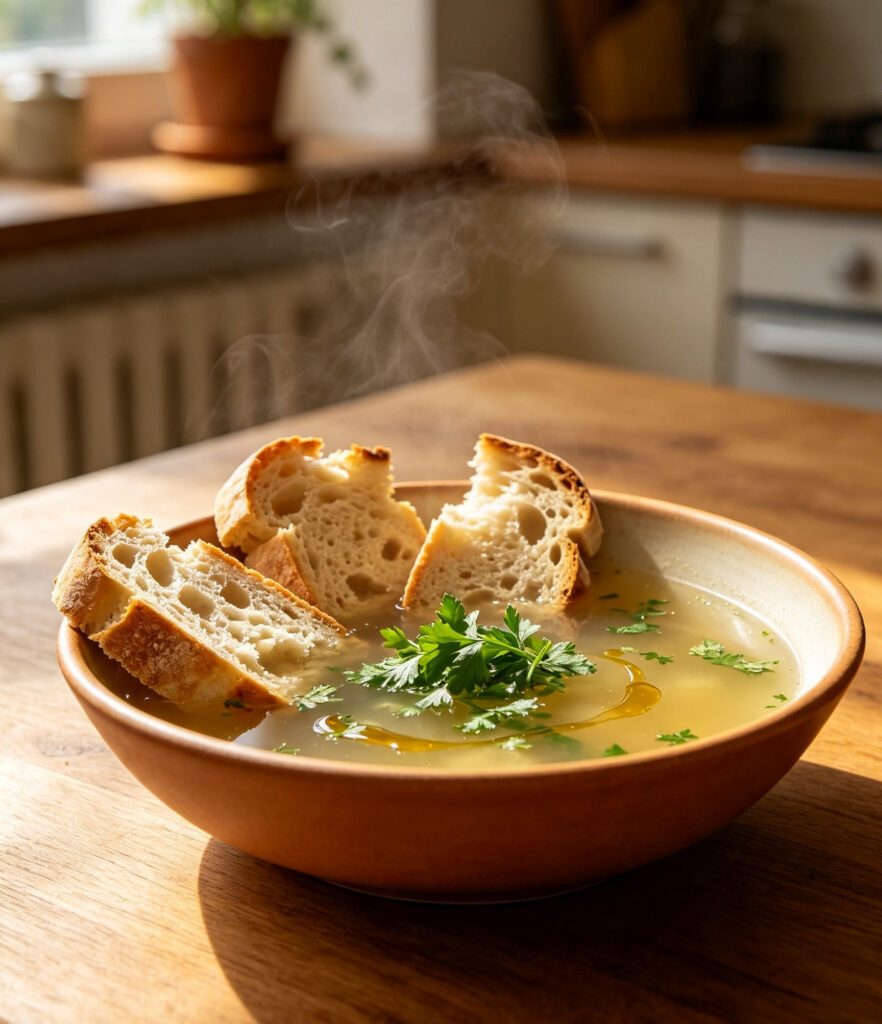
Multiple flatbreads are baked, torn by hand into small pieces, combined with shredded mutton and onion,
and served drenched in hot broth.
Tips: Slightly stale, day-old bread holds its texture better once soaked in broth than very fresh bread. Tear the bread by hand rather than cutting it with a knife, which is the traditional method believed to preserve the dish's character.
Variations: Some families add a spoonful of suzme (strained yogurt) on top before serving. Use beef in place of mutton if preferred. This dish's meat broth and shredded meat are central to its identity for religious and ceremonial occasions,
so no authentic vegetarian version exists.
Storage: Best eaten immediately; leftovers can be refrigerated for up to a day but the bread will soften considerably.
Reheating: Gently warm through in a low oven or over a double boiler; the bread texture will be softer than freshly
made.
FAQs:
Q: What does the name 'dograma' mean?
A: It means 'to cut into pieces,' referring to how the bread and meat are torn and combined.
Q: Why is stale bread preferred?
A: It holds together better once soaked in hot broth, rather than disintegrating.
Q: When is dograma traditionally served?
A: It is especially associated with religious occasions and significant family gatherings.
- Mutton or lamb, bone-in, cut into large pieces — 1 kg (2 1/4 lb)
- Water — 2.5 L (10 cups)
- Onions, one whole and one finely chopped — 2
- Salt — 2 tsp
- Black pepper — 1/2 tsp
- Flatbreads (chorek or similar), a day old if possible — 4
- Fresh dill or coriander, chopped, to serve — 2 tbsp
Please log in to leave a comment.