
Breads
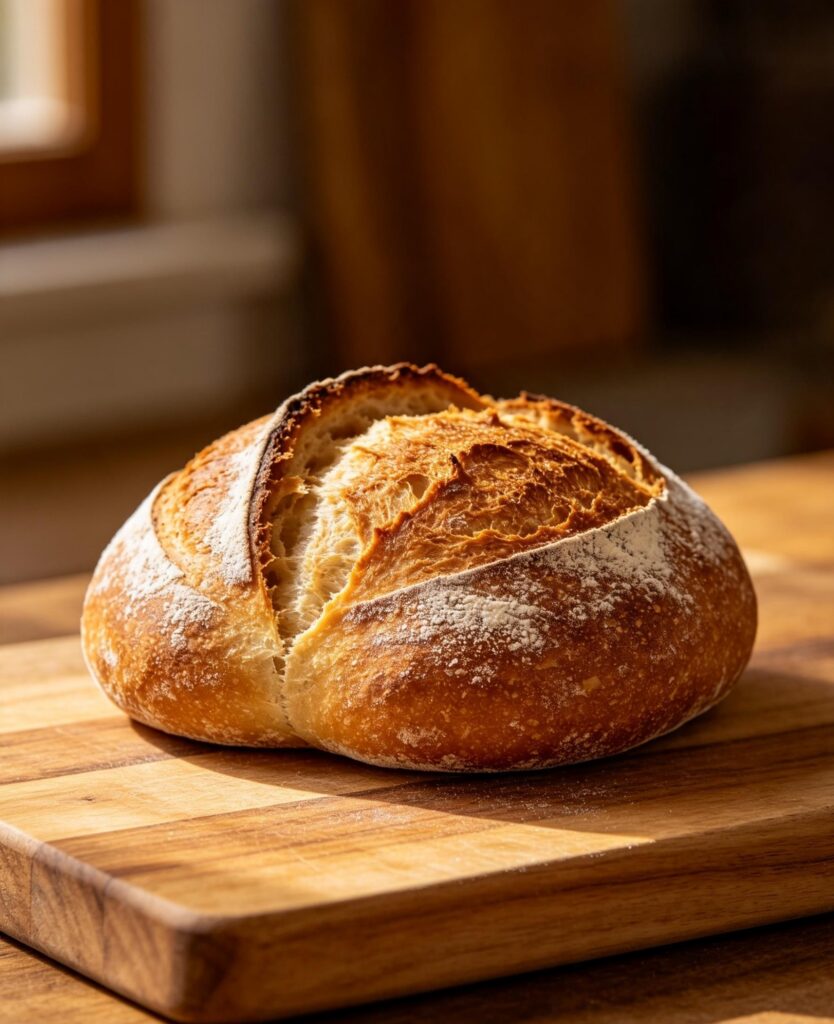
Cottage Loaf
The Quirky Foodster Team
Ingredients
- 500 g (4 cups) Strong white bread flour
- 10 g (2 tsp) Salt
- 7g (2 1/4 tsp) Instant yeast
- 320 ml (1 1/3 cups) Warm water
- 1 tbsp Olive oil
Method
- Combine the flour, salt and yeast in a large bowl, keeping the salt and yeast on opposite sides initially.
- Add the warm water and olive oil, and mix until a rough dough forms.
- Knead the dough on a floured surface for about 10 minutes until smooth and elastic.
- Place in a lightly oiled bowl, cover, and let rise in a warm place for about 1 hour, until doubled in size.
- Punch down the dough and divide it into two pieces, one roughly two-thirds and the other one-third of the total.
- Shape each piece into a tight, smooth ball.
- Place the larger ball on a floured baking tray, then place the smaller ball centred on top.
- Push a floured finger or the handle of a wooden spoon through the centre of both balls to anchor them together.
- Cover and let rise for a further 40 minutes.
- Preheat the oven to 220°C (425°F).
- Score the sides of the loaf lightly and bake for 30 to 35 minutes until deep golden brown and the base sounds hollow when tapped.
- Cool completely on a wire rack before slicing.
Introduction: A distinctive two-tiered loaf made by stacking a smaller round of dough atop a larger one, the cottage loaf is a traditional English bread shape dating back to at least the 19th century, once a familiar sight in English bakeries before more standardised loaf shapes became widespread.
Cultural Background: A distinctive two-tiered loaf made by stacking a smaller round of dough atop a larger one, the cottage loaf is a traditional English bread shape dating back to at least the 19th century, once a familiar sight in English bakeries before more standardised loaf shapes became widespread.
Storage: Store wrapped at room temperature for up to 3 days, or freeze sliced for up to 3 months.
Reheating: Refresh by warming whole in an oven at 180°C (350°F) for about 8 minutes, or toast individual slices.
Tips: Anchoring the two balls of dough together firmly is essential, or the top tier can slide off during baking. Score the sides, not just the top, to help the loaf expand evenly in the oven without splitting unpredictably.
Variations: A sprinkle of seeds on top before baking adds extra texture and flavour. A wholemeal version can be made by replacing up to half the white flour with wholemeal flour. Some bakers brush the loaf with a little milk before baking for a shinier crust. This bread is naturally vegan as written, made only from flour, water, yeast, salt and oil with no animal products.
Nutrition: Calories: 170 kcal | Protein: 6 g | Carbs: 34 g | Fat: 2 g
FAQs:
Q: Why does the top tier sometimes slide off during baking?
A: This usually happens if the two dough balls were not firmly anchored together before the final rise; pushing a floured finger through the centre helps hold them in place.
Q: Is a cottage loaf harder to make than a standard loaf?
A: It uses the same basic dough and technique as many everyday breads, with the main extra step being the shaping and stacking of the two tiers, so it is well within reach for a home baker.
Please log in to leave a comment.