
Holidays & Special Occasions
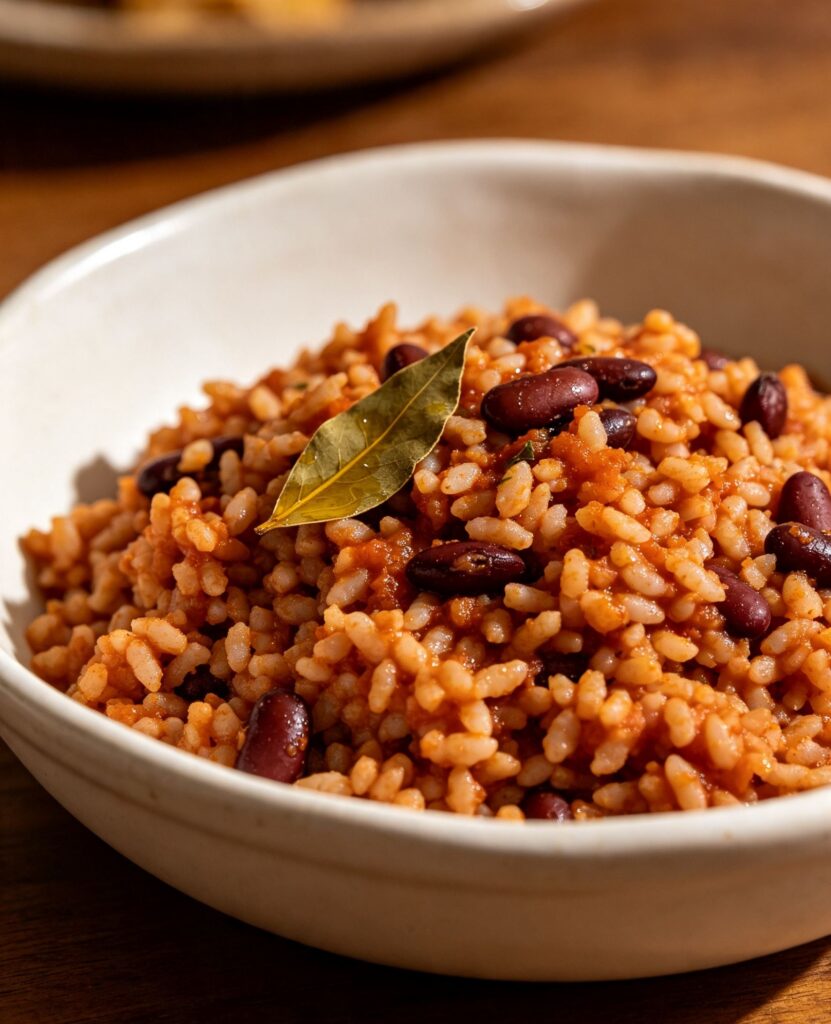
Congrí Oriental
The Quirky Foodster Team
Ingredients
- 250 g (1.25 cups) Dried red kidney beans, soaked overnight
- 100 g (3.5 oz) Salt pork or thick-cut bacon, diced
- 300 g (1.5 cups) Long-grain white rice
- 1 medium Onion, diced
- 1 medium Green bell pepper, diced
- 4 Garlic cloves, minced
- 1 Bay leaf
- 1 tsp Ground cumin
- 0.5 tsp Dried oregano
- 1.5 tsp Fine sea salt
- 1.2 l (5 cups) Water
Method
- Drain the soaked red beans and place in a large pot with the water and bay leaf.
- Bring to a boil, then reduce to a simmer and cook covered for 50-60 minutes until tender, topping up water as needed.
- Reserve the beans and about 600ml (2.5 cups) of their cooking liquid.
- In the same pot, cook the diced salt pork or bacon over medium heat until crisp and much of the fat has rendered, about 6 minutes.
- Add the onion and green pepper to the rendered fat and sauté until softened, about 6 minutes.
- Add the garlic, cumin and oregano, and cook for 1 minute until fragrant.
- Stir in the rice, coating it in the fat and aromatics.
- Add the cooked beans and their reserved liquid, and season with salt.
- Bring to a boil, then reduce to the lowest heat, cover tightly, and cook for 18-20 minutes until the rice is tender.
- Let stand covered for 5 minutes, then fluff with a fork before serving.
Introduction: Congrí, the eastern Cuban cousin of Moros y Cristianos, uses red beans rather than black and is traditionally
cooked with a piece of salted pork or bacon for extra richness, making it a fixture of festive tables in Oriente
province, especially at Christmas and New Year gatherings, where it is served alongside roast pork as one half of
the essential holiday plate.
Cultural Background: Congrí, the eastern Cuban cousin of Moros y Cristianos, uses red beans rather than black and is traditionally
cooked with a piece of salted pork or bacon for extra richness, making it a fixture of festive tables in Oriente
province, especially at Christmas and New Year gatherings, where it is served alongside roast pork as one half of
the essential holiday plate.
Tips: Rendering the salt pork slowly builds the smoky depth that distinguishes congrí from its black bean cousin. Soaking the beans overnight is essential for even cooking within the given time.
Variations: A meatless version omits the salt pork and uses extra olive oil, though this departs from the traditional preparation. Some households add a splash of dry sherry to the beans during the final simmer. Omitting the salt pork departs from the authentic dish; not converted, though extra olive oil can approximate the dish for dietary needs.
Storage: Refrigerate in an airtight container for up to 4 days, or freeze for up to 2 months.
Reheating: Reheat in a covered saucepan over low heat with a splash of water, stirring occasionally.
Nutrition: Per serving: 400 kcal, 14g protein, 58g carbohydrates, 12g fat, 8g fibre, 680mg sodium.
FAQs
Q: What's the difference between congrí and Moros y Cristianos?
A: Congrí uses red beans and traditionally includes salt pork, while Moros y Cristianos uses black beans and is typically meat-free.
Q: Can I use canned red beans?
A: Yes, use 2 cans, drained but reserving some liquid, and skip the initial simmering step for the beans.
Please log in to leave a comment.