
Holidays & Special Occasions
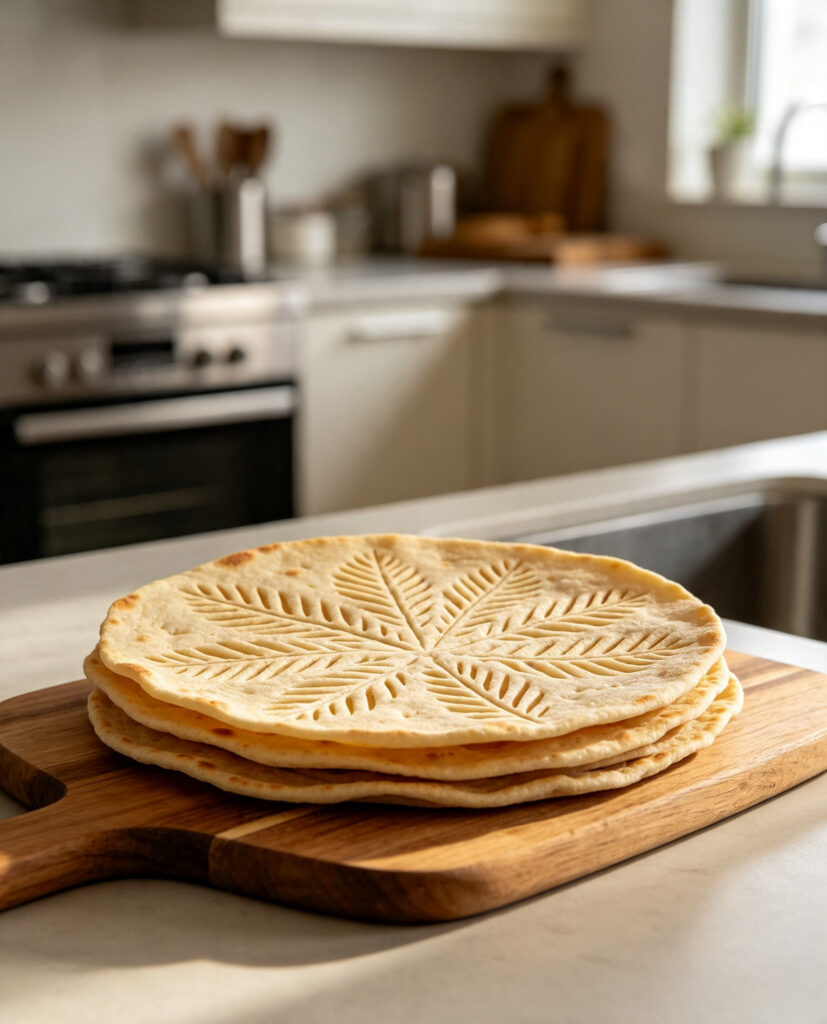
Christmas Leaf Bread
Ingredients
- 500 g (4 cups) all-purpose flour
- 1 tsp baking powder
- 1 tsp salt
- 1 tbsp sugar
- 50 g (3.5 tbsp) butter, softened
- 250 ml (1 cup) whole milk, warmed
- 1 litre (4 cups) neutral oil, for frying
Method
- In a large bowl, mix the flour, baking powder, salt and sugar.
- Rub in the softened butter until evenly incorporated.
- Gradually add the warm milk, mixing until a smooth, firm dough forms. Knead for 3-4 minutes.
- Wrap and rest the dough for 30 minutes.
- Divide the dough into small balls and roll each out as thinly as possible into rounds about 15 cm (6 inches) in diameter.
- Using a sharp knife or a special laufabrauð cutter, carefully cut decorative leaf-like patterns into each round.
- Heat the oil in a deep pot to 190°C (375°F).
- Fry each decorated round for about 20-30 seconds per side, until golden and crisp, pressing gently with a spoon to keep it flat.
- Remove with a slotted spoon and drain on paper towels before serving.
Introduction: Laufabrauð, meaning 'leaf bread', is a paper-thin fried flatbread intricately decorated with leaf-like patterns cut before frying.
Cultural Background: Laufabrauð, meaning 'leaf bread', is a paper-thin fried flatbread intricately decorated with leaf-like patterns cut before frying. Making laufabrauð is a cherished family activity in the weeks before Christmas across Iceland, with generations gathering to cut patterns together and pass down family stencil designs.
Tips: Roll the dough as thin as possible — the thinner the bread, the crisper and more delicate the final result. Fry quickly over high heat, as laufabrauð cooks in seconds and burns easily if left too long.
Variations: Create your own family pattern design, as many Icelandic households pass down unique stencils through generations. Serve alongside hangikjöt as part of the traditional Christmas meal.
Storage: Store in an airtight container at room temperature for up to 2 weeks.
Reheating: Not applicable — served at room temperature as a crisp accompaniment.
FAQs:
Q: Is laufabrauð eaten on its own?
A: It is usually served as an accompaniment to hangikjöt and other Christmas dishes rather than eaten alone.
Q: What tool is used to cut the patterns?
A: A special rolling wheel-like laufabrauð cutter is traditional, though a sharp paring knife works well too.
Please log in to leave a comment.