
Drinks
Chinese Jasmine Tea
The Quirky Foodster Team
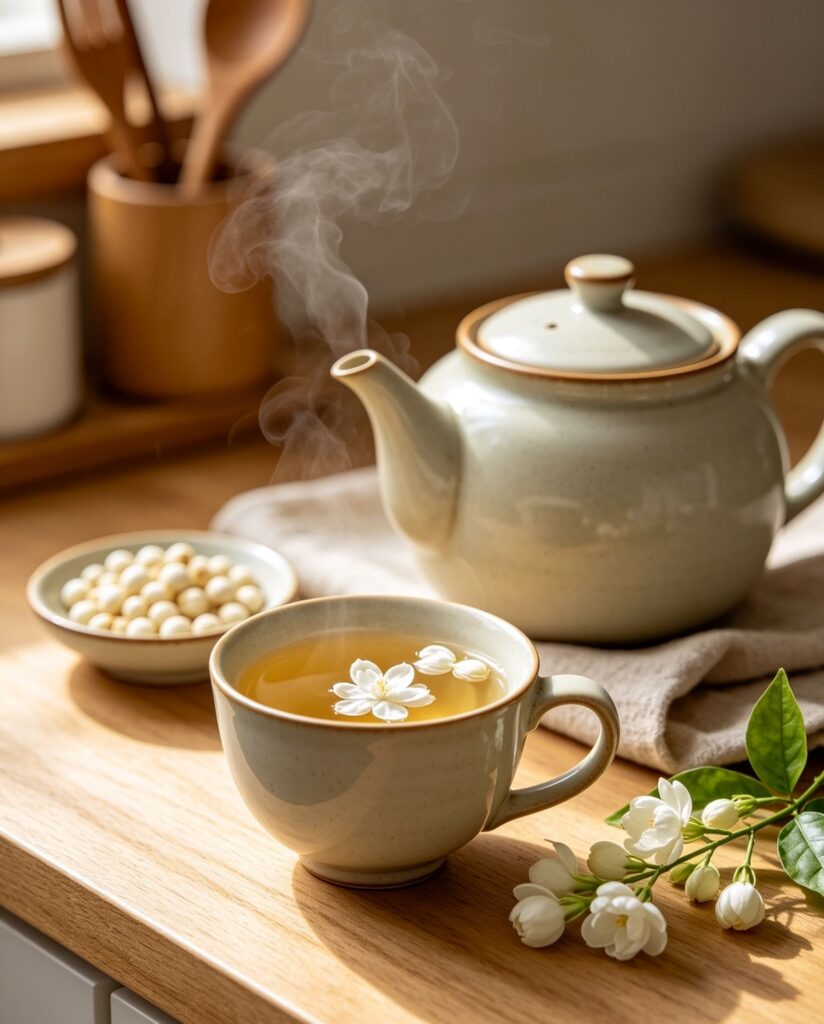
Ingredients
- 2 tsp jasmine tea leaves
- 300 ml (1 1/4 cups) water, just off the boil (around 80°C / 175°F)
Method
- Warm the teapot or gaiwan briefly with a splash of hot water, then discard.
- Add the jasmine tea leaves to the warmed vessel.
- Pour the hot water (not fully boiling) over the leaves and steep for 2-3 minutes.
- Pour into small cups and serve; the same leaves can typically be re-steeped 2-3 more times, extending the steeping time slightly with each infusion.
Introduction: Jasmine tea is produced by scenting green or white tea leaves with fresh jasmine blossoms over repeated nights, a technique dating back centuries in Fujian province, resulting in a fragrant, delicately floral tea enjoyed throughout China at meals and social gatherings.
Cultural Background: Jasmine tea is produced by scenting green or white tea leaves with fresh jasmine blossoms over repeated nights, a technique dating back centuries in Fujian province, resulting in a fragrant, delicately floral tea enjoyed throughout China at meals and social gatherings.
Tips: Water that is too hot can scorch the delicate tea leaves and produce a bitter cup. Re-steep the same leaves several times, as jasmine tea often reveals different notes with each infusion.
Variations: Serve chilled over ice for a refreshing summer drink. Add a few dried osmanthus flowers for an extra layer of floral fragrance.
Storage: Store dry tea leaves in an airtight container away from light and moisture for several months.
Reheating: Not applicable; brew fresh as needed.
Nutrition: Approx. 2 kcal, 0g protein, 0g fat, 0g carbohydrate per cup.
FAQs
Q: Why shouldn't jasmine tea be steeped in fully boiling water?
A: Fully boiling water can scald the delicate green or white tea base, drawing out excessive bitterness rather than the tea's natural floral sweetness.
Q: Can jasmine tea leaves be reused?
A: Yes, quality jasmine tea can typically be re-steeped several times, with flavour evolving across infusions.
Please log in to leave a comment.