
Desserts
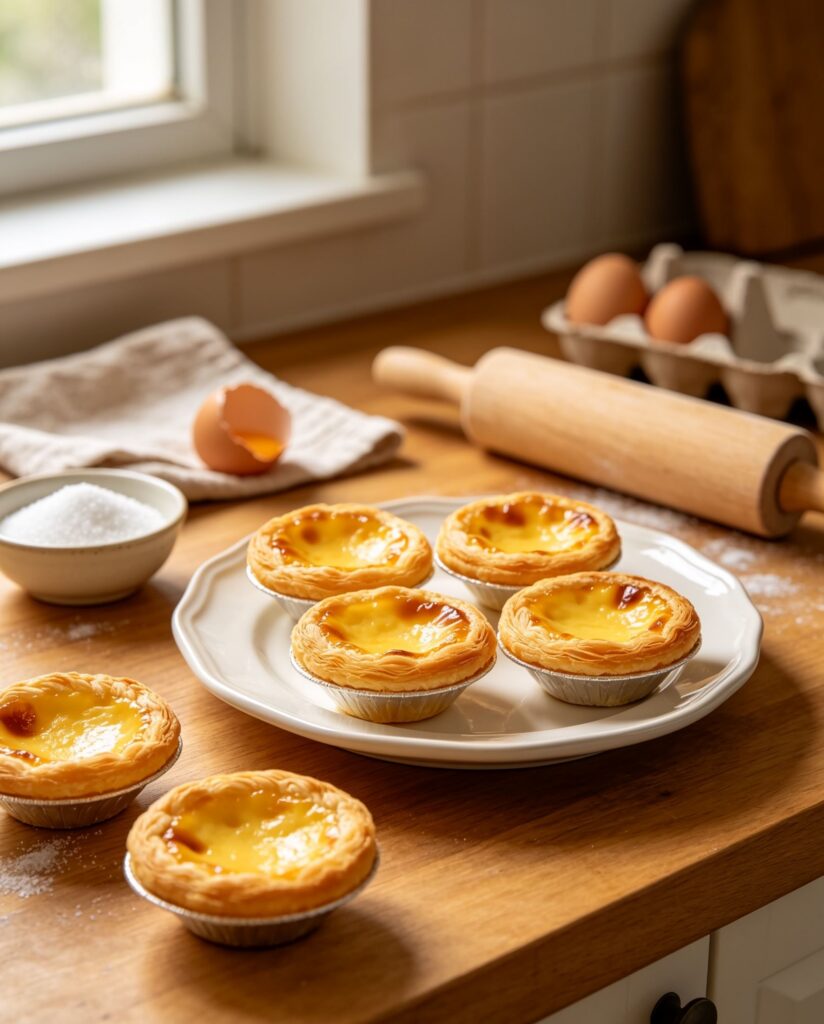
Chinese Egg Tarts
The Quirky Foodster Team
Ingredients
- 1 sheet ready-made shortcrust or puff pastry (250 g / 9 oz)
- 3 large eggs
- 100 g (1/2 cup) sugar
- 180 ml (3/4 cup) hot water
- 60 ml (1/4 cup) evaporated milk
- 1/2 tsp vanilla extract
Method
- Preheat the oven to 200°C (400°F). Roll out the pastry and cut into rounds to line individual tart moulds, pressing gently into shape.
- Dissolve the sugar in the hot water and let cool slightly.
- Whisk the eggs gently, then stir in the sugar water, evaporated milk and vanilla, mixing without creating too much froth.
- Strain the custard through a fine sieve into a jug for a smooth finish.
- Pour the custard into the pastry shells, filling about three-quarters full.
- Bake for 15-18 minutes until the pastry is golden and the custard is just set with a slight wobble in the centre.
- Cool for at least 10 minutes before removing from the moulds.
Introduction: Egg tarts blend Cantonese pastry-making with Portuguese custard tart influence from nearby Macau, resulting in a flaky or crumbly shell cradling a wobbly, lightly sweet egg custard, a beloved fixture of dim sum trolleys and bakeries.
Cultural Background: Egg tarts blend Cantonese pastry-making with Portuguese custard tart influence from nearby Macau, resulting in a flaky or crumbly shell cradling a wobbly, lightly sweet egg custard, a beloved fixture of dim sum trolleys and bakeries.
Tips: Straining the custard removes air bubbles and any stray egg strands for a silky finish. Avoid overbaking; the custard should still wobble gently when the tarts come out of the oven.
Variations: Use puff pastry for a flakier, layered crust, or shortcrust for a firmer, cookie-like shell. Add a few drops of pandan extract for a fragrant twist.
Storage: Store in an airtight container at room temperature for up to 1 day, or refrigerate for up to 3 days.
Reheating: Warm briefly in the oven at 160°C (325°F) for 5 minutes to refresh the pastry.
Nutrition: Approx. 190 kcal, 4g protein, 10g fat, 20g carbohydrate per tart.
FAQs
Q: What is the difference between Hong Kong and Portuguese egg tarts?
A: Hong Kong-style tarts typically use a smooth, less caramelised custard and a flakier or shortcrust pastry, while Portuguese-style egg tarts (pastéis de nata) have a caramelised, blistered top and a distinctly layered puff pastry shell.
Q: Why strain the custard?
A: Straining removes air bubbles and any bits of cooked egg white, giving the tart its signature silky-smooth texture.
Please log in to leave a comment.