
Chicken Roti
The Quirky Foodster Team
Ingredients
- Roti skin:
- All-purpose flour — 500 g (4 cups)
- Baking powder — 2 tsp (2 tsp)
- Salt — 1 tsp (1 tsp)
- Water, approximately — 300 ml (1 1/4 cups)
- Vegetable oil, plus extra for cooking — 2 tbsp (2 tbsp)
- Curry chicken filling:
- Boneless chicken thigh, cut into chunks — 600 g (1.3 lb)
- Vegetable oil — 2 tbsp (2 tbsp)
- Medium onion, chopped — 1
- Garlic, minced — 2 cloves
- Caribbean curry powder — 2 tbsp (2 tbsp)
- Ground cumin — 1/2 tsp (1/2 tsp)
- Medium potatoes, peeled and cubed — 2
- Whole scotch bonnet pepper, left whole — 1
- Water or chicken stock — 400 ml (1 3/4 cups)
- Salt, — to taste
Method
- Make the roti dough: whisk flour, baking powder and salt, then stir in oil and gradually add water to form a soft dough. Knead for 5 minutes until smooth, cover, and rest for 30 minutes.
- For the curry, heat oil in a heavy pot and sauté onion and garlic for 3 minutes . Stir in curry powder and cumin and cook for 1 minute until fragrant.
- Add the chicken and brown lightly for 5 minutes, then add potatoes, whole scotch bonnet, and water or stock. Season with salt.
- Cover and simmer for 30–35 minutes until the chicken is tender and the sauce has thickened. Remove the scotch bonnet before serving.
- Divide the rested roti dough into 4 balls. Roll each into a thin circle on a floured surface, about 25 cm (10 in) across.
- Cook each roti on a hot, lightly oiled griddle for 1–2 minutes per side until lightly browned and puffed in spots, brushing with a little oil while cooking.
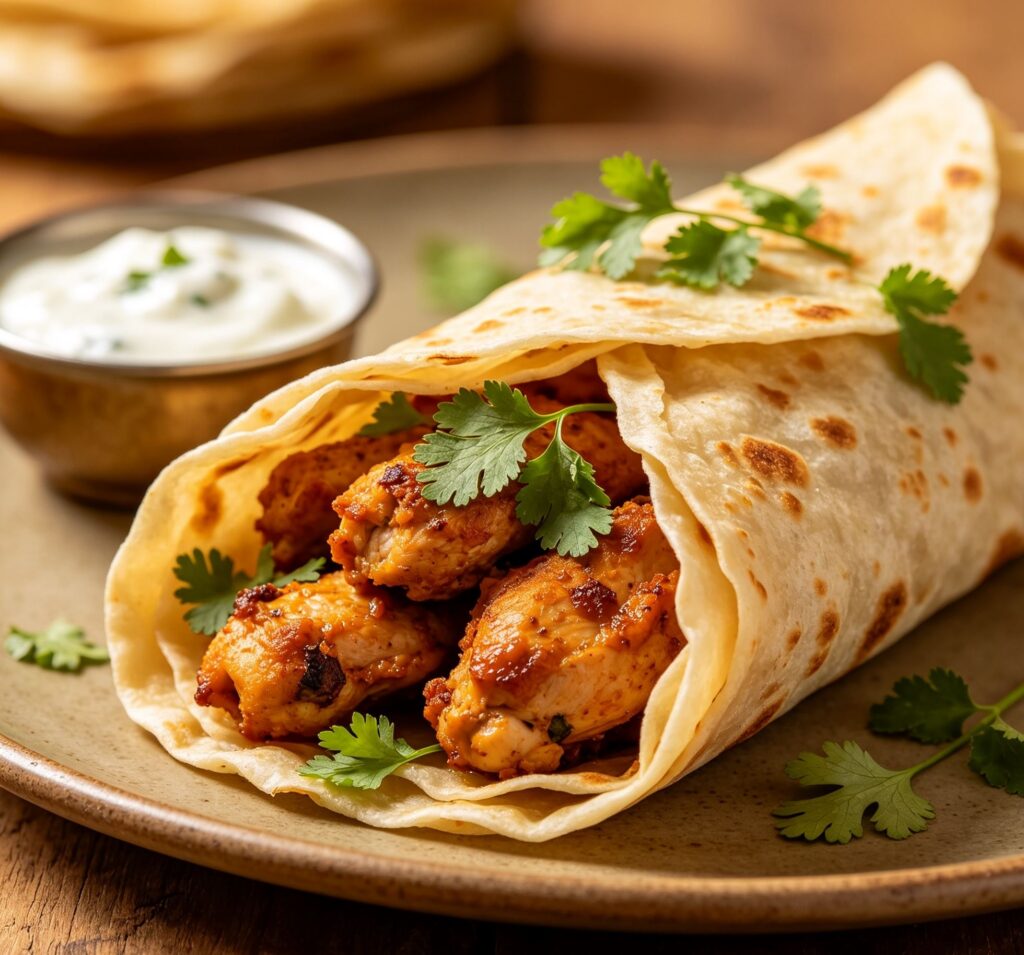
- Spoon the curry chicken filling onto each roti, fold into a wrap or parcel, and serve immediately.
Introduction: Roti arrived in the Caribbean with indentured Indian labourers brought to the region in the 19th century, and though most strongly associated with Trinidad, it has become a beloved lunch staple across Antigua and Barbuda through regional migration and trade.
Cultural Background: Roti arrived in the Caribbean with indentured Indian labourers brought to the region in the 19th century, and though most strongly associated with Trinidad, it has become a beloved lunch staple across Antigua and Barbuda through regional migration and trade. A soft, flaky flatbread is wrapped around a richly spiced curried chicken and potato filling, creating a complete, portable meal popular with office workers and at roadside lunch counters alike. The curry itself is typically milder and slightly sweeter than Indian originals, reflecting Caribbean tastes and locally available spice blends.
Tips: Resting the dough fully before rolling is essential for a soft, pliable roti that won’t tear. Keep the scotch bonnet whole in the curry pot for gentle heat; break it open only if more spice is wanted.
Variations: Chickpeas or pumpkin can be added to the curry for extra texture and heartiness. A vegetable-only curry (potato, pumpkin and chickpea) makes a popular vegetarian r oti.
Vegetarian/Vegan: For a vegetarian or vegan version, replace the chicken with chickpeas and pumpkin, and use vegetable stock and oil in place of chicken stock and any dairy.
Storage: Store curry filling and roti skins separately in airtight containers in the refrigerator for up to 3 days.
Reheating: Reheat curry gently in a covered pot over low heat with a splash of water; warm ro ti skins briefly in a dry skillet or foil in a low oven.
Nutrition: Calories: 560 kcal | Protein: 32 g | Carbohydrates: 58 g | Fat: 21 g | Fibre: 4 g | Sodium: 620 mg
FAQs:
Q: What curry powder should I use?
A: A Caribbean-style curry powder, which tends to include more turmeric and a touch of allspice, gives the most authentic flavour; standard curry powder works as a substitute.
Q: Can the roti dough be made in advance?
A: Yes, it can be prepared and refrigerated, tightly wrapped, up to a day ahead; bring to room temperature before rolling.
- Roti skin:
- All-purpose flour — 500 g (4 cups)
- Baking powder — 2 tsp (2 tsp)
- Salt — 1 tsp (1 tsp)
- Water, approximately — 300 ml (1 1/4 cups)
- Vegetable oil, plus extra for cooking — 2 tbsp (2 tbsp)
- Curry chicken filling:
- Boneless chicken thigh, cut into chunks — 600 g (1.3 lb)
- Vegetable oil — 2 tbsp (2 tbsp)
- Medium onion, chopped — 1
- Garlic, minced — 2 cloves
- Caribbean curry powder — 2 tbsp (2 tbsp)
- Ground cumin — 1/2 tsp (1/2 tsp)
- Medium potatoes, peeled and cubed — 2
- Whole scotch bonnet pepper, left whole — 1
- Water or chicken stock — 400 ml (1 3/4 cups)
- Salt, — to taste
Please log in to leave a comment.