
Chicken Parmigiana
The Quirky Foodster Team
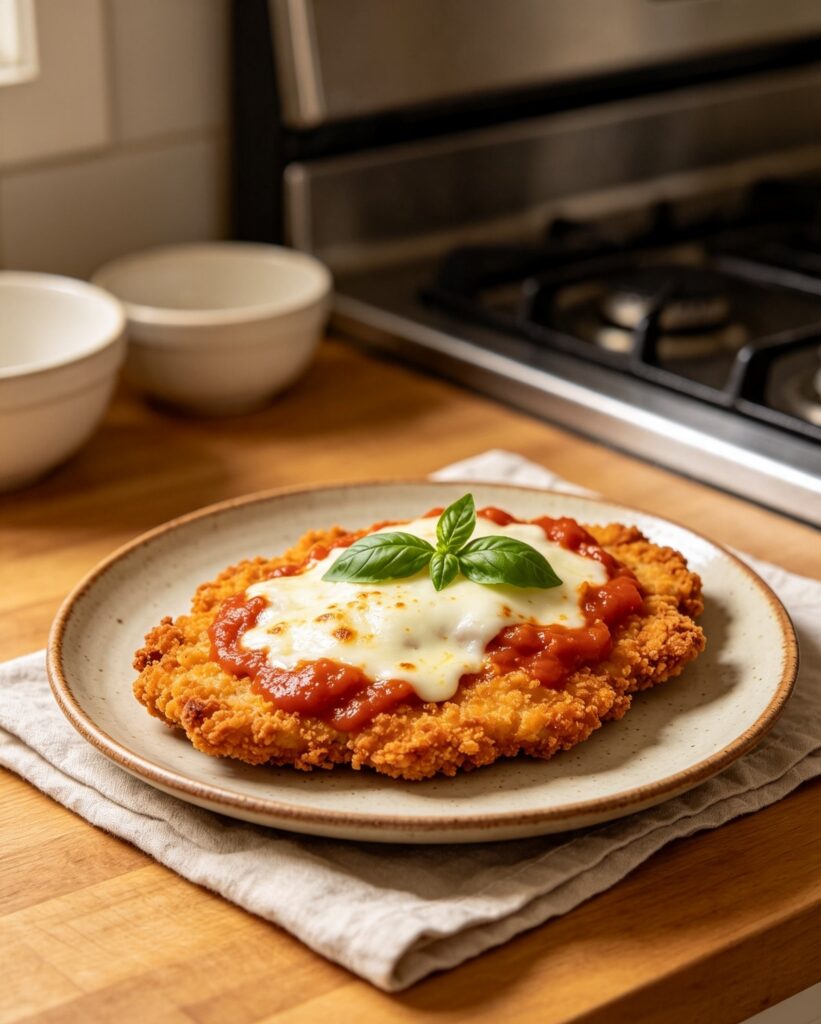
Ingredients
- Chicken breast, butterflied — 2 pieces (300 g / 10.5 oz)
- Plain flour — 60 g (1/2 cup)
- Egg, beaten — 2 eggs
- Breadcrumbs, dry — 100 g (1 cup)
- Tomato passata — 200 ml (3/4 cup)
- Mozzarella cheese, shredded — 100 g (1 cup)
- Ham slices — 2 slices
- Olive oil, for frying — 60 ml (1/4 cup)
- Salt — 1/2 tsp
- Black pepper — 1/4 tsp
Method
- Preheat the oven to 200°C (390°F).
- Season the chicken with salt and pepper, then coat in flour, dip in egg, and press into breadcrumbs.
- Heat olive oil in a frying pan over medium heat and fry the chicken 3-4 minutes per side until golden.
- Transfer chicken to a baking tray, top each piece with tomato passata, a slice of ham, and shredded mozzarella.
- Bake for 10-12 minutes until the cheese is melted and bubbling.
- Serve with chips and a side salad.
Introduction: Known affectionately as a “parma” or “parmi,” this dish is a pub-food institution in Australia, brought by Italian immigrants and adapted into a hearty, distinctly Australian pub lunch.
Cultural Background: Known affectionately as a “parma” or “parmi,” this dish is a pub-food institution in Australia, brought by Italian immigrants and adapted into a hearty, distinctly Australian pub lunch. It’s often the centrepiece of “parma night” specials at local pubs across the country.
Tips: Butterfly the chicken evenly for consistent cooking. Let the crumbed chicken rest for 5 minutes before frying to help the coating stick.
Variations: Some versions skip the ham for a simpler “parma.” Add fresh basil on top before serving for extra freshness.
Storage: Refrigerate in an airtight container for up to 2 days.
Reheating: Reheat in an oven at 180°C (350°F) for 10-12 minutes until warmed through and crisp.
Nutrition: Calories: 620 kcal | Protein: 48 g | Carbs: 32 g | Fat: 32 g | Sodium: 890 mg
FAQs:
Q: What’s the difference between a parma and parmigiana?
A: They’re the same dish — “parma” is simply the common Australian nickname.
Q: Can I use chicken thighs instead?
A: Yes, though breast is more traditional for a classic parma.
- Chicken breast, butterflied — 2 pieces (300 g / 10.5 oz)
- Plain flour — 60 g (1/2 cup)
- Egg, beaten — 2 eggs
- Breadcrumbs, dry — 100 g (1 cup)
- Tomato passata — 200 ml (3/4 cup)
- Mozzarella cheese, shredded — 100 g (1 cup)
- Ham slices — 2 slices
- Olive oil, for frying — 60 ml (1/4 cup)
- Salt — 1/2 tsp
- Black pepper — 1/4 tsp
Please log in to leave a comment.