
Holidays & Special Occasions
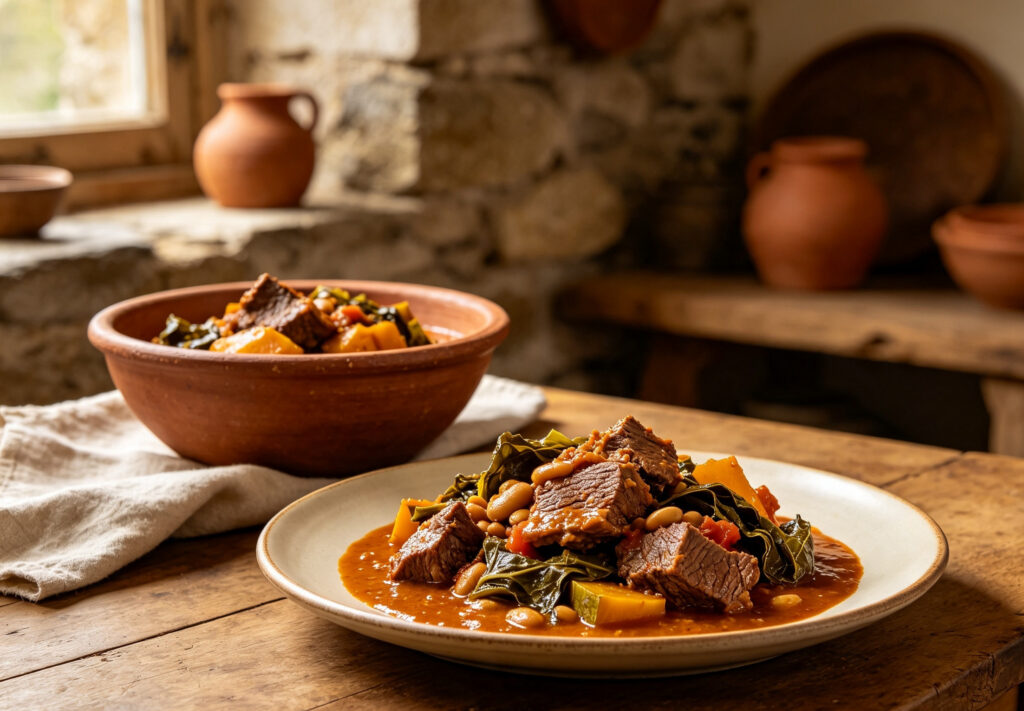
Chibwabwa ne Nyama
Ingredients
- 800 g (1.75 lb) beef or goat meat, cut into chunks
- 3 tbsp vegetable oil
- 1 onion, chopped
- 3 garlic cloves, minced
- 3 tomatoes, chopped
- 500 g (1 lb) pumpkin leaves, shredded (substitute spinach if unavailable)
- 120 g (1/2 cup) smooth groundnut (peanut) paste
- 500 ml (2 cups) beef stock or water
- 1 bay leaf
- 1 red chilli, finely chopped (optional)
- Salt and pepper, to taste
Method
- Heat the oil in a large pot over medium-high heat and brown the meat on all sides, about 8-10 minutes. Remove and set aside.
- In the same pot, sauté the onion and garlic until softened, about 4 minutes. Add the tomatoes, cooking until softened, about 6 minutes.
- Return the meat to the pot, add the stock or water and bay leaf, and bring to a simmer. Cover and cook over low heat for 1 hour to 1 hour 15 minutes, until the meat is very tender.
- Add the shredded pumpkin leaves and chilli if using, and simmer for a further 10-12 minutes until tender.
- Ladle a little of the hot cooking liquid into a bowl with the groundnut paste and whisk until smooth, then stir this mixture back into the pot.
- Simmer uncovered for a further 8-10 minutes, stirring occasionally, until the sauce thickens. Season with salt and pepper, remove the bay leaf, and serve hot with nshima.
Introduction: A generous harvest-season celebration dish, chibwabwa ne nyama pairs tender, richly seasoned meat with pumpkin leaves cooked in a creamy groundnut sauce, traditionally prepared to mark good harvests and family celebrations, reflecting Zambia’s deep agricultural roots.
Cultural Background: A generous harvest-season celebration dish, chibwabwa ne nyama pairs tender, richly seasoned meat with pumpkin leaves cooked in a creamy groundnut sauce, traditionally prepared to mark good harvests and family celebrations, reflecting Zambia’s deep agricultural roots.
Tips: Browning the meat thoroughly at the start builds a deeper, more festive flavour. Tempering the groundnut paste with hot liquid before adding it prevents lumps in the sauce. This dish is traditionally made in generous quantities to share among family and community at harvest celebrations.
Variations: Use goat meat in place of beef for a traditional regional variation. Add dried kapenta alongside the meat for a layered, traditional protein combination. Serve with a side of nshima and a fresh tomato relish for a complete celebratory spread. Not applicable in its traditional form; the dish is defined by its combination of meat, pumpkin leaves and groundnut sauce.
Storage: Refrigerate in an airtight container for up to 3 days, or freeze for up to 2 months.
Reheating: Reheat gently on the stovetop over low heat, stirring frequently and adding a splash of water if the sauce has thickened too much.
Nutrition: Per serving (approx.): 460 kcal, 33 g protein, 15 g carbohydrates, 30 g fat, 5 g fibre.
FAQs:
Q: What occasion is this dish traditionally served for?
A: It’s especially associated with harvest celebrations and family gatherings, given its generous, feast-style preparation.
Q: Can I use chicken instead of beef or goat?
A: Yes, though beef and goat are more traditional for this particular celebratory dish.
Q: Is this dish meant to be shared?
A: Yes, it’s traditionally prepared in large quantities and served communally at gatherings.
Please log in to leave a comment.