
Chapati (Chapati)
The Quirky Foodster Team
Ingredients
- Plain flour, plus extra for dusting — 500 g (4 cups)
- Salt — 1 tsp
- Sugar — 1 tbsp
- Warm water — 300 ml (1 1/4 cups)
- Sunflower oil, plus extra for cooking and layering — 3 tbsp (45 ml)
Method
- Mix the flour, salt and sugar in a large bowl.
- Gradually add the warm water and 3 tbsp oil, mixing into a soft dough.
- Knead for 8–10 minutes until smooth and elastic, then cover and rest for 30 minutes.
- Divide the dough into 8 pieces. Roll each piece into a thin circle, brush lightly with oil, then roll up into a tight spiral and coil into a bun shape; rest for 10 minutes.
- Roll each coiled bun back out into a flat circle, about 18 cm (7 in) across.
- Heat a lightly oiled non-stick skillet or griddle over medium heat.
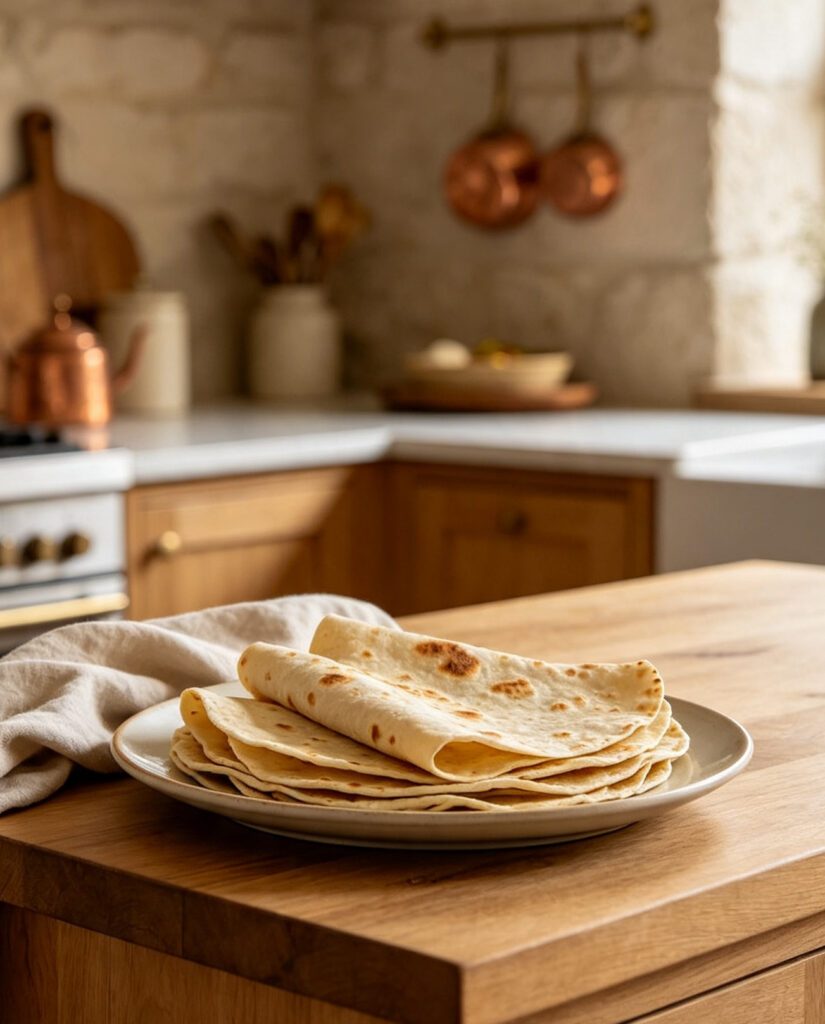
- Cook each chapati for 2–3 minutes per side, pressing gently with a spatula and brushing with a little extra oil, until golden brown with visible flaky layers.
- Stack and keep warm, wrapped in a clean towel, while you cook the rest.
Introduction: Chapati, a soft, flaky flatbread introduced through Indian influence, has become deeply woven into
everyday Tanzanian cooking, served alongside stews, beans, and curries at nearly every meal, especially
popular for breakfast or as an accompaniment to mchuzi.
Cultural Background: Chapati, a soft, flaky flatbread introduced through Indian influence, has become deeply woven into
everyday Tanzanian cooking, served alongside stews, beans, and curries at nearly every meal, especially
popular for breakfast or as an accompaniment to mchuzi.
Tips: Rolling the dough into a spiral before rolling it out flat is what creates chapati's characteristic soft, flaky layers. Cook over medium heat so the chapati cooks through without burning before the layers have a chance to develop.
Variations: Add a little grated coconut to the dough for a subtly sweet, coastal-style variation. Brush with melted butter as soon as they come off the griddle for extra richness. Naturally vegetarian.
Storage: Store in an airtight container or wrapped in foil at room temperature for up to 2 days.
Reheating: Reheat in a dry skillet for 1 minute per side, or wrap in foil and warm in a 180°C (350°F) oven for 5
minutes.
FAQs:
Q: What makes chapati flaky?
A: Rolling the dough into a spiral before flattening creates thin layers that separate slightly as it cooks.
Q: Can I make the dough ahead?
A: Yes, the dough can rest in the refrigerator for a few hours; bring to room temperature before shaping and cooking.
Q: What is chapati typically eaten with?
A: Bean stews, curries like mchuzi wa samaki, or simply with tea for breakfast.
- Plain flour, plus extra for dusting — 500 g (4 cups)
- Salt — 1 tsp
- Sugar — 1 tbsp
- Warm water — 300 ml (1 1/4 cups)
- Sunflower oil, plus extra for cooking and layering — 3 tbsp (45 ml)
Please log in to leave a comment.