
Breads
Cassava Flatbread (Kasav)
The Quirky Foodster Team
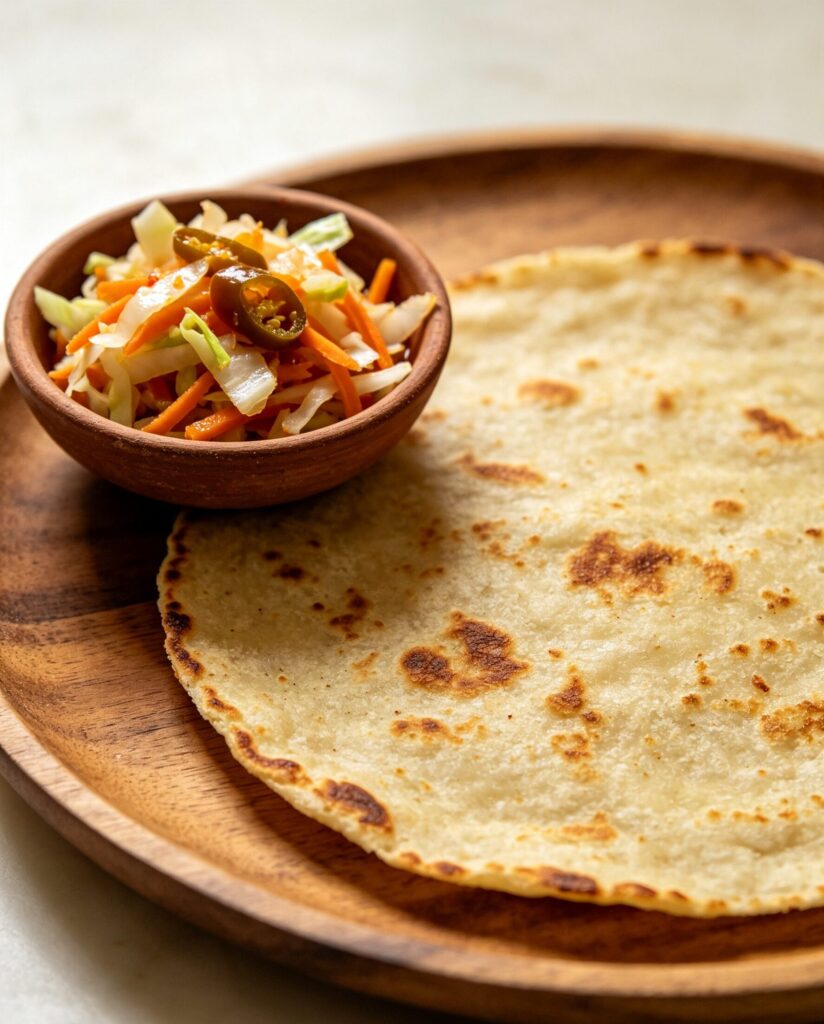
Ingredients
- 500 g (about 4 cups) bitter or sweet cassava, peeled and grated
- 1/2 tsp salt
- 2 tbsp grated coconut (optional)
Method
- Grate the cassava finely using a box grater or food processor.
- Wrap the grated cassava in cheesecloth and squeeze firmly to remove as much liquid as possible.
- If using bitter cassava, let the extracted liquid settle and discard the top layer, as it can contain natural toxins; only sweet cassava starch and pulp should be used, or use sweet cassava throughout for safety.
- Mix the dried cassava pulp with salt and grated coconut, if using.
- Heat a heavy, ungreased skillet or griddle over medium heat.
- Spread a thin, even layer of the cassava mixture across the skillet to form a round flatbread.
- Cook for 5-6 minutes until the underside is lightly browned and set, then carefully flip and cook the other side for 4-5 minutes.
- Remove and let cool slightly; the flatbread will crisp further as it cools.
Introduction: An unleavened flatbread made from grated cassava root, kasav traces its origins to the indigenous Taíno people of Hispaniola and remains a traditional accompaniment across rural Haiti, valued for its long shelf life and simple, earthy flavour.
Cultural Background: An unleavened flatbread made from grated cassava root, kasav traces its origins to the indigenous Taíno people of Hispaniola and remains a traditional accompaniment across rural Haiti, valued for its long shelf life and simple, earthy flavour.
Tips: Press the grated cassava as dry as possible before cooking; excess moisture prevents the flatbread from crisping properly.
Variations: A touch of sugar can be worked into the mixture for a slightly sweet version enjoyed as a snack.
Storage: Store in an airtight container at room temperature for up to 1 week, as its low moisture content gives it a long shelf life.
Reheating: Warm briefly in a dry skillet or toaster oven to restore crispness.
Nutrition: Approx. 160 kcal, 1 g protein, 1 g fat, 38 g carbohydrate, 2 g fibre per serving.
FAQs:
Q: Is cassava safe to eat raw or undercooked?
A: Bitter cassava varieties contain natural toxins that must be removed by grating, pressing and cooking thoroughly; sweet cassava is safer and simpler to prepare at home.
Q: What is kasav traditionally eaten with?
A: It is often eaten on its own as a snack, or alongside peanut butter, avocado, or savoury stews.
Please log in to leave a comment.