
Buuz
The Quirky Foodster Team
Ingredients
- Plain flour — 3 cups (375 g / 13 oz)
- Water, plus more as needed — 1 cup (240 ml / 8 fl oz)
- Minced mutton or beef — 500 g (1 lb 2 oz)
- Onion, finely chopped — 1
- Garlic, minced — 2 cloves
- Salt and pepper — to taste
- Caraway seeds — 1 tsp (optional)
Method
- Combine the flour and water to form a smooth, firm dough; rest for 20 minutes.
- Mix the minced meat with the onion, garlic, salt, pepper and caraway seeds if using.
- Divide the dough into small balls and roll each into a thin round.
- Place a spoonful of filling in the centre of each round.
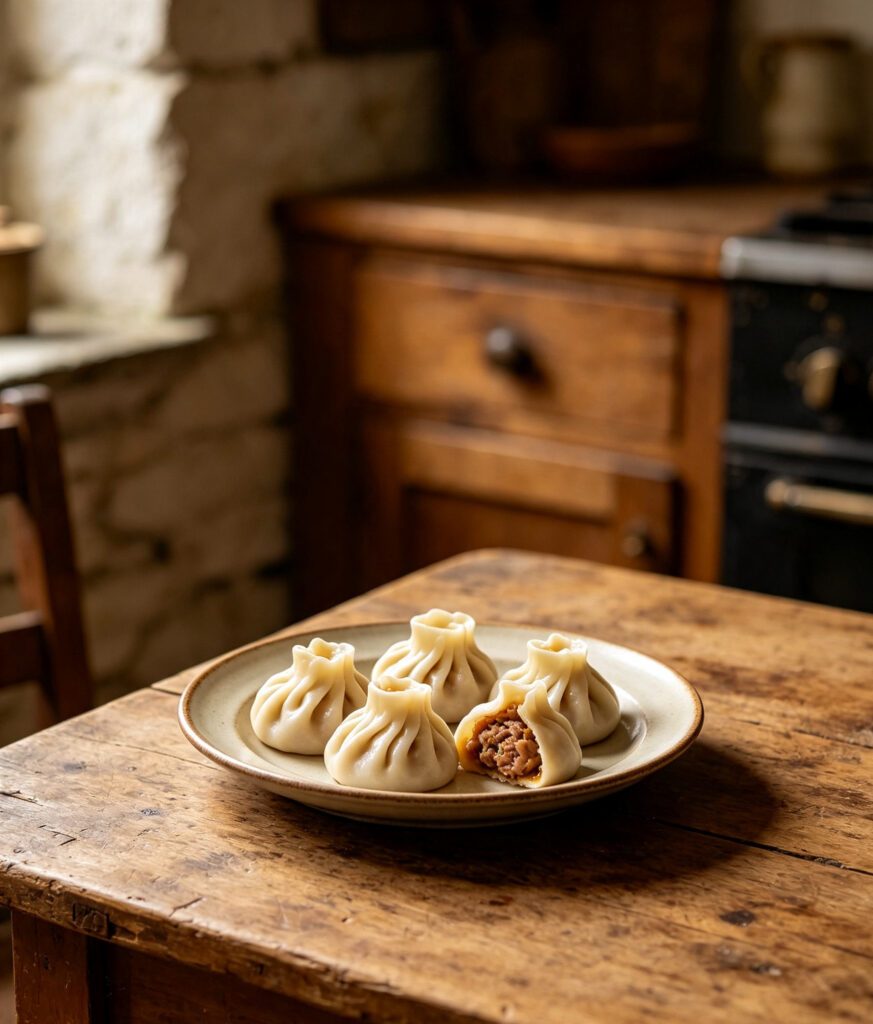
- Gather the edges up and pleat them together at the top, pinching to seal into a small pouch shape.
- Arrange the buuz in a lightly oiled steamer, leaving space between each.
- Steam for 15–20 minutes until the dough is cooked through and the filling is hot.
Introduction: Plump steamed dumplings filled with seasoned minced mutton or beef, pinched at the top into a distinctive pleated shape.
Cultural Background: Buuz are especially associated with Tsagaan Sar, when families gather to make thousands at a time, but they are also enjoyed year-round as a filling everyday lunch, the pleated fold a mark of a cook’s skill.
Tips: Keep the filling well-seasoned, as it is the main source of flavour in this simple dish. Leave a small space between dumplings in the steamer so they don’t stick together.
Variations: Make smaller versions called bansh for soup. Add finely chopped cabbage to the filling for extra moisture and texture.
Storage: Refrigerate cooked buuz in an airtight container for up to 2 days, or freeze uncooked for longer storage.
Reheating: Reheat by steaming for 8–10 minutes until warmed through.
Nutrition: Per serving (approx., 4 pieces): 380 kcal, 22 g protein, 16 g fat, 38 g carbohydrate.
FAQs:
Q: Can buuz be frozen?
A: Yes, freeze uncooked dumplings on a tray, then transfer to a bag; steam
Q: Why is buuz especially linked to Tsagaan Sar?
A: Families traditionally prepare huge batches
- Plain flour — 3 cups (375 g / 13 oz)
- Water, plus more as needed — 1 cup (240 ml / 8 fl oz)
- Minced mutton or beef — 500 g (1 lb 2 oz)
- Onion, finely chopped — 1
- Garlic, minced — 2 cloves
- Salt and pepper — to taste
- Caraway seeds — 1 tsp (optional)
Please log in to leave a comment.