
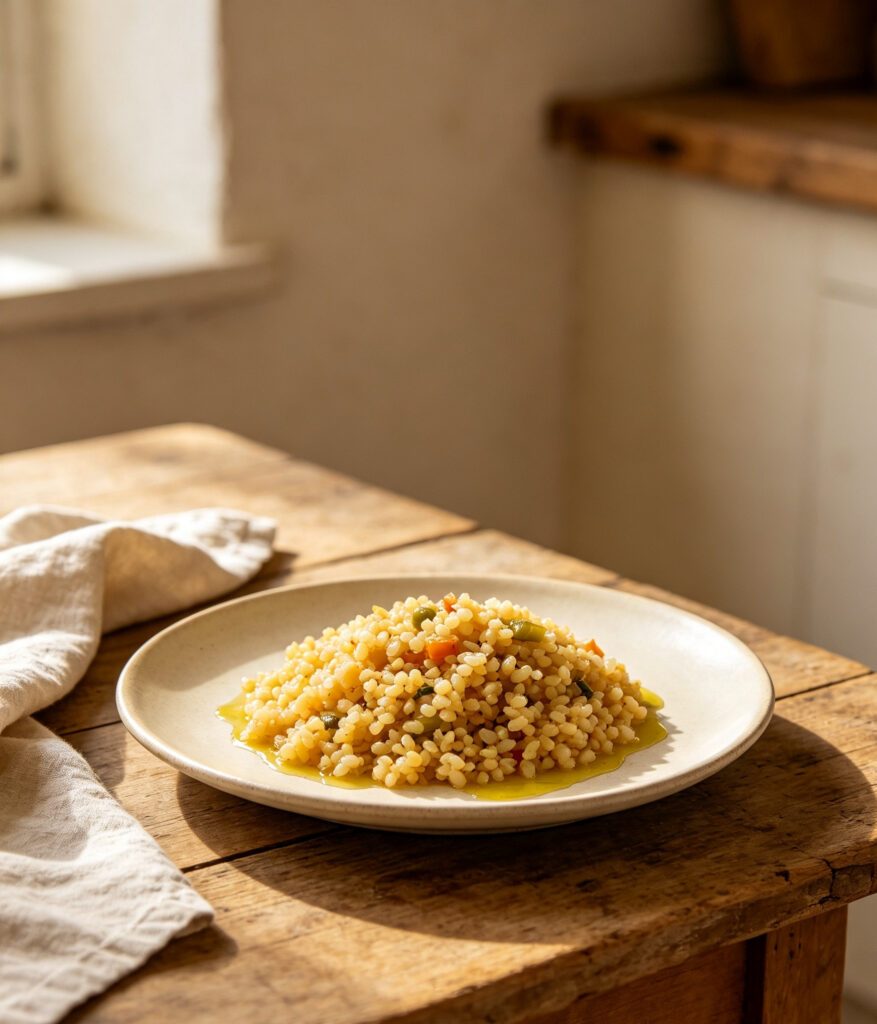
Bulgur Pilavı (Turkish Bulgur Pilaf)
The Quirky Foodster Team
Ingredients
- Olive oil or butter — 3 tbsp (45 ml)
- Onion, finely chopped — 1
- Green pepper, diced — 1
- Tomato, diced (or 1 tbsp tomato paste) — 1
- Coarse bulgur, rinsed — 250 g (1 1/3 cups)
- Hot vegetable or chicken stock — 500 ml (2 cups)
- Salt — 1 tsp
- Black pepper — 1/4 tsp
Method
- Heat the oil in a medium pot over medium heat and fry the onion for 4–5 minutes until softened.
- Add the green pepper and cook for 3 minutes, then add the tomato and cook for a further 3–4 minutes until softened.
- Stir in the bulgur and toast for 1–2 minutes, stirring, until lightly coated in oil.
- Pour in the hot stock, season with salt and pepper, and bring to a simmer.
- Cover, reduce the heat to low, and cook for 15 minutes without stirring, until the liquid is absorbed and the bulgur is tender.
- Remove from the heat, place a clean kitchen towel under the lid, and let rest for 10 minutes before fluffing with a fork.
Introduction: Bulgur pilavı, made from cracked wheat rather than rice, is a nutty, hearty side dish especially popular in
southeastern Turkey, often served alongside grilled meats or stews as a wholesome alternative to rice
pilaf.
Cultural Background: Bulgur pilavı, made from cracked wheat rather than rice, is a nutty, hearty side dish especially popular in
southeastern Turkey, often served alongside grilled meats or stews as a wholesome alternative to rice
pilaf.
Tips: Letting the pilaf rest, covered, off the heat gives fluffier, less sticky grains. Toasting the bulgur briefly in the oil before adding liquid deepens its nutty flavour.
Variations: Add cooked chickpeas for extra protein and texture. Stir through toasted pine nuts just before serving. Naturally vegan and vegetarian when made with vegetable stock.
Storage: Refrigerate in an airtight container for up to 3 days.
Reheating: Reheat in a covered pot over low heat with a splash of water, or in the microwave, stirring halfway.
FAQs:
Q: What's the difference between bulgur and rice pilaf?
A: Bulgur pilaf has a nuttier, chewier texture and is made from cracked wheat rather than rice.
Q: Can I use fine bulgur instead of coarse?
A: Coarse bulgur is traditional for pilaf; fine bulgur cooks much faster and gives a softer texture, more suited to other dishes like kısır.
Q: What does it pair with?
A: Grilled meats, stews, or as a side to köfte.
- Olive oil or butter — 3 tbsp (45 ml)
- Onion, finely chopped — 1
- Green pepper, diced — 1
- Tomato, diced (or 1 tbsp tomato paste) — 1
- Coarse bulgur, rinsed — 250 g (1 1/3 cups)
- Hot vegetable or chicken stock — 500 ml (2 cups)
- Salt — 1 tsp
- Black pepper — 1/4 tsp
Please log in to leave a comment.