
Bread with Butter and Cheese
The Quirky Foodster Team
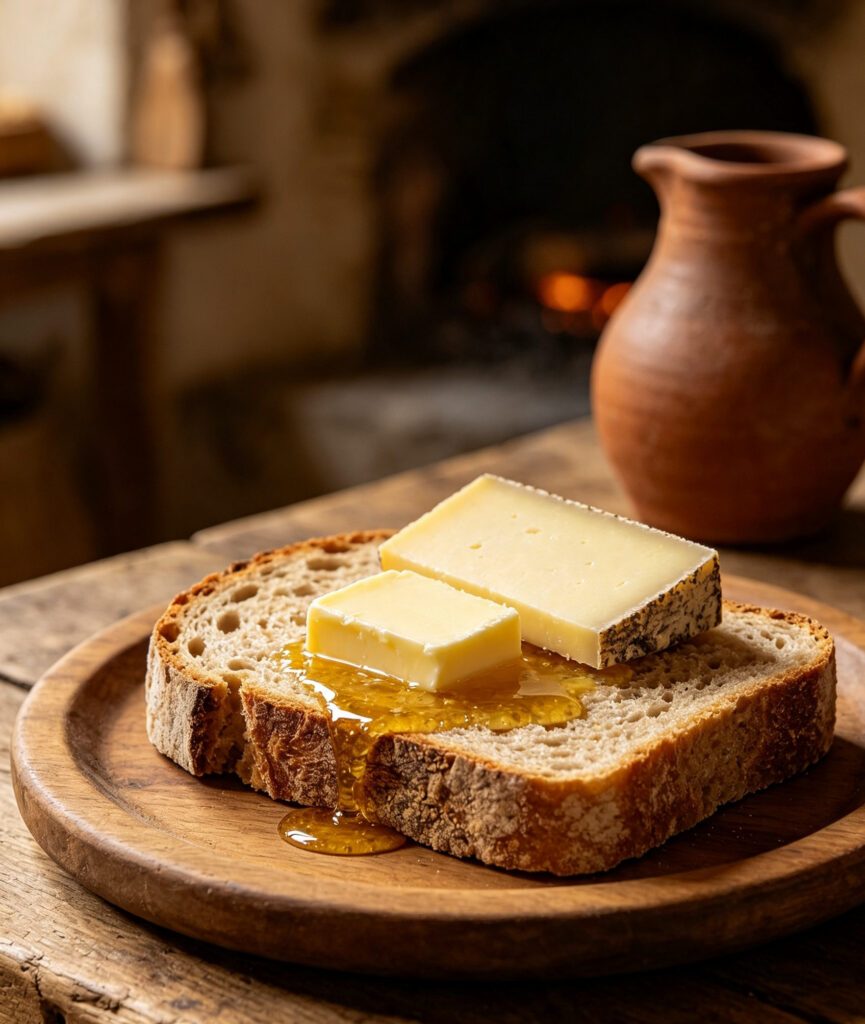
Ingredients
- Barley flatbread (see Breads section) — 1
- Butter — 2 tbsp
- Firm cheese — 100 g (3.5 oz)
Method
- Slice or break the flatbread into portions.
- Spread generously with butter while the bread is still warm.
- Serve alongside a portion of firm cheese.
Introduction: A simple lunch of griddle-baked bread spread with butter and served alongside firm cheese, combining two of the most notably documented foods of Gallic diet.
Cultural Background: Gallic hams and cheeses were reputed enough to be exported to Rome, referenced by later Roman writers on food such as Pliny the Elder, and Gallic butter use is separately documented by the same author as a distinctive dairy practice; pairing bread, butter and cheese into one simple lunch reflects genuinely well-attested individual foods, though the specific combination is a reasonable reconstruction rather than one directly named period dish.
Tips: – Butter spreads best on bread that is still warm from the griddle. – A firmer, well-aged cheese suits this simple pairing well.
Variations: – Naturally vegetarian; not vegan, due to the butter and cheese. – A little honey can be added alongside for a sweeter version of the same simple meal.
Storage: Store bread and cheese separately; bread keeps 1-2 days wrapped at room temperature, cheese keeps refrigerated for up to 4 days.
Reheating: Warm the bread briefly on a dry griddle for 1-2 minutes if desired; the cheese is served cold or at room temperature.
Nutrition: Per serving (approx.): 310 kcal, 10 g protein, 28 g carbohydrate, 18 g fat.
FAQs:
Q: Were Gallic cheeses really exported to Rome?
A: Yes, Gallic hams and cheeses were reputed enough among Roman writers on food, including Pliny the Elder, to be specifically noted as export goods valued in Rome itself.
Q: Is this pairing directly named in a period source?
A: No single Roman or Greek source names this exact combination; it reconstructs a plausible everyday meal from Gaul’s separately well-documented bread, butter and cheese traditions.
- Barley flatbread (see Breads section) — 1
- Butter — 2 tbsp
- Firm cheese — 100 g (3.5 oz)
Please log in to leave a comment.