
Lunches
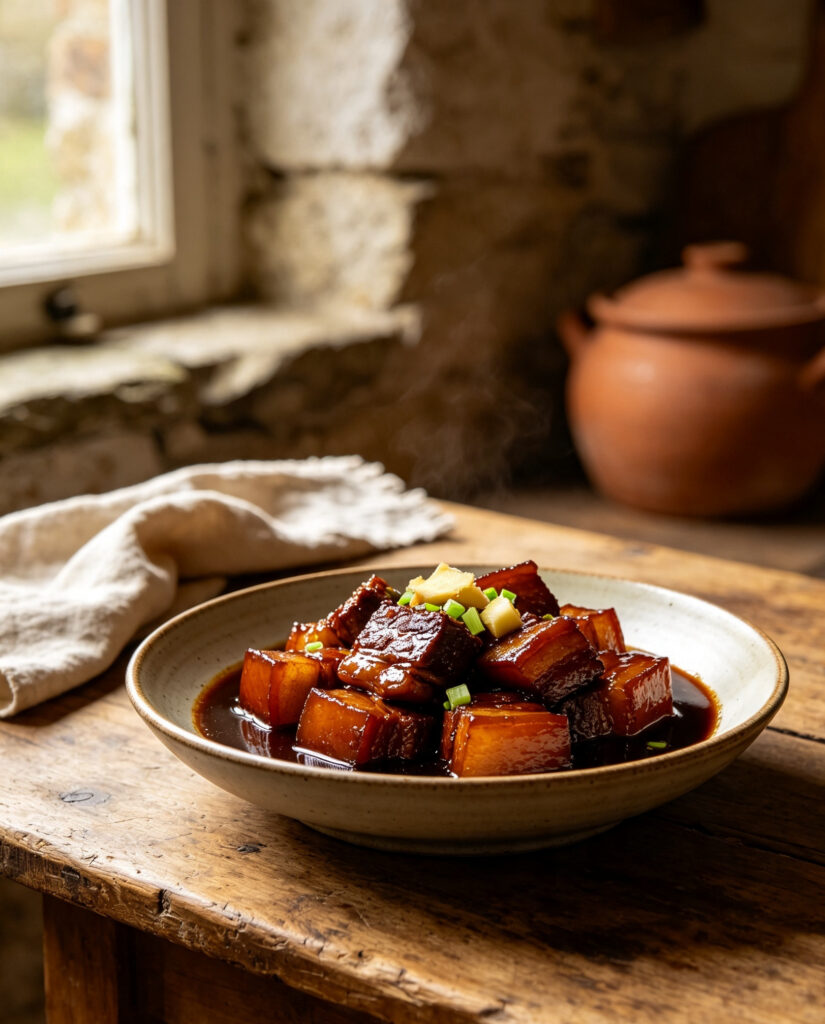
Braised Pork with Soy and Wine (红烧肉 (Hóngshāo Ròu))
sjfegan
Ingredients
- 800g Pork belly, cut into chunks
- 120ml (1/2 cup) Soy sauce
- 120ml (1/2 cup) Rice wine
- 2 tbsp honey
- 3 slices fresh ginger
- 2 star anise
- 480ml (2 cups) Water
Method
- Blanch the pork belly chunks in boiling water for 3–4 minutes to remove impurities; drain and rinse.
- Combine the blanched pork with the soy sauce, rice wine, honey, ginger, star anise and water in a heavy pot.
- Bring to a boil, then reduce to a low simmer, cover, and cook for 1.5–2 hours, stirring occasionally, until the pork is very tender and the sauce has reduced and thickened.
- Remove the ginger and star anise before serving hot with grain or rice.
Introduction: Pork belly slowly braised in soy sauce and rice wine until deeply tender and glossy, a dish with roots reaching back into ancient Chinese cooking practice.
Cultural Background: Braising meat slowly in fermented soy and wine reflects some of the earliest recorded Chinese culinary techniques, this rich, savoury preparation representing a dish of relative luxury reserved for those with access to meat.
Tips: Blanching the pork first removes impurities and results in a cleaner-tasting braise. Simmer low and slow for the full time — this patient cooking is what develops the dish’s deep, glossy richness.
Variations: Add a few hard-boiled eggs to the braise in the final 30 minutes to absorb the sauce. Adjust the honey for a more or less pronounced sweetness.
Storage: Refrigerate in an airtight container for up to 4 days; the flavour often improves the next day.
Reheating: Reheat gently on the stovetop over low heat, stirring occasionally, until hot throughout.
Nutrition: Per serving (approx.): 480 kcal, 24 g protein, 38 g fat, 10 g carbohydrate.
FAQs:
Q: How old is red-braised pork as a technique?
A: Braising meats in soy-based liquids has roots in ancient Chinese cooking practice, with the specific dish evolving over centuries into the version enjoyed today.
Q: Was pork commonly eaten in ancient China?
A: Pork was an important meat, though it was more accessible to those with greater means; grains and vegetables formed the bulk of the ordinary diet.
Please log in to leave a comment.