
Bibingka
The Quirky Foodster Team
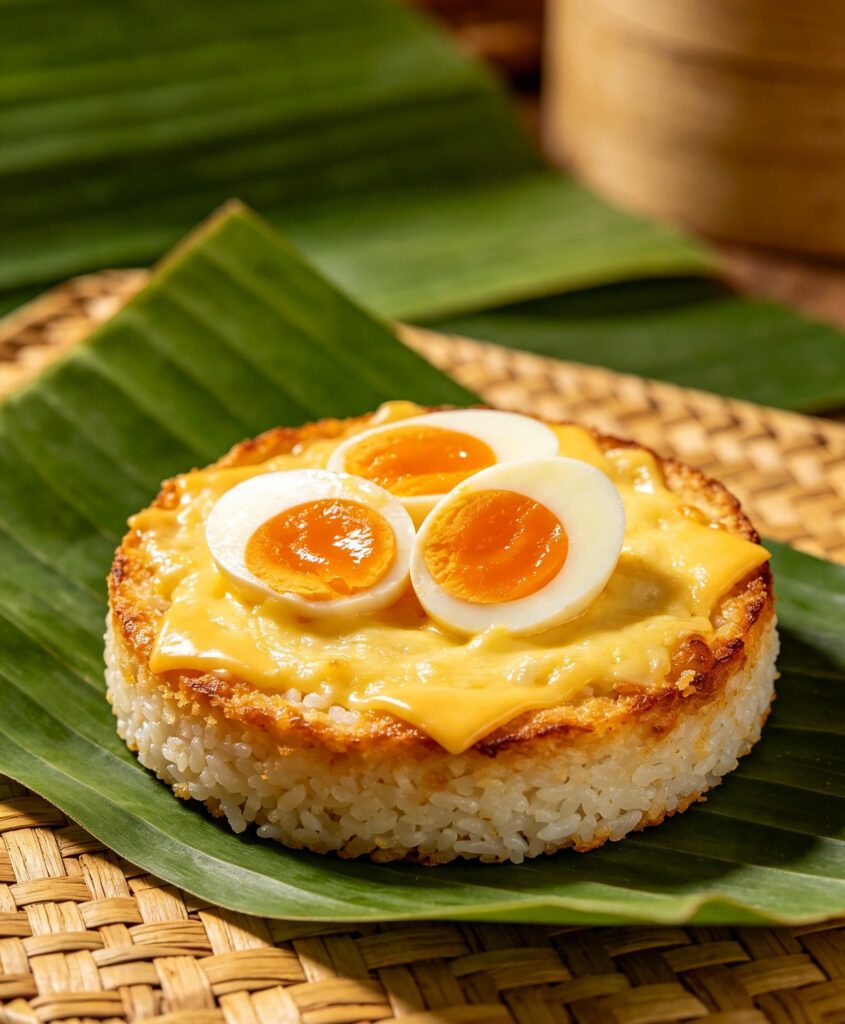
Ingredients
- Rice flour — 250 g (9 oz)
- Baking powder — 1 tbsp
- Sugar — 100 g (3.5 oz)
- Coconut milk — 360 ml (12 fl oz)
- Eggs — 2
- Melted butter, plus extra for brushing — 60 g (2 oz)
- Banana leaves, for lining
- Salted egg slices, for topping — 2
- Grated cheese, for topping — 25 g (1 oz)
- Grated coconut, to garnish
Method
- Preheat the oven to 190°C (375°F).
- Line the baking pans with banana leaves, lightly toasted over a flame if possible for extra aroma.
- Whisk together the rice flour, baking powder and sugar in a bowl.
- Add the coconut milk, eggs and melted butter, whisking until smooth.
- Pour the batter into the lined pans.
- Bake for 15 minutes, then top with slices of salted egg and grated cheese.
- Continue baking for a further 10–15 minutes until set and lightly golden.
- Brush with a little extra melted butter and sprinkle with grated coconut before serving warm.
Introduction: A soft, slightly charred rice cake baked traditionally over hot coals in a clay pot, a beloved treat especially associated with the Christmas season and Simbang Gabi.
Cultural Background: Bibingka is inseparable from the Filipino Christmas season, sold outside churches during Simbang Gabi (the nine-day pre-Christmas dawn masses), its warm, comforting sweetness a cherished part of the holiday tradition.
Tips: Toasting the banana leaves briefly over a flame before lining the pans imparts extra fragrance to the finished bibingka, a traditional touch. Traditional bibingka is cooked with heat from both above and below (using hot coals); a hot oven approximates this well at home.
Variations: Add a sprinkle of muscovado sugar on top for extra caramelised sweetness. Serve fresh and warm, straight from the pan, as is traditional when sold outside churches during Simbang Gabi.
Storage: Store cooled bibingka in an airtight container at room temperature for up to 1 day.
Reheating: Reheat briefly in an oven at 160°C (325°F) for 5–8 minutes to warm through.
FAQs:
Q: What is Simbang Gabi?
A: A series of nine dawn masses leading up to Christmas, a beloved Filipino Catholic tradition, with bibingka traditionally sold and enjoyed by attendees afterward.
Q: Why is bibingka baked in banana leaves?
A: The leaves impart a subtle fragrance and prevent sticking, an essential part of the traditional preparation.
- Rice flour — 250 g (9 oz)
- Baking powder — 1 tbsp
- Sugar — 100 g (3.5 oz)
- Coconut milk — 360 ml (12 fl oz)
- Eggs — 2
- Melted butter, plus extra for brushing — 60 g (2 oz)
- Banana leaves, for lining
- Salted egg slices, for topping — 2
- Grated cheese, for topping — 25 g (1 oz)
- Grated coconut, to garnish
Please log in to leave a comment.