
Bibimbap (Mixed Rice with Vegetables)
The Quirky Foodster Team
Ingredients
- Cooked rice bowls (about 400 g / 14 oz cooked short-grain rice) — 2
- Beef bulgogi-style strips (or minced beef), pan-fried — 100 g (3.5 oz)
- Medium carrot, julienned and quickly sautéed — 1
- Courgette (zucchini), julienned and quickly sautéed — 1
- Fresh spinach, blanched and seasoned with sesame oil and salt — 100 g (3.5 oz)
- Soybean sprouts, blanched and seasoned — 100 g (3.5 oz)
- Dried shiitake mushrooms, soaked, sliced and sautéed — 4–6
- Large eggs, fried sunny-side up — 2
- Gochujang (Korean chilli paste) — 2–3 tbsp (45 g)
- Sesame oil, for serving — 1 tbsp (15 ml)
- Toasted sesame seeds — 1 tsp
Method
- Prepare each vegetable separately: sauté the carrot and courgette individually in a lightly oiled pan with a pinch of salt until just tender; blanch the spinach and bean sprouts separately in boiling water, then squeeze dry and toss each with a little sesame oil and salt.
- Sauté the soaked shiitake slices in a touch of oil and soy sauce until fragrant.
- Cook the beef in the same pan until browned and just cooked through, seasoning lightly with soy sauce and a pinch of sugar.
- Fry the eggs sunny-side up, keeping the yolks runny.
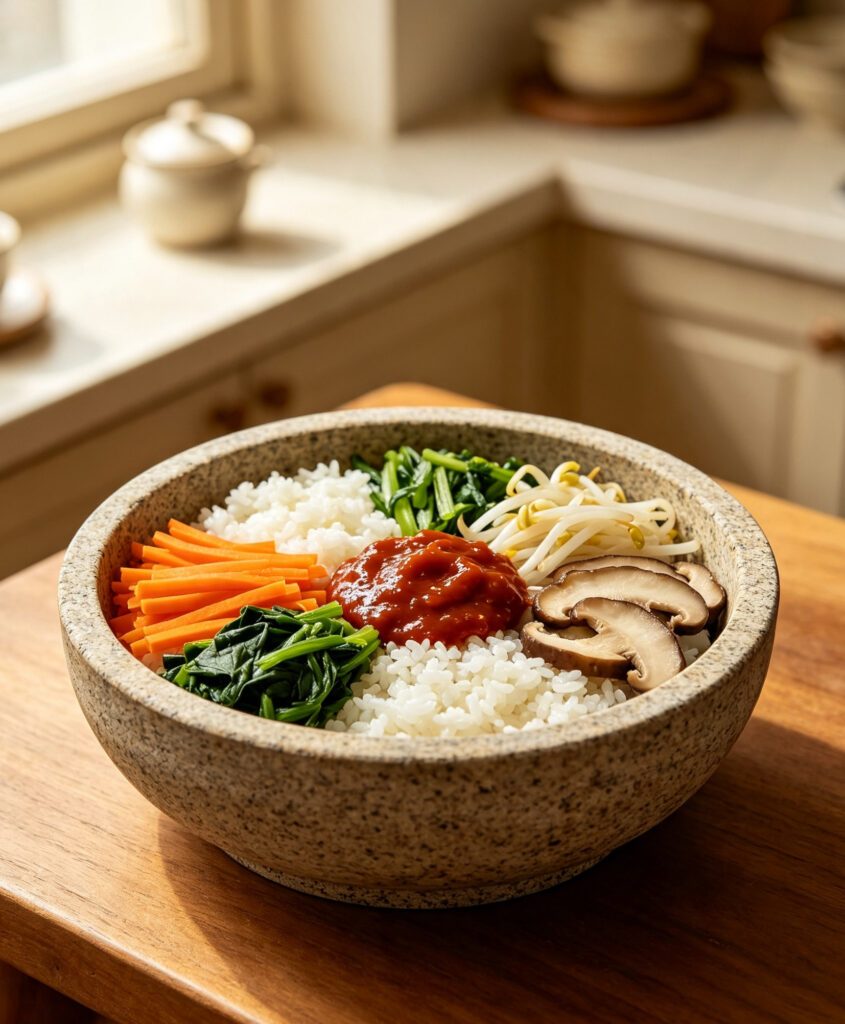
- Divide the warm rice between two bowls and arrange the vegetables, mushrooms and beef in separate sections on top, keeping their colours distinct.
- Top each bowl with a fried egg, a generous spoonful of gochujang and a drizzle of sesame oil, then scatter with sesame seeds. Mix everything together thoroughly just before eating.
Introduction: Bibimbap means 'mixed rice', and its Jeonju version — layering rice with an array of seasoned vegetables, meat and a fried egg around a spoonful of gochujang — is the most internationally recognised of all Korean dishes.
Cultural Background: Bibimbap means 'mixed rice', and its Jeonju version — layering rice with an array of seasoned vegetables, meat and a fried egg around a spoonful of gochujang — is the most internationally recognised of all Korean dishes. It began as a practical way to use up small amounts of leftover banchan (side dishes) and has since become a celebrated symbol of Korean cuisine's balance of colour, texture and nutrition.
Tips: Keep each topping separate while cooking and arranging — the visual contrast of colours is part of the dish's appeal before it's all stirred together. For the authentic dolsot (stone bowl) version, heat the empty stone bowl until very hot, oil it lightly, then assemble the bibimbap inside it so the rice crisps against the hot sides.
Variations: Dolsot bibimbap: assemble in a very hot stone bowl for a crispy scorched-rice bottom (nurungji). Jeyuk bibimbap: replace the beef with spicy stir-fried pork. Omit the beef and add extra sautéed mushrooms (shiitake and king oyster work well); swap the egg for a fried tofu slice for a fully vegan bowl.
Storage: Store components separately in airtight containers in the fridge for up to 2 days; do not mix with rice until ready to eat.
Reheating: Reheat the rice and cooked toppings separately in a microwave or pan; assemble with a freshly fried egg and fresh gochujang.
Nutrition: Calories: 560 kcal | Protein: 28 g | Carbs: 62 g | Fat: 21 g | Fibre: 7 g | Sodium: 760 mg Per serving with beef; estimate only.
FAQs:
Q: What can I use instead of gochujang?
A: There's no true substitute for its flavour, but in a pinch, mix regular chilli paste with a little miso and sugar; genuine gochujang is worth sourcing for an authentic result.
Q: Do all the vegetables need to be cooked separately?
A: Yes — cooking and seasoning each vegetable on its own is what gives bibimbap its distinct layers of flavour rather than one blended taste.
Q: Is bibimbap traditionally served hot or cold?
A: It is served warm, though the vegetables themselves are typically served at room temperature rather than piping hot, except in the sizzling stone-bowl version.
- Cooked rice bowls (about 400 g / 14 oz cooked short-grain rice) — 2
- Beef bulgogi-style strips (or minced beef), pan-fried — 100 g (3.5 oz)
- Medium carrot, julienned and quickly sautéed — 1
- Courgette (zucchini), julienned and quickly sautéed — 1
- Fresh spinach, blanched and seasoned with sesame oil and salt — 100 g (3.5 oz)
- Soybean sprouts, blanched and seasoned — 100 g (3.5 oz)
- Dried shiitake mushrooms, soaked, sliced and sautéed — 4–6
- Large eggs, fried sunny-side up — 2
- Gochujang (Korean chilli paste) — 2–3 tbsp (45 g)
- Sesame oil, for serving — 1 tbsp (15 ml)
- Toasted sesame seeds — 1 tsp
Please log in to leave a comment.