
Appetizers
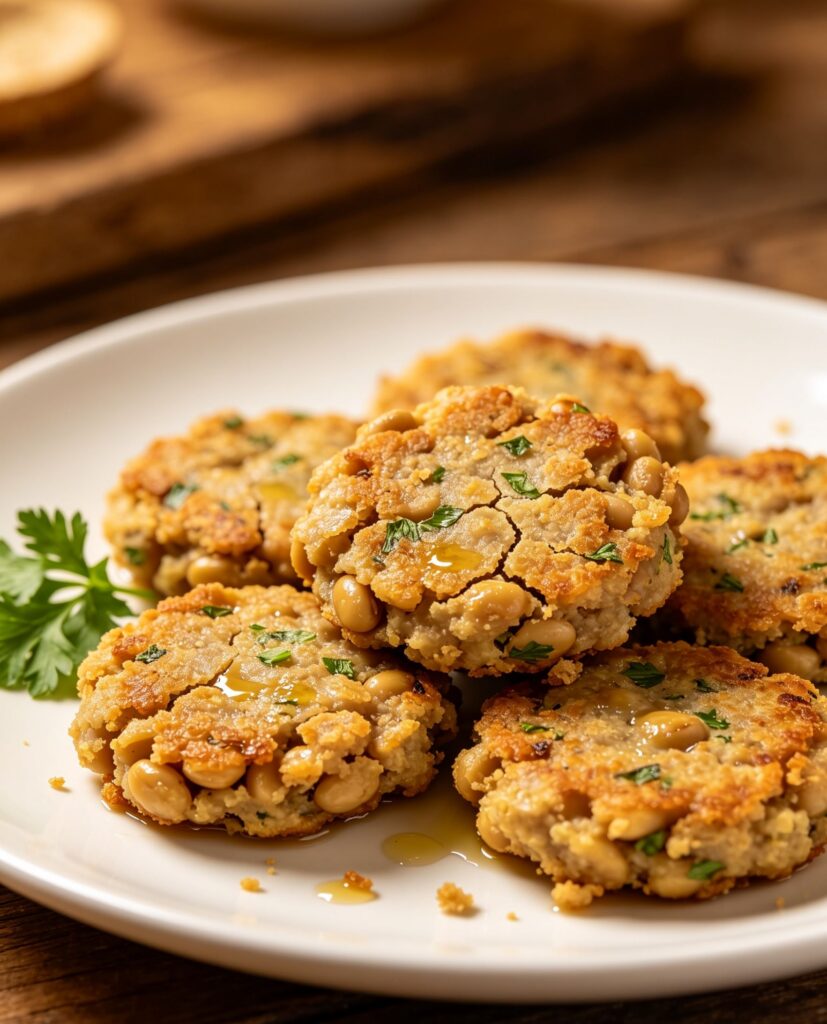
Beignets de Haricots (Bean Fritters)
The Quirky Foodster Team
Ingredients
- 300 g (1.5 cups) black-eyed peas, soaked overnight and peeled
- 1 onion, finely chopped
- 1 red chilli, finely chopped
- 1 tsp salt
- 60 ml (1/4 cup) water, as needed
- 500 ml (2 cups) vegetable oil, for frying
Method
- Drain the soaked, peeled black-eyed peas and blend with a little water to a thick, smooth paste.
- Transfer to a bowl and whisk vigorously for 3-4 minutes to incorporate air, making the batter light.
- Fold in the onion, chilli and salt.
- Heat the oil to 175°C (350°F) in a deep frying pan.
- Drop tablespoons of the batter into the hot oil and fry for 3-4 minutes per side until golden and puffed.
- Drain on kitchen paper and serve warm.
Introduction: These savoury black-eyed pea fritters are a popular starter and snack across Central Africa, made by grinding soaked beans into a light batter that is whipped for airiness before frying, resulting in a crisp shell around a fluffy interior.
Cultural Background: These savoury black-eyed pea fritters are a popular starter and snack across Central Africa, made by grinding soaked beans into a light batter that is whipped for airiness before frying, resulting in a crisp shell around a fluffy interior.
Tips: Whisking air into the batter before frying is the key step for light, fluffy fritters rather than dense ones.
Variations: Add finely chopped smoked fish to the batter for a heartier, more savoury version. Naturally vegan as written.
Storage: Store in an airtight container in the refrigerator for up to 2 days.
Reheating: Reheat in a 180°C (350°F) oven for 6-8 minutes to restore crispness.
Nutrition: Per fritter (approx.): 95 kcal, 4g protein, 10g carbohydrate, 5g fat, 2g fibre.
FAQs:
Q: Do I need to peel the beans?
A: Yes, peeling gives the classic light, airy texture; the skins can be rubbed off after soaking.
Q: Can these be made without a blender?
A: A mortar and pestle can be used to pound the soaked beans into a paste, in the traditional method.
Please log in to leave a comment.