
Breads
Baton de Manioc (Fermented Cassava Bread Sticks)
The Quirky Foodster Team
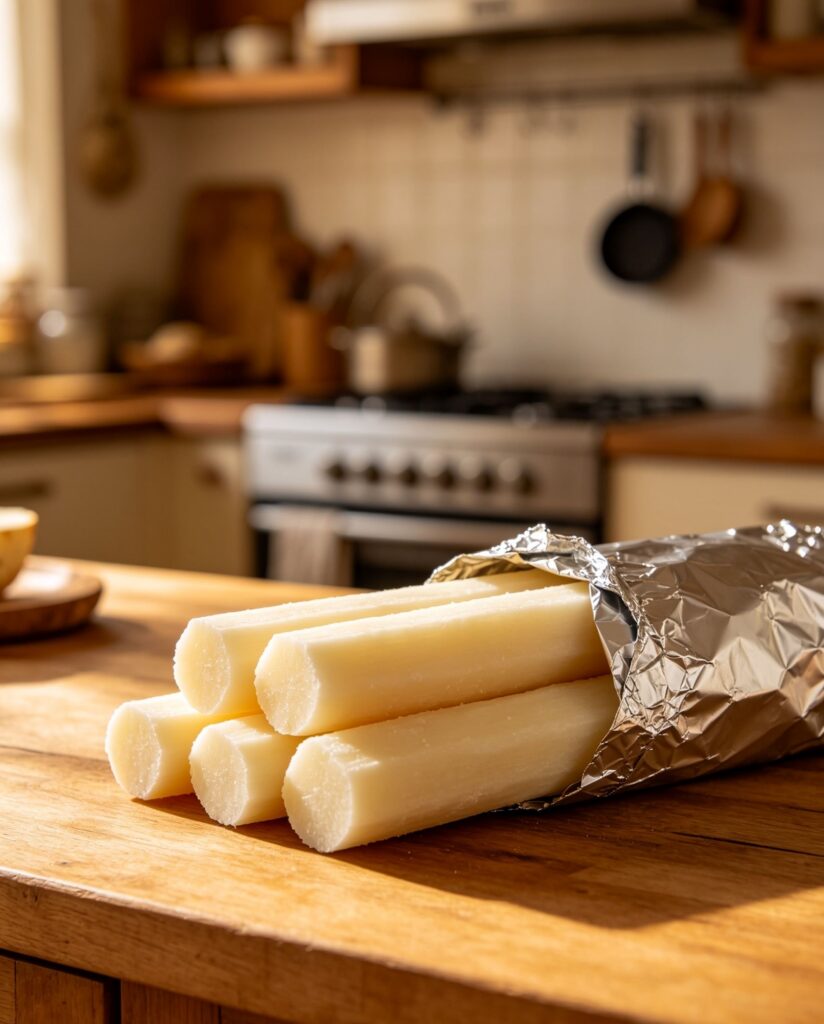
Ingredients
- Fresh cassava root, peeled -- 1.5 kg (3.3 lb)
- Water (for soaking) -- as needed (as needed)
- Salt -- 1 tsp (1 tsp)
- Banana or plantain leaves, softened -- as needed (as needed)
Method
- Peel and chop the cassava, then soak in water for 3 days, changing the water daily, to ferment and soften.
- Drain and grate or process the softened cassava into a coarse mash.
- Wrap the mash in cheesecloth and press firmly to squeeze out excess liquid.
- Mix the pressed cassava with salt, working it until slightly elastic.
- Portion the dough onto softened banana leaves and roll tightly into log shapes, tying both ends securely with string.
- Steam the wrapped logs for 1 to 1 1/2 hours until firm and cooked through.
- Cool slightly before unwrapping and slicing to serve.
Introduction: Baton de manioc is a dense, tangy fermented cassava dough wrapped and steamed inside banana or plantain leaves, forming firm, sliceable logs.
Cultural Background: Baton de manioc is a dense, tangy fermented cassava dough wrapped and steamed inside banana or plantain leaves, forming firm, sliceable logs. A staple across Central Africa and widely eaten in Cameroon alongside grilled fish or spicy sauces, its slightly sour tang comes from days of natural fermentation, a process passed down through generations of cassava farmers and market women.
Tips: Changing the soaking water daily is essential to develop the right tang without over-fermenting. Press out as much liquid as possible for a firm, sliceable texture.
Variations: Some regions add a little ripe plantain to the dough for extra sweetness. Foil can substitute for banana leaves if unavailable, though it lacks the traditional aroma. Naturally vegetarian and vegan as written.
Storage: Refrigerate wrapped logs for up to 5 days.
Reheating: Re-steam for 15 minutes, or slice and lightly pan-fry to serve warm.
Nutrition: Calories: 210 kcal | Protein: 1 g | Carbs: 50 g | Fat: 0 g | Fiber: 2 g
FAQs:
Q: Why does baton de manioc taste sour?
A: The multi-day fermentation of the cassava develops its characteristic tangy flavour — this is intentional and traditional.
Q: What is it served with?
A: Commonly with grilled fish, spicy pepper sauce, or peanut stews.
Please log in to leave a comment.