
Barley and Vegetable Pottage
The Quirky Foodster Team
Ingredients
- Pearl barley — 200 g (1 cup)
- Water — 1 L (4 cups)
- Leeks, sliced — 2
- Onion, chopped — 1
- Kale or wild cabbage greens, shredded — 100 g (0.7 cup)
- Salt — 1 pinch
Method
- Place the barley and water in the pot and bring to a simmer.
- Cook for 20 minutes, then add the leeks and onion.
- Continue simmering for a further 15-20 minutes, until the barley is tender and the pottage has thickened.
- Stir in the shredded kale or wild cabbage greens in the final 5 minutes of cooking.
- Season with salt and serve hot.
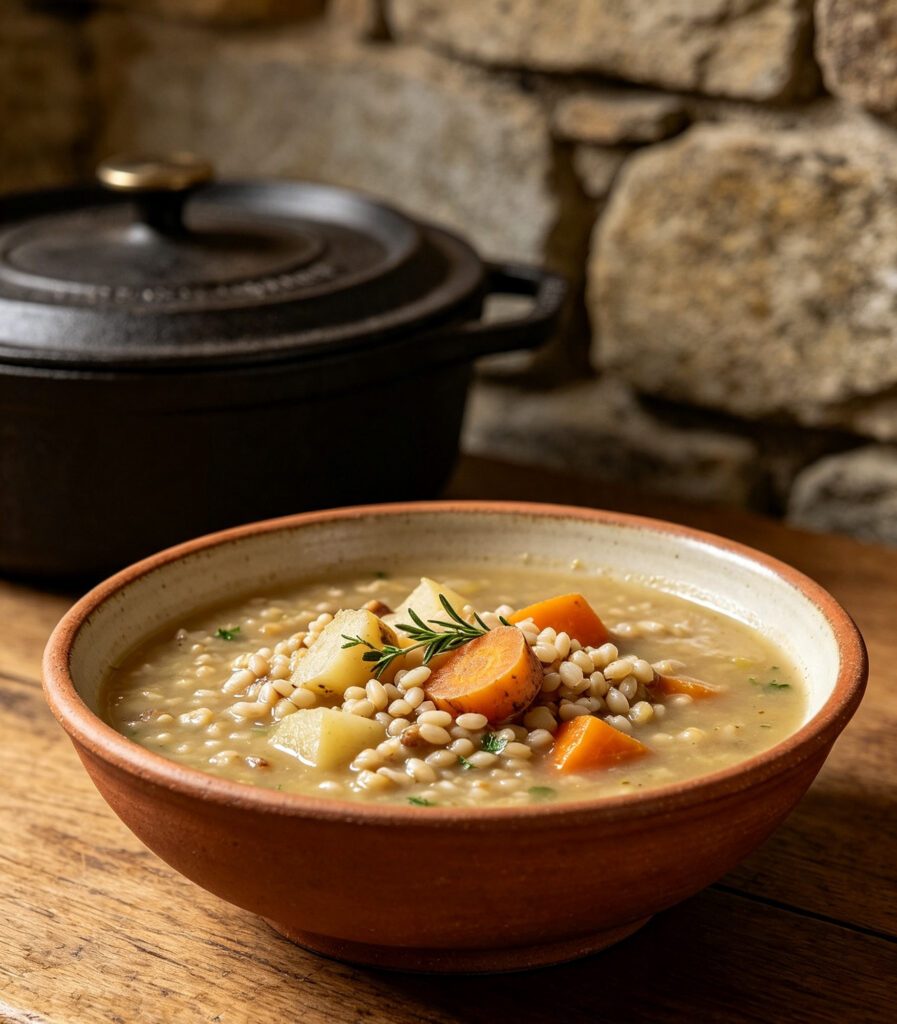
Introduction: A thick midday pottage of barley simmered with whatever root vegetables and greens were on hand, a filling one-pot meal typical of early Irish farming life.
Cultural Background: Barley is one of the best-attested cereal crops of early Ireland archaeologically, and thick grain-and-vegetable pottages are a category referenced under terms such as brothchan in early Irish glossaries; the specific vegetable combination here draws on crops known to have been cultivated or gathered in early Ireland, including onions, leeks, and native brassicas, though the precise combined recipe is a reasonable reconstruction rather than a single directly attested dish.
Tips: Barley releases starch as it cooks, which naturally thickens the pottage; stir occasionally to prevent sticking. Add the greens late so they keep some texture rather than turning fully soft.
Variations: Naturally vegan as written. A richer version can be made by simmering the barley in part milk, part water, reflecting dairy’s wide use in the early Irish diet.
Storage: Refrigerate covered for up to 3 days.
Reheating: Reheat in a pot over low heat with a splash of water, stirring, for 6-8 minutes until hot throughout.
Nutrition: Per serving (approx.): 210 kcal, 6 g protein, 42 g carbohydrate, 1.5 g fat, 7 g fibre.
FAQs:
Q: Was cabbage available in early Ireland?
A: Wild and cultivated brassica greens are attested in early Ireland; the specific tight-headed cabbage varieties common today are a later development, so this recipe specifies wild cabbage or kale-type greens as the closer period equivalent.
Q: Is this a vegan dish?
A: As written with water only, yes; the milk variation is not.
- Pearl barley — 200 g (1 cup)
- Water — 1 L (4 cups)
- Leeks, sliced — 2
- Onion, chopped — 1
- Kale or wild cabbage greens, shredded — 100 g (0.7 cup)
- Salt — 1 pinch
Please log in to leave a comment.