
Breads
Bannock (Indigenous Fry Bread)
The Quirky Foodster Team
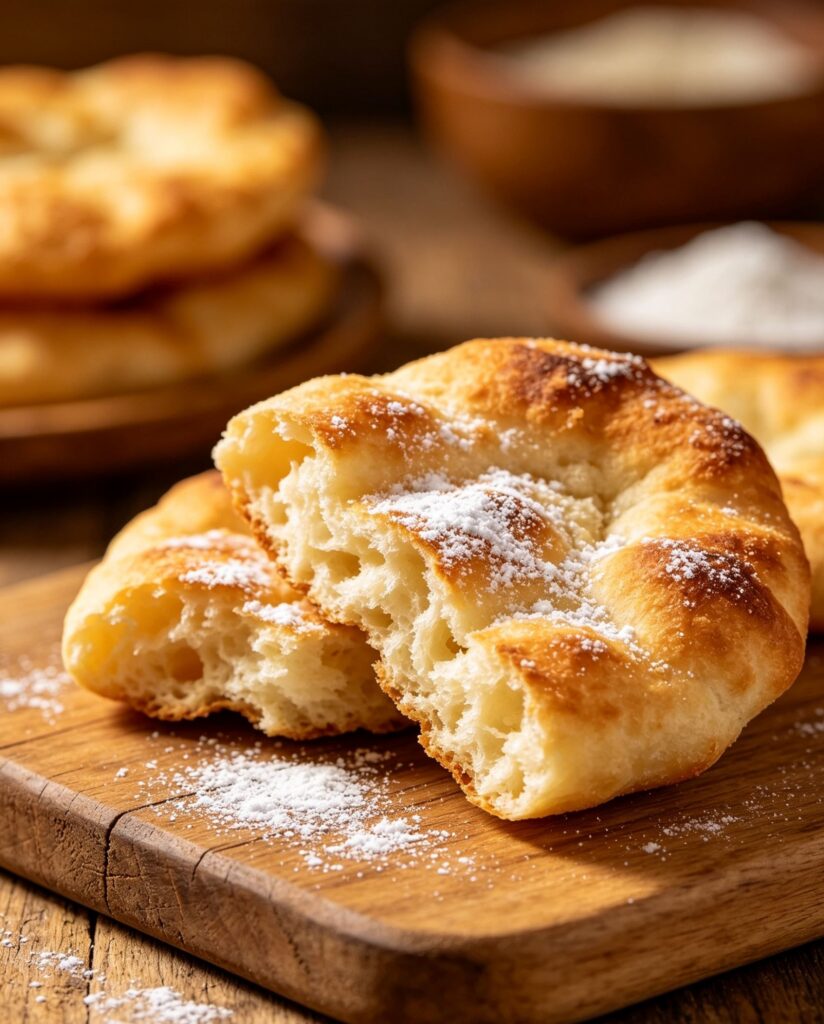
Ingredients
- 500g (4 cups) all-purpose flour
- 20g (4 tsp) baking powder
- 5g (1 tsp) salt
- 60g (4 tbsp) lard or vegetable shortening, cold and cubed
- 300ml (1 1/4 cups) warm water
- Vegetable oil, for frying (if making fried bannock)
Method
- In a large bowl, whisk together the flour, baking powder and salt.
- Rub the cold lard or shortening into the flour mixture using your fingertips or a pastry cutter, until the mixture resembles coarse crumbs.
- Gradually add the warm water, stirring with a fork until a soft, slightly sticky dough forms. Add a little more water if needed.
- Turn the dough onto a lightly floured surface and knead gently for 1-2 minutes, just until smooth. Do not overwork the dough.
- Divide into 6-8 portions and flatten each into a round about 1.5cm (1/2 inch) thick.
- For fried bannock: heat about 2.5cm (1 inch) of oil in a frying pan over medium heat and fry each round for 3-4 minutes per side, until deep golden and cooked through.
- For baked bannock: preheat the oven to 200C (400F) and bake the rounds on a lined tray for 20-25 minutes, until golden and hollow-sounding when tapped.
- Drain fried bannock briefly on paper towels, if using, and serve warm.
Introduction: Bannock is a simple flatbread adapted by Indigenous peoples across Canada from Scottish fur traders' bannock in the 18th and 19th centuries, evolving into a distinctly Indigenous staple baked over open fires, fried, or cooked on a stick, and remaining a beloved food at community and powwow gatherings today.
Cultural Background: Bannock is a simple flatbread adapted by Indigenous peoples across Canada from Scottish fur traders' bannock in the 18th and 19th centuries, evolving into a distinctly Indigenous staple baked over open fires, fried, or cooked on a stick, and remaining a beloved food at community and powwow gatherings today.
Tips: Handle the dough gently and briefly – overworking bannock dough makes it tough rather than tender. Keep the frying oil at a steady medium heat so the bread cooks through before the outside burns.
Variations: Add a handful of raisins or dried berries to the dough for a slightly sweet version. Bannock can also be wrapped around a stick and cooked slowly over an open campfire, a traditional method still used today. Substitute vegetable shortening for lard to make it fully vegan, as written using shortening.
Storage: Keeps at room temperature, wrapped, for up to 2 days, or frozen for up to 2 months.
Reheating: Warm in a 180C (350F) oven for 5-8 minutes, or split and toast.
Nutrition: Per piece (fried): approx. 240 kcal, 5g protein, 34g carbohydrate, 9g fat, 1g fibre, 380mg sodium.
FAQs:
Q: What is the difference between fried and baked bannock?
A: Fried bannock has a crisp, golden crust similar to a fry bread, while baked bannock is more like a dense biscuit or scone; both are equally traditional depending on region and family.
Q: Is bannock the same in every Indigenous community?
A: No, recipes and preparation methods vary considerably between First Nations, Metis and Inuit communities across the country.
Please log in to leave a comment.