
Colonial Latin America
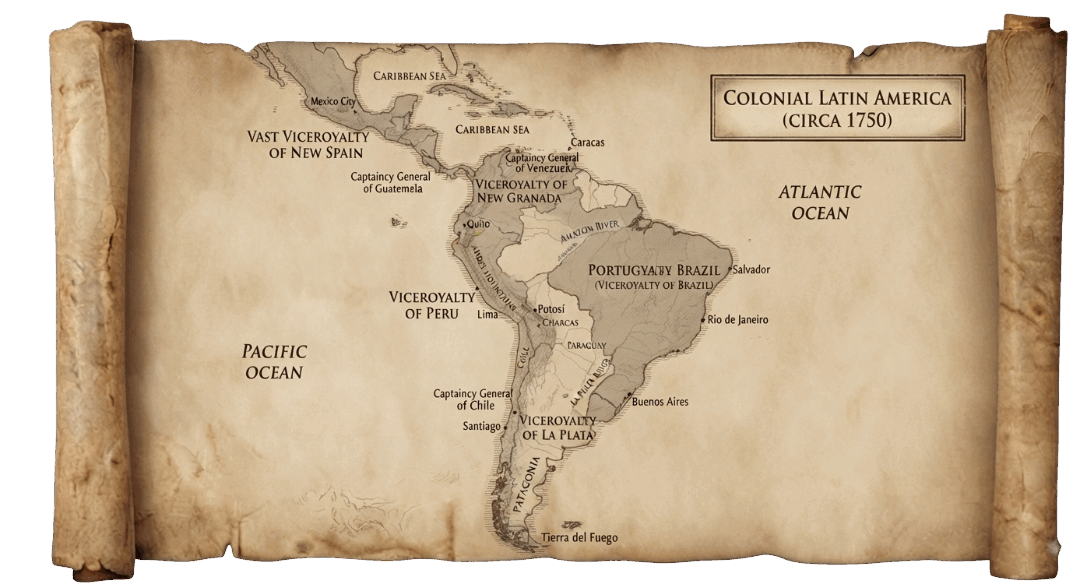
Colonial Latin America's kitchens became a genuine three-way fusion, blending Indigenous staples like corn, beans, and chili peppers with Spanish and Portuguese ingredients such as wheat, olive oil, and livestock, plus African cooking techniques and crops brought by enslaved people. The result was a wave of new dishes—tamales, moles, and stews—that combined Old and New World ingredients in ways that hadn't existed anywhere before.
Sugar, cacao, and coffee plantations reshaped entire economies and landscapes across the region during this period, while everyday cooking relied on corn tortillas, beans, rice, and whatever regional produce and livestock were locally available. This blending of three culinary traditions during the colonial period laid the direct foundation for the distinct national cuisines of Mexico, Peru, Brazil, and their neighbors today.