
Lunches
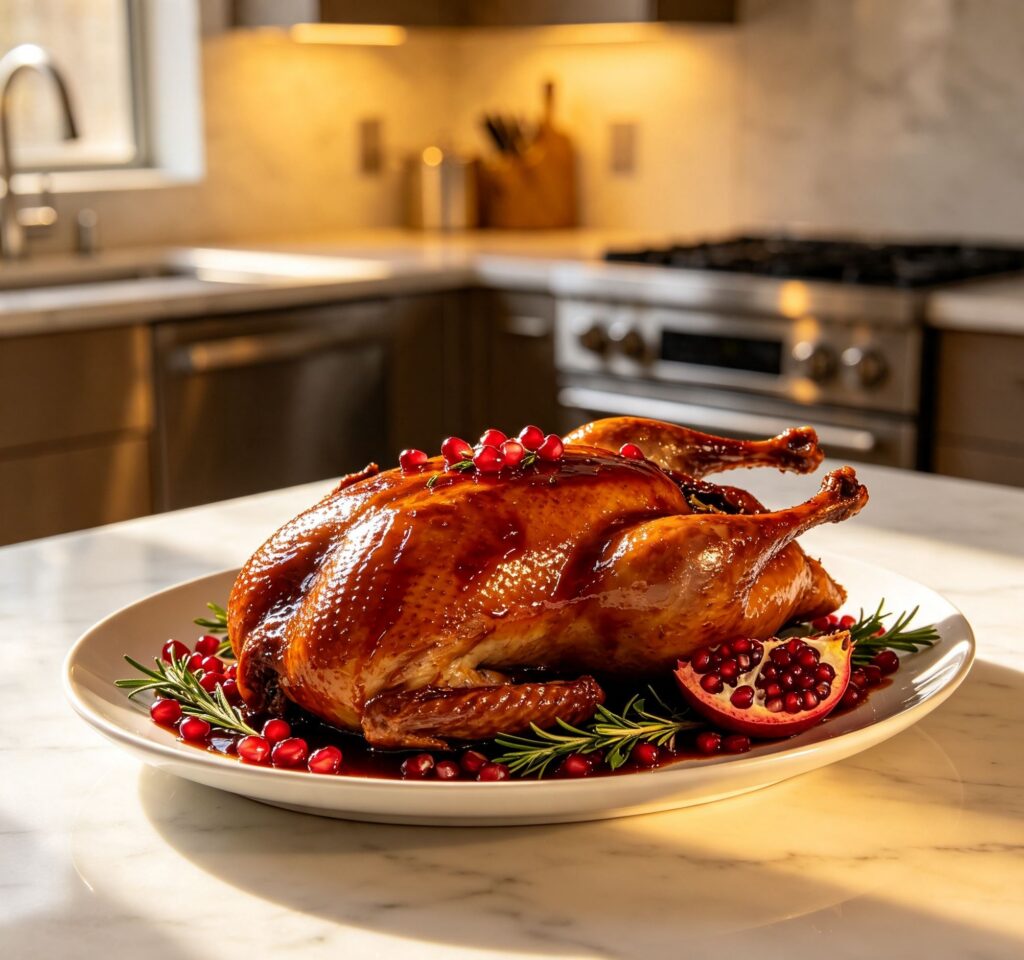
Roast Fowl with Pomegranate Glaze
The Quirky Foodster Team
Ingredients
- 1 whole chicken (about 1.4 kg / 3 lb), jointed into pieces
- 250ml (1 cup) Pomegranate juice
- 2 tbsp pomegranate molasses
- 2 tbsp olive oil
- 2 garlic cloves, crushed
- 1 tsp ground coriander
- 1/2 tsp ground cinnamon
- 1 tsp salt
- 1/2 tsp black pepper
- 2 tbsp fresh pomegranate seeds, to serve
Method
- Preheat the oven to 200°C (400°F).
- Whisk together the pomegranate juice, pomegranate molasses, olive oil, garlic, coriander, cinnamon, salt and pepper.
- Place the chicken pieces in the roasting tray and pour over half the marinade, turning to coat. Marinate for at least 20 minutes if time allows.
- Roast for 35 minutes, then baste with the remaining marinade and roast for a further 15 minutes, until the chicken is cooked through and richly glazed.
- Rest for 5 minutes, then scatter with fresh pomegranate seeds before serving.
Native Name: Morgh-e Anari
Cultural Background: Pomegranates were prized across the Persian Empire both fresh and reduced into a thick, sour-sweet syrup,
and glazing roasted fowl with pomegranate juice is one of the oldest documented flavour pairings from the
region, referenced in later Sassanid-era culinary writing that preserved much older household practice. A
modest roast fowl like this would have suited a family midday meal rather than a grand banquet.
Tips:
– Reduce the basting liquid on the stovetop for a couple of minutes first if you want an extra-glossy glaze.
– Use a meat thermometer to confirm the thickest piece reaches 74°C (165°F).
Variations:
– Use whole quail or a small game bird in place of chicken for a more traditional feel.
– Add a spoonful of chopped walnuts to the glaze for a nuttier finish.
Storage: Refrigerate cooked leftovers in an airtight container for up to 3 days.
Reheating: Reheat covered in a 160°C (320°F) oven for about 15 minutes until warmed through.
Nutrition: Per serving: approx. 420 kcal, 34 g protein, 14 g carbohydrate, 24 g fat, 1 g fibre.
FAQs:
Q: Can I use bottled pomegranate molasses?
A: Yes, this is standard practice and gives a reliable, concentrated sourness.
Q: What can I serve this with?
A: It pairs naturally with the Saffron Rice with Barberries or a simple flatbread from this collection.
Please log in to leave a comment.