
Holidays & Special Occasions
Sacred Feast Roast Duck with Pomegranate
The Quirky Foodster Team
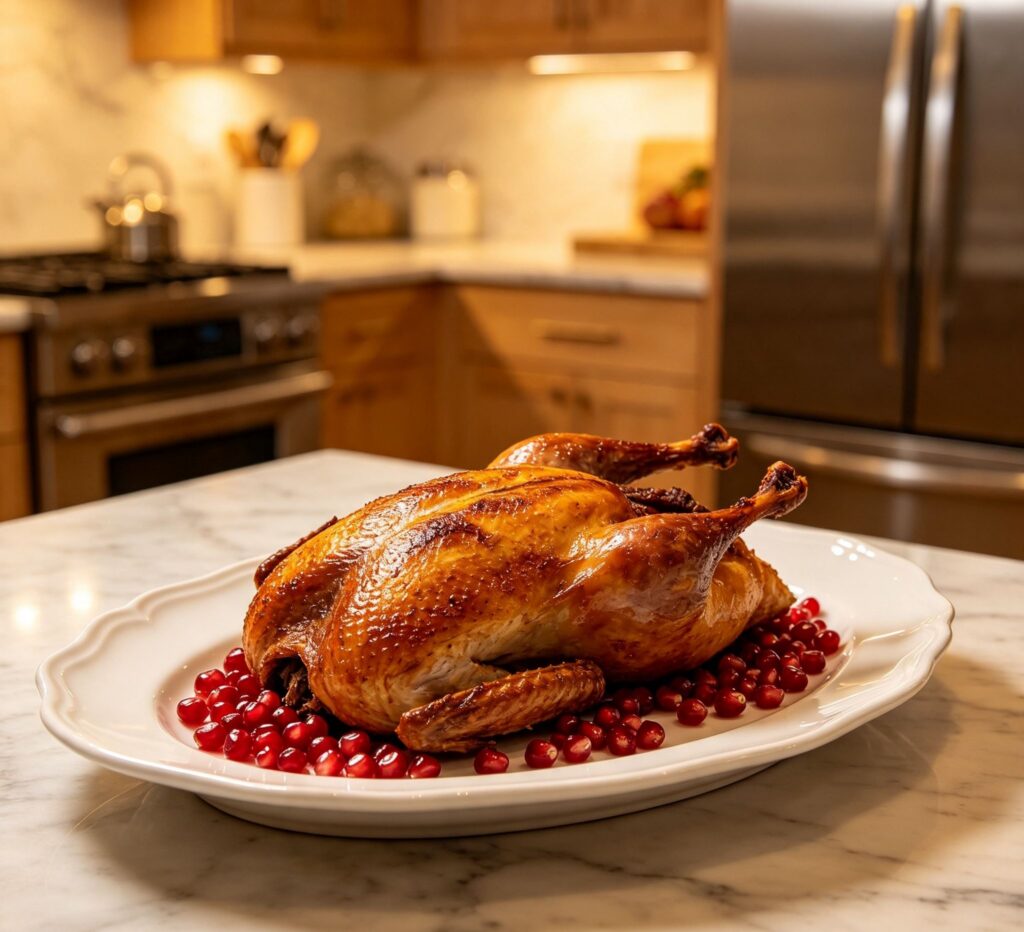
Ingredients
- 2 whole ducks (about 2 kg / 4.5 lb each)
- 3 tablespoons honey
- 2 pomegranates, seeds extracted
- 3 tablespoons sesame oil
- 4 garlic cloves, crushed
- 1 tablespoon ground coriander
- 2 teaspoons salt
- 2 onions, quartered (for the cavities)
Method
- Preheat the oven to 190°C (375°F).
- Pat the ducks dry and place onion quarters and half the garlic into each cavity.
- Mix the remaining garlic, sesame oil, coriander, and salt into a paste and rub over the skin of both ducks.
- Prick the skin lightly all over and place the ducks on a roasting tray, breast-side up.
- Roast for 50 minutes, draining excess fat periodically, then brush generously with warmed honey.
- Return to the oven for a further 20-25 minutes until the internal temperature reaches 74°C (165°F) at the thickest part of the thigh and the skin is deeply golden.
- Rest for 15 minutes, then carve and scatter generously with fresh pomegranate seeds before serving.
Native/Reconstructed Name: Ser en Inhemenet (reconstructed; festival duck)
Cultural Background: Duck, alongside goose, was standard fare at ancient Egyptian religious festivals and temple feasts, offered to
the gods before being shared among priests and worshippers. Pairing roasted duck with pomegranate, a fruit
associated with fertility and abundance following its New Kingdom introduction, would have made this a dish
reserved for the most significant celebrations of the ritual calendar.
Tips:
– Pricking the duck skin thoroughly helps render the fat and achieve crisper skin.
– Save the rendered duck fat for roasting root vegetables — a genuinely period-appropriate use of the fat.
Variations:
– Use goose in place of duck for an equally traditional festival centerpiece.
– Add a handful of chopped dates to the cavity alongside the onion for extra sweetness.
Storage: Refrigerate carved leftovers for up to 3 days.
Reheating: Reheat gently, covered, in a 160°C (325°F) oven until warmed through.
Nutrition: Approx. 480 kcal, 32 g protein, 10 g carbohydrate, 34 g fat per serving.
FAQs:
Q: Why is this dish tied to temple worship specifically?
A: Waterfowl were among the most common offerings depicted on temple and tomb offering tables, later shared
among worshippers and priests.
Q: Can this be made with a single larger bird instead of two ducks?
A: Yes, a large goose can be substituted using the same method, extending the roasting time by about 30
minutes.
Please log in to leave a comment.