
Holidays & Special Occasions
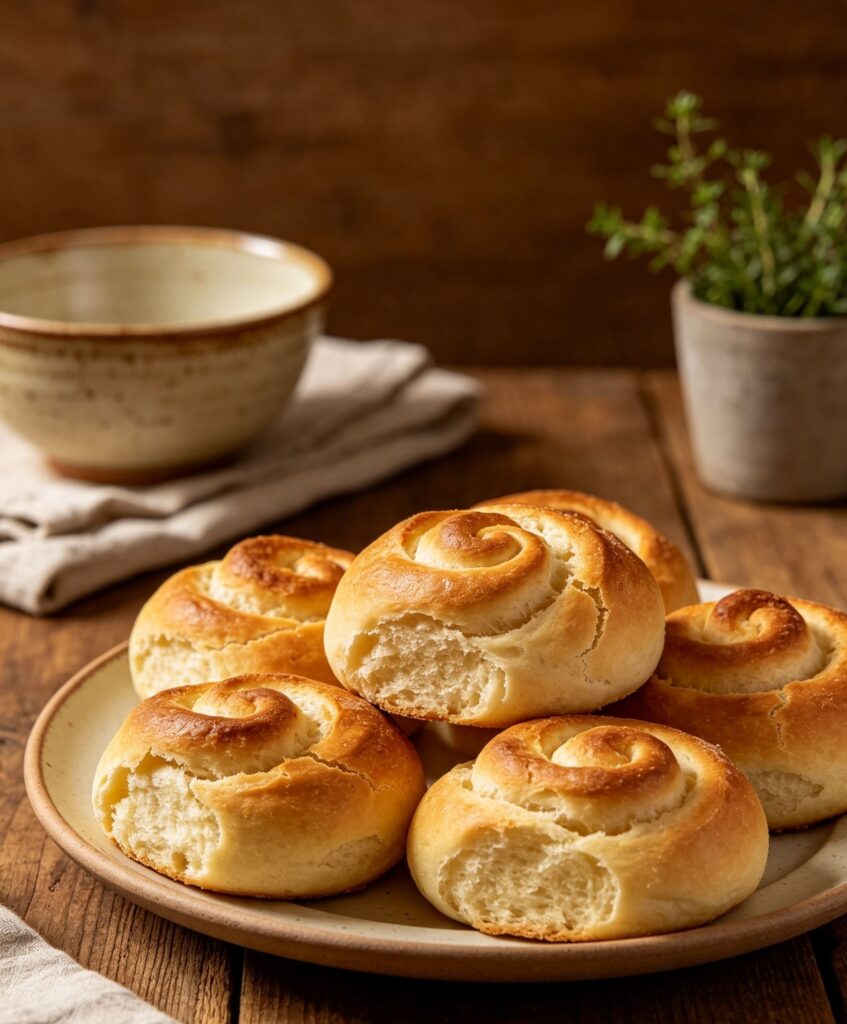
Judas Buns
The Quirky Foodster Team
Ingredients
- 500 g (4 cups) plain flour
- 60 g (4 tbsp) sugar
- 2 tsp instant yeast
- 250 ml (1 cup) warm milk
- 2 egg yolks
- 60 g (4 tbsp) butter, softened
- 1/2 tsp salt
- Zest of 1 lemon
- 3 tbsp honey
- 2 tbsp warm water
Method
- Dissolve the yeast and a pinch of sugar in the warm milk, and let stand for 5 minutes until frothy.
- In a large bowl, mix the flour, remaining sugar and salt. Add the yeast mixture, egg yolks, butter and lemon zest, mixing into a soft dough.
- Knead for 8-10 minutes until smooth and elastic, then cover and let rise in a warm place for 1 hour, until doubled.
- Divide the dough into small portions and roll each into a long rope, then shape into a spiral or loose knot on a lined baking tray.
- Cover and let rise for a further 20-30 minutes.
- Preheat the oven to 190°C (375°F) and bake the buns for 15-18 minutes until golden.
- While still warm, mix the honey with the warm water and brush generously over each bun.
Introduction: Jidáše are sweet, spiral-shaped or knot-shaped yeast buns brushed with honey water, traditionally baked on
Maundy Thursday during Czech Easter celebrations.
Cultural Background: Jidáše are sweet, spiral-shaped or knot-shaped yeast buns brushed with honey water, traditionally baked on
Maundy Thursday during Czech Easter celebrations. Their name and shape are linked to the biblical figure of
Judas, and eating them is folk-associated with warding off misfortune and pests in the coming year.
Tips: Brush the honey glaze on while the buns are still warm so it soaks in slightly rather than just sitting on the
surface.
Variations: Some bakers add a light dusting of poppy seeds before baking for extra texture and flavour.
Storage: Store at room temperature in an airtight container for up to 2 days.
Reheating: Warm briefly in the oven or toaster to refresh before serving.
Nutrition: Approx. 190 kcal, 4g protein, 5g fat, 32g carbohydrate per bun.
FAQs
Q: When exactly are jidáše traditionally eaten?
A: On Maundy Thursday (Zelený čtvrtek), the Thursday before Easter, as part of Czech Holy Week customs.
Q: What is the significance of the honey glaze?
A: Honey is thought to bring sweetness and protection for the year ahead, tied into the buns' folk symbolism.
Please log in to leave a comment.