
Sides
Czech Bread Dumplings
The Quirky Foodster Team
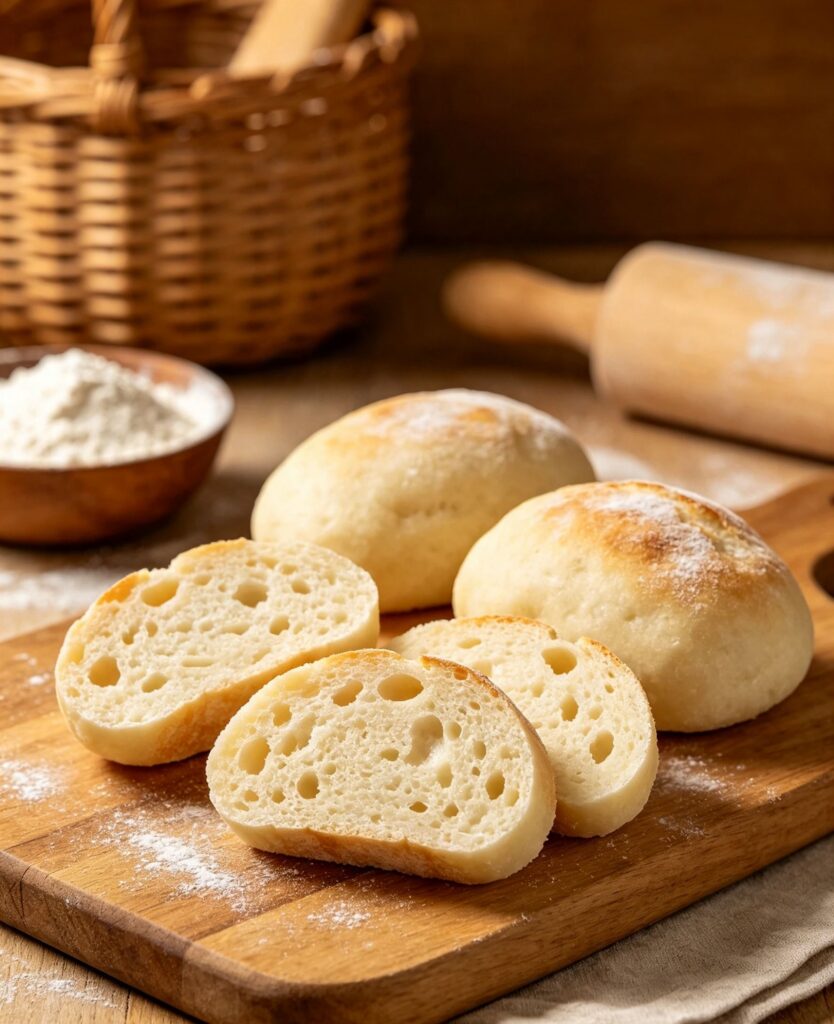
Ingredients
- 500 g (4 cups) plain flour
- 2 tsp instant yeast
- 250 ml (1 cup) warm milk
- 1 egg
- 1 tsp salt
- 150 g (5.3 oz) stale white bread or rolls, cubed
Method
- Dissolve the yeast in the warm milk and let stand for 5 minutes until frothy.
- In a large bowl, combine the flour and salt, then add the yeast mixture and egg, mixing into a soft, slightly sticky dough.
- Fold in the cubed stale bread, then knead briefly to distribute evenly.
- Cover and let the dough rise in a warm place for 45-60 minutes until doubled.
- Shape the dough into two or three log shapes, then either wrap in cling film and simmer in a large pot of gently boiling water for 20-25 minutes, or steam over simmering water for the same time.
- Turn the logs halfway through cooking for even texture. Once cooked, pierce with a fork to release steam, then slice with thread or a sharp knife.
Introduction: Knedlíky are the indispensable Czech side dish, a steamed bread-based dumpling sliced and served alongside
virtually every saucy main course, from svíčková to goulash.
Cultural Background: Knedlíky are the indispensable Czech side dish, a steamed bread-based dumpling sliced and served alongside
virtually every saucy main course, from svíčková to goulash. Their soft, spongy texture is designed specifically
to soak up rich gravies and sauces, making them a structural pillar of Czech cuisine.
Tips: Using thread rather than a knife to slice the dumpling logs prevents them from compressing and keeps their airy
texture.
Variations: Potato dumplings (bramborové knedlíky) are a common alternative made with mashed potato instead of bread.
Storage: Refrigerate sliced leftovers in an airtight container for up to 3 days.
Reheating: Steam slices for a few minutes, or pan-fry in a little butter until warmed through and lightly golden.
Nutrition: Approx. 210 kcal, 7g protein, 2g fat, 40g carbohydrate per serving (serves 8).
FAQs
Q: Why do the dumplings sometimes turn out dense?
A: This usually means the dough didn't rise long enough or the water wasn't boiling gently — dense dumplings often result from underproofing.
Q: Can I freeze bread dumplings?
A: Yes, slice and freeze in a single layer, then reheat by steaming directly from frozen.
Please log in to leave a comment.