
Lunches
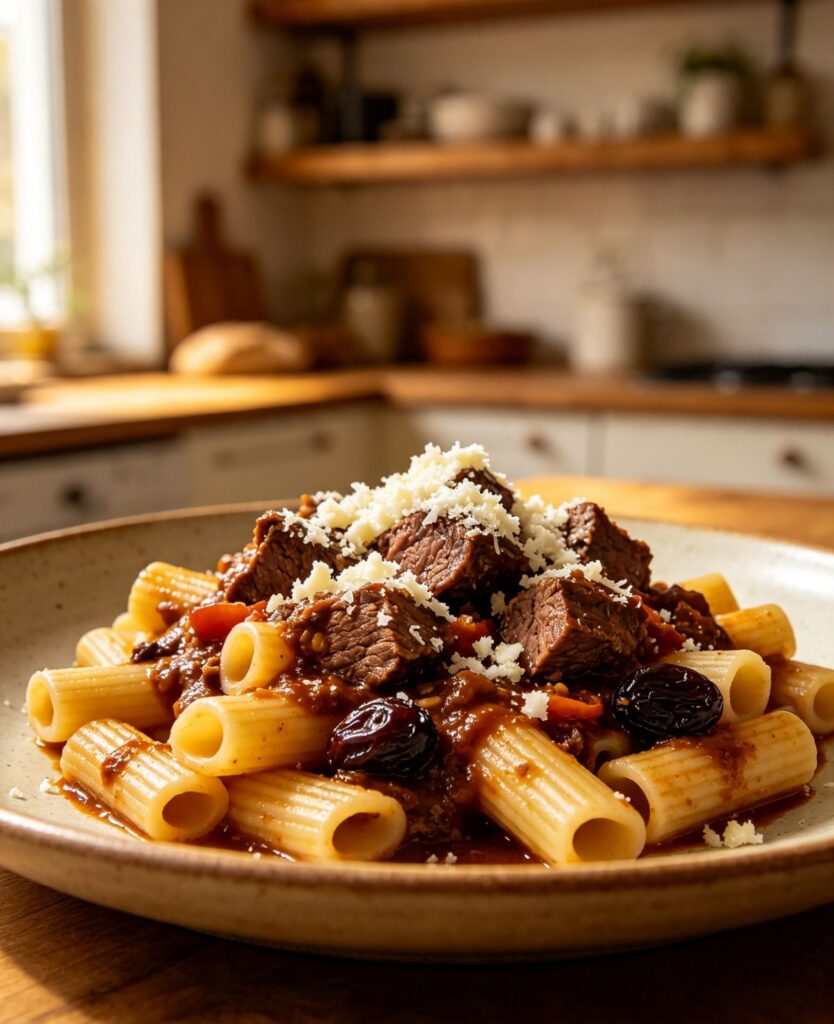
Šporki Makaruli
The Quirky Foodster Team
Ingredients
- 600 g (1.3 lb) beef chuck, cut into large chunks
- 500 g (1.1 lb) macaroni or homemade maccheroni
- 1 onion, finely chopped
- 2 cloves garlic, minced
- 700 g (24.7 oz) canned crushed tomatoes
- 150 ml (5 fl oz / 2/3 cup) red wine
- 2 tbsp olive oil
- 1 bay leaf
- 1 tsp sugar
- Salt and black pepper, to taste
- Grated hard cheese (e.g. Croatian Paški sir), to serve
Method
- Heat olive oil in a heavy pot and brown the beef chunks on all sides.
- Add onion and garlic, cook until softened.
- Pour in the wine and let it reduce by half.
- Add crushed tomatoes, bay leaf, sugar, salt and pepper.
- Cover and simmer gently for 2.5-3 hours until the beef falls apart, stirring occasionally.
- Shred the beef into the sauce and discard the bay leaf.
- Cook macaroni in salted boiling water until al dente, drain.
- Toss the pasta through the sauce and serve topped with grated hard cheese.
Introduction: Meaning literally "dirty macaroni," this Dubrovnik speciality is a slow-cooked beef ragù tossed through
hand-rolled macaroni.
Cultural Background: Meaning literally "dirty macaroni," this Dubrovnik speciality is a slow-cooked beef ragù tossed through
hand-rolled macaroni. Its name comes from the dark, rich sauce that stains the pasta, a dish with roots in the
aristocratic kitchens of the old Republic of Ragusa, now a beloved family Sunday lunch.
Tips: The sauce improves overnight — make a day ahead for deeper flavour. Use a wide, shallow pot so the sauce
reduces evenly.
Variations: A vegetarian version replaces the beef with mixed mushrooms and a splash of soy sauce for umami depth.
Storage: Store sauce separately from pasta in the refrigerator for up to 3 days, or freeze for up to 2 months.
Reheating: Reheat gently on the stovetop with a splash of water to loosen the sauce.
Nutrition: Per serving (approx.): 520 kcal, 32 g protein, 16 g fat, 58 g carbohydrate.
FAQs
Q: Why is it called 'dirty' macaroni?
A: The name refers to the dark, rich tomato-and-wine ragù that coats and stains the pasta.
Q: Can I use a different pasta shape?
A: Traditional homemade maccheroni is used, but any short, sturdy pasta works well.
Please log in to leave a comment.