
Breads
Kisser
The Quirky Foodster Team
Ingredients
- 250g (2 cups) sorghum flour
- 500ml (2 cups) water, divided
- 1/4 tsp instant yeast
- 1/4 tsp salt
- 1 tbsp vegetable oil, for greasing
Method
- In a bowl, whisk the sorghum flour with 250ml of the water and the yeast until smooth.
- Cover and leave to ferment at room temperature for 6-8 hours, or overnight, until slightly bubbly and tangy-smelling.
- Stir in the remaining 250ml water and the salt to loosen the batter to a thin, pourable consistency.
- Heat a large flat griddle or non-stick pan over medium heat and lightly grease with oil.
- Ladle a thin layer of batter onto the griddle, tilting or spreading quickly to form a very thin, even round.
- Cook for 1-2 minutes until the surface is set and small holes appear, then carefully lift off (kisser is traditionally cooked on one side only).
- Repeat with the remaining batter, stacking the cooked kisser between clean cloths to keep warm and soft.
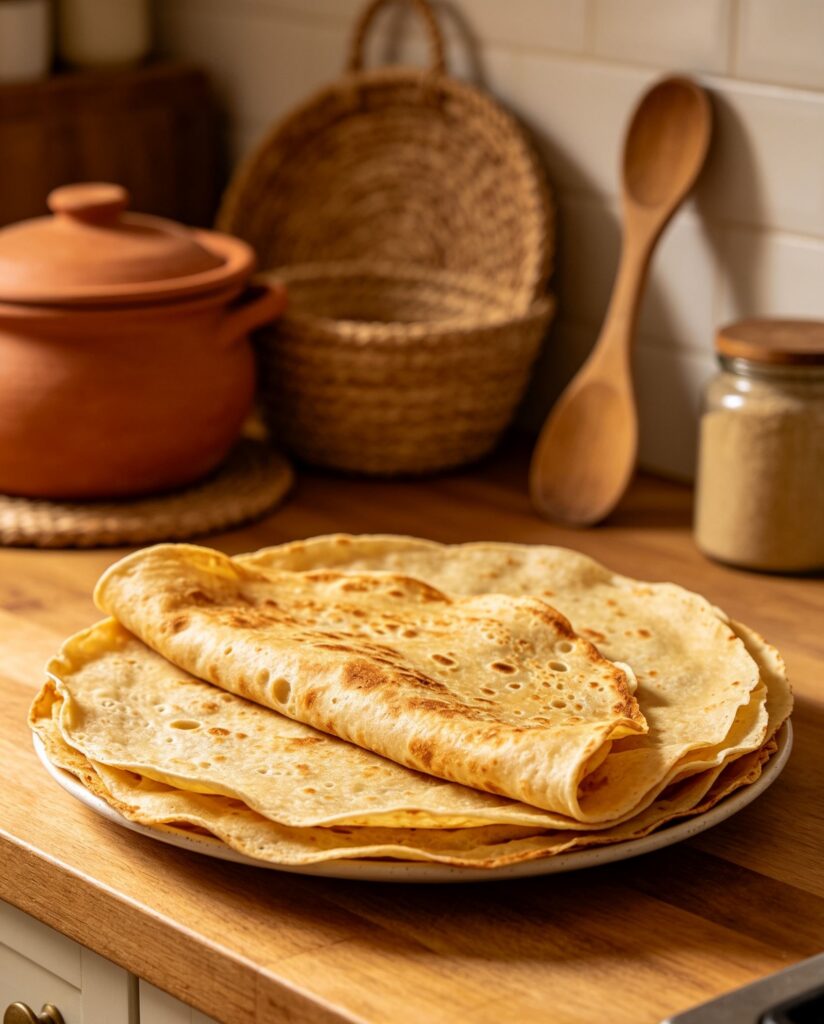
Introduction: Kisser is a thin, fermented flatbread made from sorghum, closely related to Sudanese kisra and reflecting Chad's cultural and culinary ties to its eastern neighbour.
Cultural Background: Kisser is a thin, fermented flatbread made from sorghum, closely related to Sudanese kisra and reflecting Chad's cultural and culinary ties to its eastern neighbour. It is cooked on a large flat griddle and used to scoop up sauces and stews.
Tips: The batter should be thin enough to spread easily across the griddle; adjust with a splash more water if it's too thick.
Variations: A blend of sorghum and millet flour can be used for a slightly different flavour and texture. Already vegan as written.
Storage: Store stacked and wrapped in a clean cloth or airtight container at room temperature for up to 2 days.
Reheating: Warm briefly in a dry pan for 20-30 seconds per side, or wrap in foil and warm in a low oven for a few minutes.
Nutrition: Approx. 110 kcal, 3g protein, 22g carbohydrate, 1g fat per piece (based on 10 pieces).
FAQs
Q: Why does the batter need to ferment?
A: Fermentation develops the characteristic tangy flavour and helps create the bread's soft, slightly spongy texture.
Q: Can this be made without a fermentation step?
A: Skipping fermentation will produce a flatter, less tangy bread; for the most authentic result, allow the full resting time.
Please log in to leave a comment.