
Drinks
Vin de Palme (Palm Wine)
The Quirky Foodster Team
Ingredients
- 1 litre (4 cups) fresh palm sap, freshly tapped
Method
- Collect the fresh palm sap as soon as possible after tapping, working with clean vessels throughout.
- Pour the sap into a clean fermentation vessel or traditional gourd.
- Cover loosely with a clean cloth to allow natural airborne yeasts to begin fermentation while keeping out debris.
- Leave in a cool area to ferment naturally for 12-24 hours, tasting periodically.
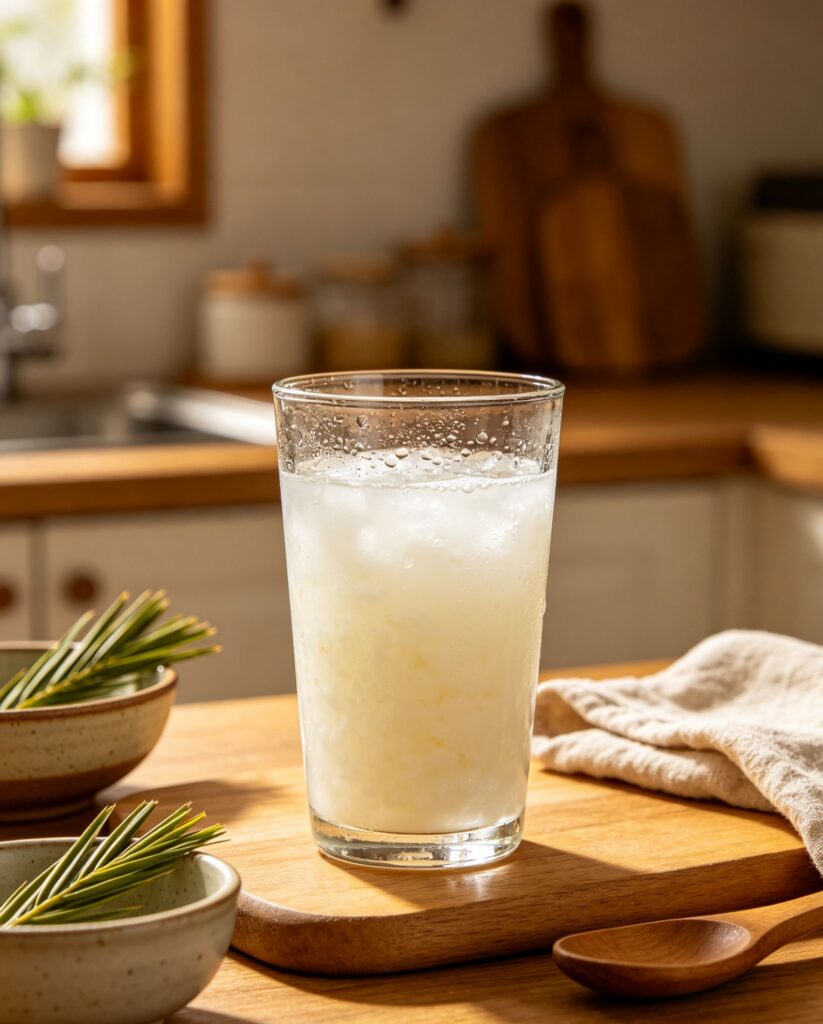
- The wine develops a mildly alcoholic, slightly fizzy, sweet-tart character as fermentation progresses; serve fresh, as it continues to ferment and sour with time.
- Serve chilled or at room temperature in traditional gourd cups.
Introduction: Palm wine is a naturally fermented drink tapped directly from palm trees, holding deep cultural and ceremonial significance across the Central African Republic, traditionally served at gatherings, weddings and to welcome guests.
Cultural Background: Palm wine is a naturally fermented drink tapped directly from palm trees, holding deep cultural and ceremonial significance across the Central African Republic, traditionally served at gatherings, weddings and to welcome guests.
Tips: Palm wine is best enjoyed fresh, within a day or two of tapping, as its flavour changes quickly and becomes notably more sour the longer it ferments.
Variations: Some households add a small piece of tree bark traditionally believed to influence the fermentation and flavour. Naturally vegan.
Storage: Best consumed within 1-2 days; refrigeration can slow further fermentation slightly.
Reheating: This drink is served cold or at room temperature and is not reheated.
Nutrition: Per serving (approx.): 40 kcal, 0g protein, 5g carbohydrate, 0g fat, 0g fibre; alcohol content varies with fermentation time.
FAQs:
Q: Is palm wine strongly alcoholic?
A: Its alcohol content is generally mild when fresh, similar to a light beer, but increases the longer it ferments.
Q: Can palm wine be made outside of palm-growing regions?
A: Genuine palm wine requires fresh palm sap and is not practical to replicate without access to tapped palm trees; this entry is included for cultural completeness.
Please log in to leave a comment.