
Lunches
Nom Banh Chok
The Quirky Foodster Team
Ingredients
- 500 g (1.1 lb) fresh fermented rice noodles (num banh chok)
- 400 g (14 oz) freshwater fish fillets (snakehead or catfish)
- 3 tbsp (45 g) kroeung (lemongrass-galangal-turmeric paste)
- 200 ml (3/4 cup + 1 tbsp) coconut milk
- 500 ml (2 cups) fish or chicken stock
- 2 tbsp (30 ml) fish sauce
- 1 tsp (5 g) palm sugar
- 200 g (2 cups) shredded banana blossom
- 150 g (1 1/2 cups) bean sprouts
- 1 cucumber, julienned
- handful mint and Asian basil leaves
- green beans, thinly sliced, to serve
Method
- Poach the fish fillets in the stock for 8–10 minutes until cooked through; remove, flake the flesh, and reserve the poaching liquid.
- Pound or blend the kroeung paste until smooth if not using pre-made paste.
- In a saucepan, sauté the kroeung paste over medium heat for 2–3 minutes until fragrant.
- Add the reserved poaching liquid and coconut milk, and bring to a gentle simmer.
- Stir in the flaked fish, fish sauce and palm sugar; simmer for 10 minutes until slightly thickened. Adjust seasoning to taste.
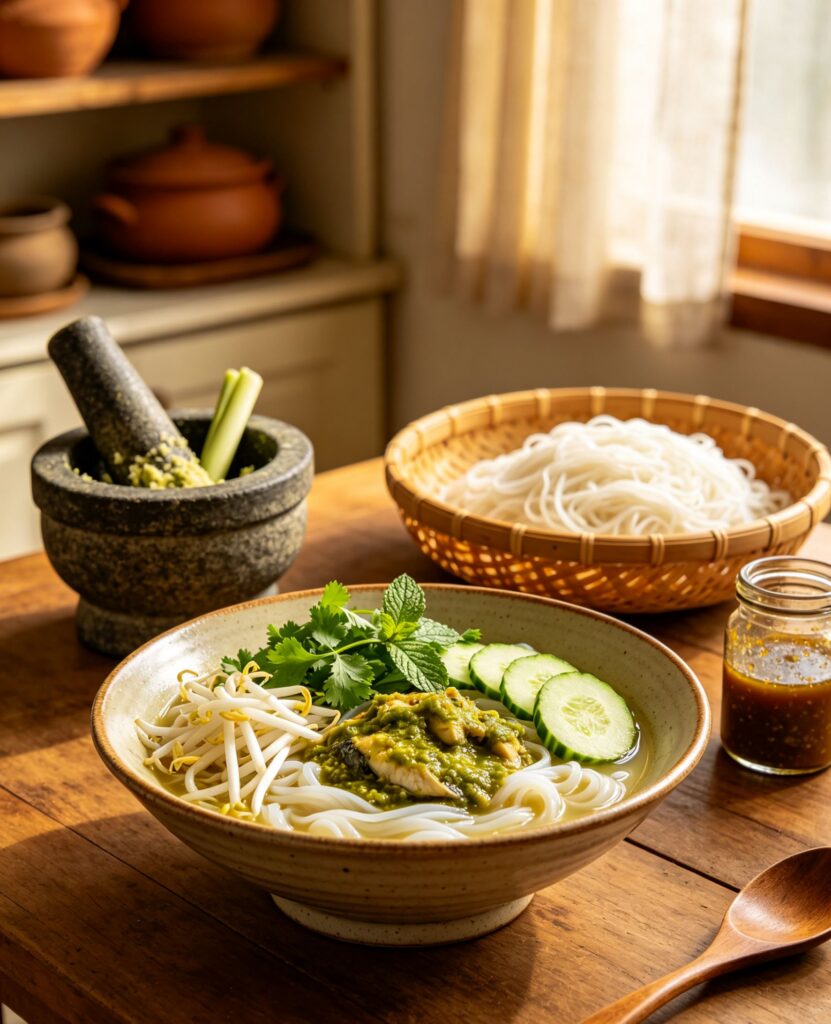
- Arrange the rice noodles on plates, top with a generous ladle of the fish gravy, and surround with banana blossom, bean sprouts, cucumber, green beans and fresh herbs.
Introduction: Widely regarded as Cambodia's national dish, Nom Banh Chok is fresh fermented rice noodles topped with a fragrant green fish-and-kroeung gravy and a generous pile of raw and blanched vegetables.
Cultural Background: Widely regarded as Cambodia's national dish, Nom Banh Chok is fresh fermented rice noodles topped with a fragrant green fish-and-kroeung gravy and a generous pile of raw and blanched vegetables. Traditionally sold by women carrying baskets balanced on shoulder poles through villages in the early morning, it remains a fixture of markets nationwide and is central to Khmer New Year gatherings.
Tips: Kroeung paste can be made in batches and frozen in ice-cube trays for quick use. Serve the vegetables cold or at room temperature to contrast with the warm gravy.
Variations: A red version, Nom Banh Chok Samlor Kari, uses a coconut curry sauce instead of the green fish gravy. Egg can be added by stirring beaten egg into the simmering gravy at the end. Replace fish with steamed and mashed firm tofu and use vegetable stock; season with extra kroeung and a little seaweed for oceanic depth.
Storage: Store gravy and noodles separately in the refrigerator for up to 2 days; keep fresh vegetables separate and add just before serving.
Reheating: Gently reheat the gravy in a saucepan over low heat, stirring frequently to prevent the coconut milk from splitting.
Nutrition: Per serving (approx.): 430 kcal, 26 g protein, 16 g fat, 48 g carbohydrate, 4 g fibre, 760 mg sodium.
FAQs:
Q: What is kroeung?
A: A Khmer aromatic paste of pounded lemongrass, galangal, turmeric, garlic and shallots that forms the flavour base of many Cambodian dishes.
Q: Can I use frozen banana blossom?
A: Yes, though fresh gives a firmer texture; drain well and pat dry before serving.
Please log in to leave a comment.