
Mains
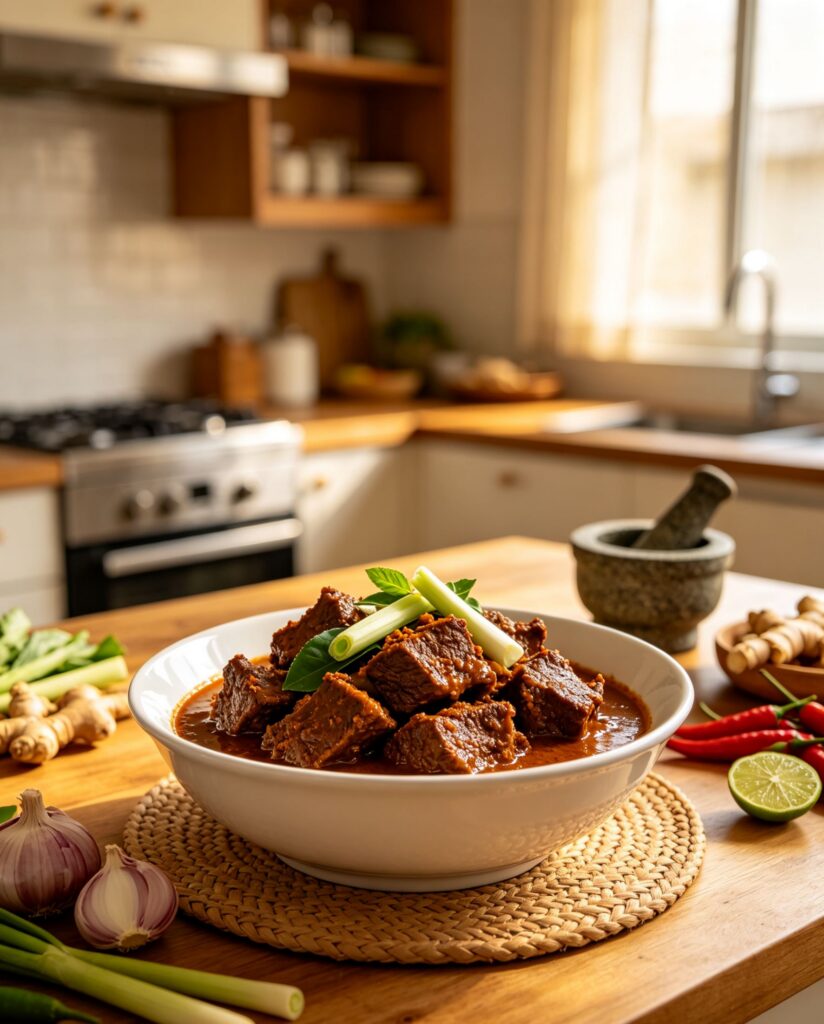
Beef Rendang Brunei-Style
The Quirky Foodster Team
Ingredients
- 800 g Beef chuck or shin, cut into chunks (1¾ lb)
- 700 ml Coconut milk (3 cups)
- 8 Shallots
- 6 Garlic cloves
- 20 g Fresh ginger (¾ oz)
- 20 g Fresh galangal (¾ oz)
- 10 Dried chillies, soaked
- 3 stalks Lemongrass, bruised and tied
- 6 Kaffir lime leaves
- 40 g Toasted grated coconut (kerisik) (1/2 cup)
- 20 g Tamarind pulp (4 tsp)
- 20 g Palm sugar (1 tbsp)
- 8 g Fine salt (1½ tsp)
Method
- Blend the shallots, garlic, ginger, galangal and soaked chillies to a smooth paste.
- Soak the tamarind pulp in a little warm water, strain, and reserve the liquid.
- Fry the spice paste in a heavy pot over medium heat for 8–10 minutes until fragrant and the oil begins to separate.
- Add the beef and stir to coat in the paste, cooking for 5 minutes.
- Pour in the coconut milk, tamarind liquid, lemongrass and kaffir lime leaves. Bring to a gentle simmer.
- Reduce the heat to low and cook uncovered for 2–2½ hours, stirring occasionally, until the beef is tender and the sauce has thickened significantly.
- Stir in the toasted grated coconut, palm sugar and salt, and continue cooking, stirring more frequently now, for a further 30–40 minutes until the rendang is thick, dark and almost dry, clinging to the meat.
- Remove the lemongrass stalks before serving, and rest for 10 minutes before serving with rice or kelupis.
Introduction: Beef rendang, a slow-cooked coconut and spice stew, is beloved throughout Brunei and is a fixture at weddings, Hari Raya celebrations and family feasts, often served alongside kelupis or plain rice.
Cultural Background: Beef rendang, a slow-cooked coconut and spice stew, is beloved throughout Brunei and is a fixture at weddings, Hari Raya celebrations and family feasts, often served alongside kelupis or plain rice. While the dish's roots trace to the wider Malay world, Bruneian households cook it low and slow until the meat is fork-tender and the sauce has reduced to a thick, dark, almost dry paste clinging to every piece of beef.
Tips: Rendang rewards patience — the long, slow reduction is what develops its signature dark colour and concentrated flavour. Stir more often in the final stage to prevent the thickened sauce from catching on the bottom of the pot. Rendang often tastes even better the next day, once the flavours have had time to settle.
Variations: Chicken rendang follows the same method with a shorter cooking time of about 45 minutes. Some households add whole boiled eggs to the pot in the final 20 minutes for rendang telur. A drier, 'rendang kering' version is cooked even longer until almost no liquid remains, for extended storage. No authentic vegetarian version exists, as beef is central to the dish; a mushroom or jackfruit rendang is a modern, non-traditional substitute some cooks use.
Storage: Store in an airtight container in the refrigerator for up to 5 days, or freeze for up to 3 months.
Reheating: Reheat gently in a covered pan over low heat with a splash of water, stirring occasionally, until piping hot throughout.
Nutrition: Per serving: approx. 480 kcal, 32g protein, 12g carbohydrate, 34g fat.
FAQs:
Q: What is kerisik?
A: Kerisik is grated coconut toasted until deep golden brown and then pounded into a paste; it thickens rendang and adds a distinct nutty, toasted flavour.
Q: Why does my rendang stay wet instead of thick and dry?
A: It likely needs more time uncovered on low heat — rendang requires the liquid to reduce fully, which can take well over two hours.
Q: Can I make rendang in a slow cooker?
A: Yes, though finish the last 30 minutes on the stovetop uncovered to properly reduce and thicken the sauce.
Please log in to leave a comment.