
Gari Nature (Steamed Cassava Semolina)
The Quirky Foodster Team
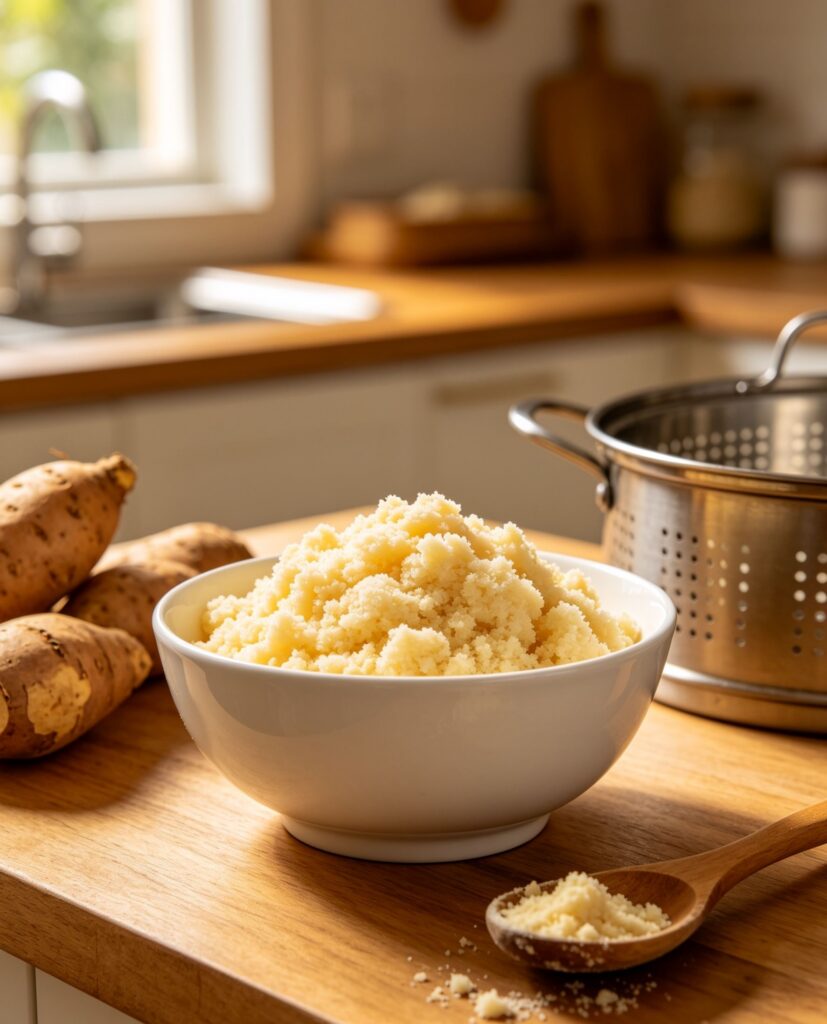
Ingredients
- Dried gari (granulated cassava) — 300 g (3 cups)
- Warm water — 250 ml (1 cup)
- Salt — 1/2 tsp
- Vegetable oil (optional) — 1 tbsp
Method
- Place the gari in a wide bowl.
- Sprinkle the warm water over the gari gradually, tossing with a fork between additions, until evenly moistened but not wet.
- Stir in the salt and oil if using.
- Let the gari rest for 5 minutes to absorb the moisture, then fluff again with a fork.
- For a softer texture, steam the moistened gari in a covered steamer basket for 8-10 minutes.
- Fluff once more before serving warm alongside stews or sauces.
Introduction: Gari, made from fermented and toasted cassava, is a pantry staple across Benin, prized for its long shelf life
and versatility.
Cultural Background: Gari, made from fermented and toasted cassava, is a pantry staple across Benin, prized for its long shelf life
and versatility. Soaked briefly and steamed or simply rehydrated, it becomes a light, fluffy side that
accompanies stews and sauces at nearly every meal.
Tips: Add water gradually and in small amounts – too much liquid at once turns the gari into a paste rather than
light, separate granules.
Variations: Toast the dry gari briefly in a dry pan before moistening for a nuttier, more roasted flavour.
Vegetarian/Vegan: Already vegan as written.
Storage: Dry, unmoistened gari keeps for months in a sealed container at room temperature. Prepared gari should be
eaten fresh.
Reheating: Reheat prepared gari briefly in a steamer or microwave with a light sprinkle of water to loosen it.
Nutrition: Approx. 180 kcal, 1g protein, 1g fat, 42g carbohydrates per serving.
FAQs:
Q: Is gari the same as cassava flour?
A: No, gari is coarser and pre-toasted, giving it a distinct granular texture, unlike fine cassava flour.
Q: Can gari be eaten without cooking?
A: Yes, it's traditionally soaked cold in water or milk as a quick snack, in addition to being steamed as a side.
- Dried gari (granulated cassava) — 300 g (3 cups)
- Warm water — 250 ml (1 cup)
- Salt — 1/2 tsp
- Vegetable oil (optional) — 1 tbsp
Please log in to leave a comment.