
Bahamian Chicken Souse
The Quirky Foodster Team
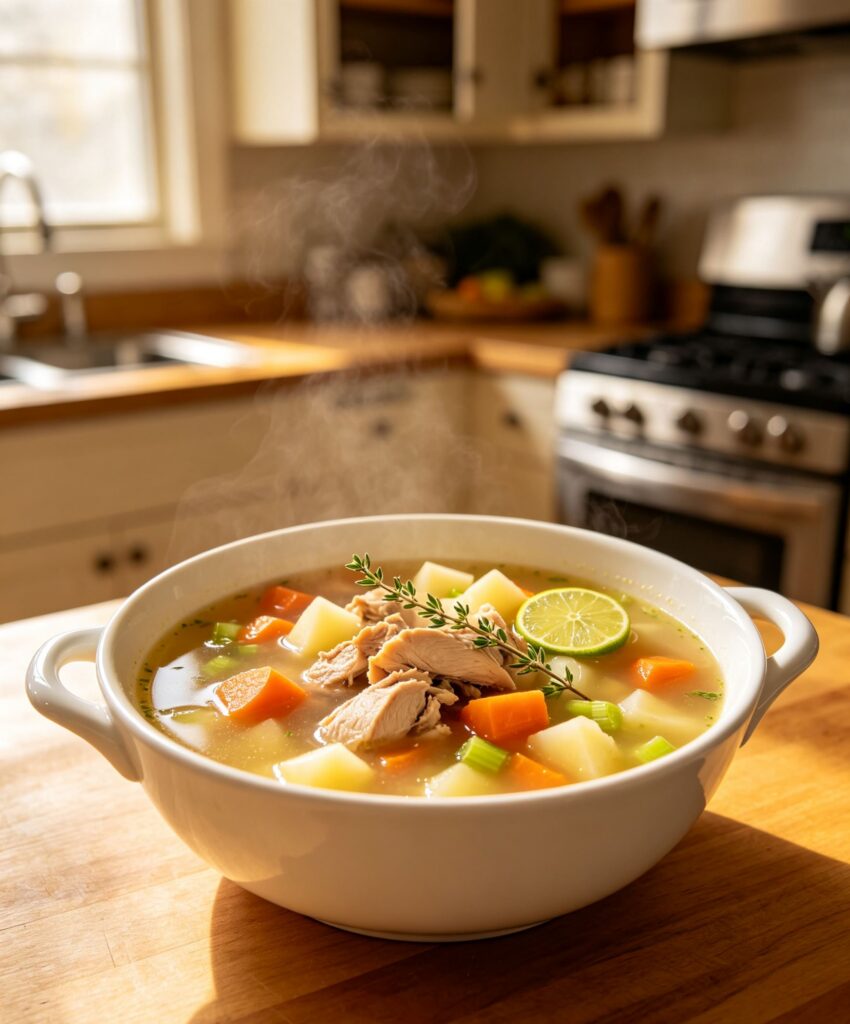
Ingredients
- Bone-in chicken pieces (backs, necks or thighs) — 1 kg (2.2 lb)
- Limes, juiced (divided) — 3
- Water — 1.5 L (6 cups)
- Large onion, sliced — 1
- Celery stalks, sliced — 2
- Scotch bonnet pepper, whole — 1
- Whole black peppercorns — 1 tsp
- Medium potatoes, peeled and cubed — 2
- Salt, — to taste
- Chopped fresh parsley, to garnish — 1 tbsp
Method
- Rub chicken pieces with half the lime juice; rinse under cold water and drain.
- Place chicken in a large pot with water, remaining lime juice, onion, celery, scotch bonnet and peppercorns.
- Bring to a boil, skimming any foam that rises to the surface.
- Reduce heat and simmer 25 minutes, then add potatoes and cook a further 15 minutes until chicken and potatoes are tender.
- Remove the scotch bonnet, season broth with salt to taste.
- Ladle into deep bowls, garnish with parsley, and serve hot.
Introduction: Souse is a tangy, peppery broth made by simmering chicken (or pig’s feet, or sheep tongue) with lime, onion, celery and whole peppercorns.
Cultural Background: Souse is a tangy, peppery broth made by simmering chicken (or pig’s feet, or sheep tongue) with lime, onion, celery and whole peppercorns. Traditionally a hearty weekend or hangover-cure meal, it is eaten hot as a midday dish, often alongside johnnycake or grits.
Tips: Skimming the foam early keeps the broth clear and clean-tasting. Squeeze extra fresh lime at the table for brightness.
Variations: Traditional versions use pig’s feet or sheep tongue instead of chicken. A splash of hot sauce is common for extra heat.
Vegetarian/Vegan: No authentic vegetarian or vegan conversion exists for this dish; none has been forced.
Storage: Refrigerate in an airtight container up to 3 days; the flavour deepens overnight.
Reheating: Reheat gently on the stovetop over low heat until warmed through; avoid boiling hard, which can toughen the chicken.
Nutrition: Approx. 310 kcal, 27 g protein, 18 g carbohydrate, 12 g fat per serving.
FAQs:
Q: Why is it called souse?
A: The name comes from the Caribbean tradition of ‘sousing’ meats — curing or marinating them in an acidic, peppery liquid.
Q: Is souse always spicy?
A: It carries a peppery warmth from the whole scotch bonnet, but stays mild if the pepper is not pierced during cooking.
- Bone-in chicken pieces (backs, necks or thighs) — 1 kg (2.2 lb)
- Limes, juiced (divided) — 3
- Water — 1.5 L (6 cups)
- Large onion, sliced — 1
- Celery stalks, sliced — 2
- Scotch bonnet pepper, whole — 1
- Whole black peppercorns — 1 tsp
- Medium potatoes, peeled and cubed — 2
- Salt, — to taste
- Chopped fresh parsley, to garnish — 1 tbsp
Please log in to leave a comment.