
Samani Nowruz Sprouted Wheat Pudding
The Quirky Foodster Team
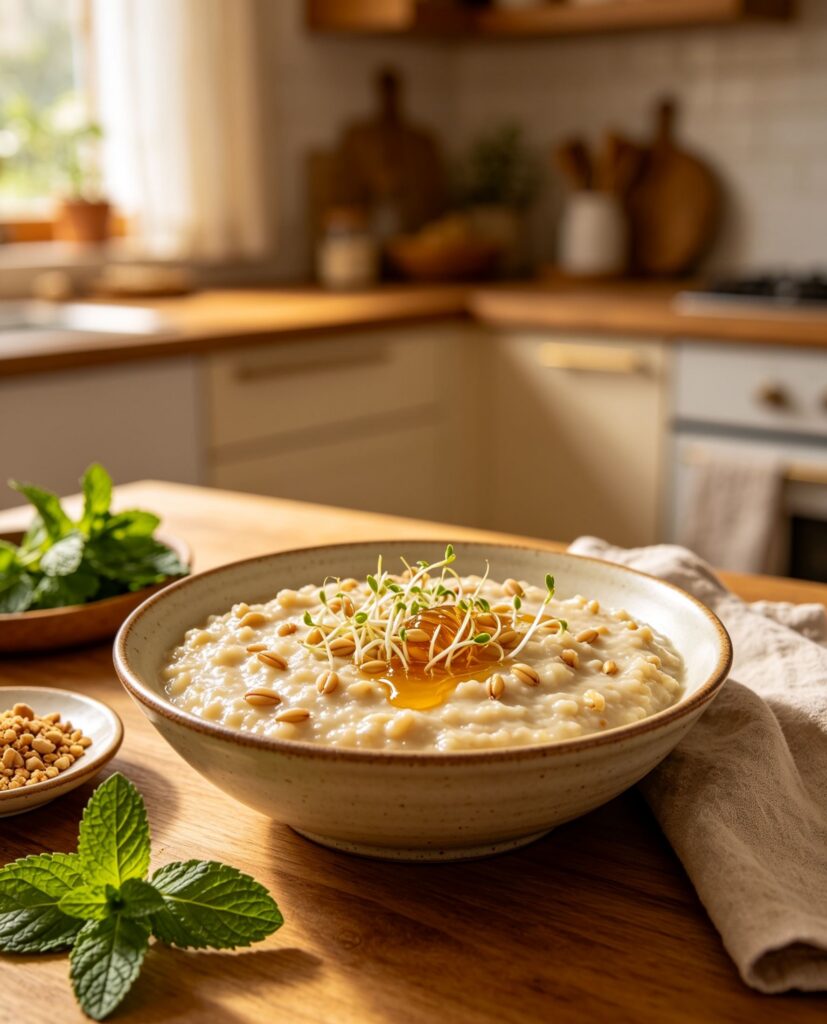
Ingredients
- Wheat berries, sprouted (grown 12-15 days in advance) — 300 g (1.5 cups)
- Sugar — 150 g (3/4 cup)
- Plain flour — 3 tbsp
- Vegetable oil — 3 tbsp
- Ground cinnamon — 1/2 tsp
- Walnuts, chopped, to garnish — 50 g (1/3 cup)
- Sesame seeds, to garnish — 1 tbsp
Method
- Blend the sprouted wheat with a little water until you have a smooth, thick puree, then strain through a sieve to extract the liquid, pressing well to get all the starch and juice; discard the fibrous solids.
- Toast the flour in a dry pan over low heat, stirring constantly, until pale golden and fragrant, about 5 minutes.
- In a heavy pot, combine the strained wheat liquid, sugar and toasted flour, and cook over low heat, stirring constantly, until it thickens into a smooth pudding, about 30-40 minutes.
- Stir in the oil and cinnamon during the last few minutes of cooking.
- Pour into a shallow dish, smooth the top, and traditionally decorate with walnut halves arranged in a pattern, or scatter with sesame seeds.
- Cool completely before serving; samani firms up as it sets.
Introduction: Samani, a sweet pudding made from sprouted wheat grown specially for the occasion, is one of the most symbolically important dishes of Novruz, the Azerbaijani New Year, representing fertility, renewal and the arrival of spring.
Cultural Background: Samani, a sweet pudding made from sprouted wheat grown specially for the occasion, is one of the most symbolically important dishes of Novruz, the Azerbaijani New Year, representing fertility, renewal and the arrival of spring. Growing the wheat sprouts is itself a weeks-long household ritual.
Tips: Constant stirring while thickening is essential to prevent the pudding from catching and burning at the bottom of the pot. Growing the wheat sprouts is a two-week process and is traditionally started well ahead of Novruz.
Variations: Some households add a few drops of rosewater for fragrance. A quicker version uses store-bought wheatgrass juice, though this is considered less traditional.
Storage: Refrigerate covered for up to 5 days.
Reheating: Traditionally served cold or at room temperature; not reheated.
Nutrition: Approx. 140 kcal, 2 g protein, 5 g fat, 22 g carbohydrate per serving (serves 8).
FAQs:
Q: What does samani symbolise?
A: It represents fertility, abundance and the renewal of nature at the arrival of spring during Novruz.
Q: Can I buy pre-sprouted wheat?
A: Some speciality shops sell wheat sprouts seasonally around Novruz, saving the two-week growing process.
- Wheat berries, sprouted (grown 12-15 days in advance) — 300 g (1.5 cups)
- Sugar — 150 g (3/4 cup)
- Plain flour — 3 tbsp
- Vegetable oil — 3 tbsp
- Ground cinnamon — 1/2 tsp
- Walnuts, chopped, to garnish — 50 g (1/3 cup)
- Sesame seeds, to garnish — 1 tbsp
Please log in to leave a comment.