
Thai Tamarind Sauce
The Quirky Foodster Team
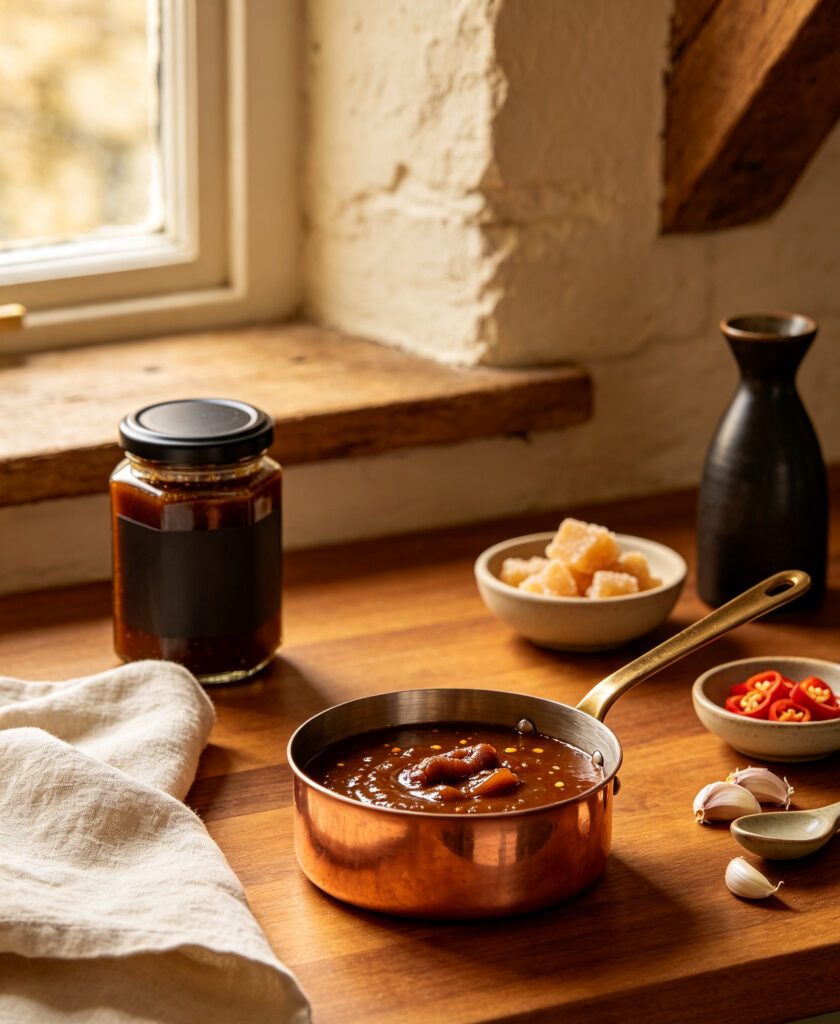
Ingredients
- Tamarind paste — 60 g (3 tbsp)
- Warm water — 150 ml (2/3 cup)
- Palm sugar — 60 g (1/4 cup)
- Fish sauce — 30 ml (2 tbsp)
- Dried chile flakes (optional) — 3 g (1 tsp)
Method
- Dissolve tamarind paste in warm water, mashing with a spoon to loosen.
- Strain through a fine sieve, pressing to extract maximum liquid; discard fibrous solids.
- Combine strained tamarind liquid with palm sugar and fish sauce in a saucepan.
- Simmer over medium-low heat 10-12 minutes, stirring, until slightly thickened and glossy.
- Stir in chile flakes if using; cool before using.
Cultural Background: A tangy-sweet tamarind sauce, Thai tamarind sauce underlies dishes like pad thai and is used as a general glazing and dipping sauce, its bright acidity a defining thread running through much of Thai cuisine's flavour balance.
Tips: • Straining the tamarind thoroughly removes fibrous bits for a smooth, glossy final sauce. • This sauce should balance tangy, sweet and salty in relatively equal measure — adjust to taste.
Variations: • Use as the base sauce for pad thai by adding to stir-fried noodles with other seasonings. • Adjust sweetness and tanginess ratios to personal preference.
Storage: Refrigerate in an airtight container up to 3 weeks.
Reheating: Reheat gently if needed, or use at room temperature. Nutrition (per serving) Approx. 30 kcal, 0.3 g protein, 0 g fat, 7 g carbohydrate per 15 ml serving.
FAQs: What is Thai tamarind sauce traditionally used for? The base flavour for pad thai, and a general glazing sauce for grilled meats and fish. Can I use tamarind concentrate instead of paste? Yes, tamarind concentrate is more potent, so use less and adjust with water to reach the desired tartness.
- Tamarind paste — 60 g (3 tbsp)
- Warm water — 150 ml (2/3 cup)
- Palm sugar — 60 g (1/4 cup)
- Fish sauce — 30 ml (2 tbsp)
- Dried chile flakes (optional) — 3 g (1 tsp)
Please log in to leave a comment.