
Za’atar
The Quirky Foodster Team
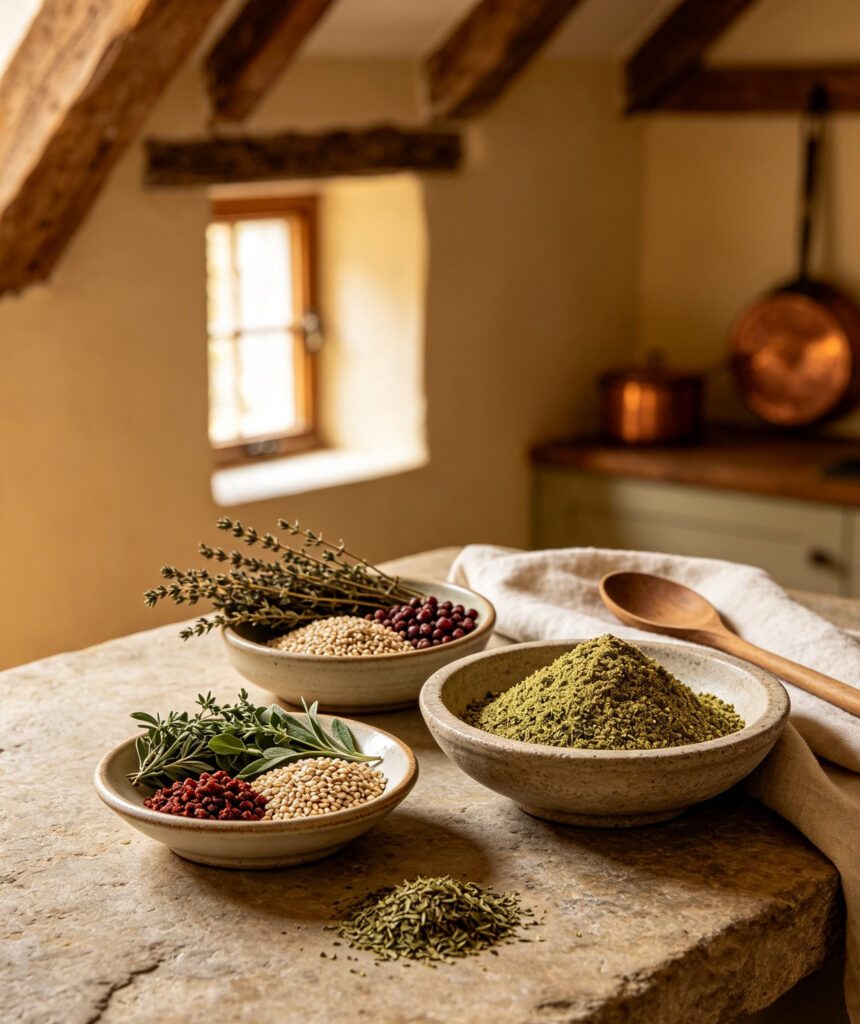
Ingredients
- Dried za'atar herb — 1/2 cup
- Sumac — 1/4 cup
- Toasted sesame seed — 1/4 cup
- Salt — 1 tsp
Method
- Simply combine the dried herb, sumac, toasted sesame, and salt — no further cooking or grinding required beyond toasting the sesame.
- Only the sesame seed requires toasting, done separately before combining with the other room-temperature ingredients.
Origin: Levant broadly (Syria, Lebanon, Jordan, Palestine). Note that ‘za’atar’ names both the herb and this blend.
Use: Mixed with olive oil as a dip for bread, or sprinkled directly onto flatbread dough before baking (manakish).
Classic Dishes: Za’atar manakish (flatbread); mixed into olive oil as a dip; sprinkled over labneh or hummus.
Storage: Keeps 2-3 months sealed and dark before the herb component loses potency; sesame’s oils can also turn slightly stale over time.
Variations: Za’atar is best understood as a family of regional formulations (Palestinian, Syrian, Lebanese, Jordanian) — ratios of herb to sumac to sesame vary meaningfully by country and even by household.
Substitutions: A mix of dried thyme, oregano, and marjoram can approximate the herb base where true za’atar herb is unavailable.
- Dried za'atar herb — 1/2 cup
- Sumac — 1/4 cup
- Toasted sesame seed — 1/4 cup
- Salt — 1 tsp
Please log in to leave a comment.