
Breads
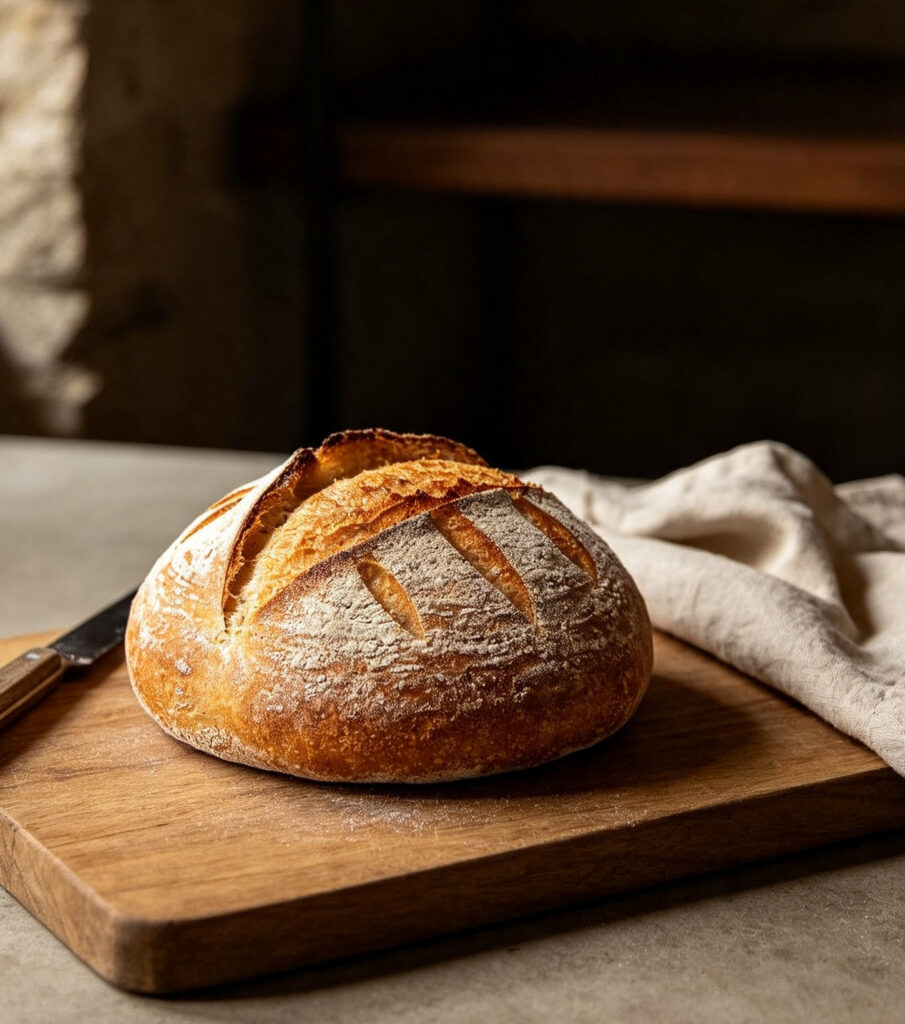
Cottage Loaf (Cottage Loaf)
sjfegan
Ingredients
- 4 cups bread flour (500 g / 1 lb 2 oz)
- 2 tsp active dry yeast
- 360ml (1.5 cups) Warm water
- 2 tsp salt
- 1 tbsp butter
Method
- Dissolve the yeast in the warm water and let sit for 10 minutes until foamy.
- Combine the flour and salt in a large bowl, then add the yeast mixture and butter, kneading for 10 minutes until smooth and elastic.
- Cover and let rise in a warm place for 1 hour, or until doubled.
- Divide the dough into two portions, one about two-thirds and the other one-third of the total.
- Shape each into a round ball, place the smaller on top of the larger, and press a hole through the centre of both with your fingers to join them securely.
- Let rise for a further 30 minutes.
- Preheat the oven to 220°C (425°F) and bake for 30–35 minutes until deeply golden and hollow-sounding when tapped.
Introduction: A distinctive two-tiered round loaf, one of the most visually recognisable and beloved breads of Victorian British baking.
Cultural Background: The cottage loaf, with its charming stacked, snowman-like shape, was a common sight in Victorian bakeries, its distinctive form said to have originated from the practical need to fit more bread into limited oven space.
Tips: Press the join between the two tiers firmly, as this is essential to prevent the top from toppling off during baking. A hot oven helps develop a good crust while keeping the interior soft.
Variations: Score decorative patterns into the dough before baking for a more elaborate presentation. Serve alongside soups and stews, or simply with butter.
Storage: Store at room temperature wrapped in a cloth for up to 2 days.
Reheating: Warm briefly in an oven at 180°C (350°F) for 5–8 minutes to refresh.
Nutrition: Per serving (approx., 1 slice): 180 kcal, 5 g protein, 2 g fat, 34 g carbohydrate.
FAQs:
Q: Why does the cottage loaf have its distinctive shape?
A: Its stacked form is believed to have originated from practical baking needs, allowing bakers to fit more bread into a limited oven space compared to a single large loaf.
Q: Is the cottage loaf still baked today?
A: While less common than in the Victorian era, it remains a recognised traditional British bread shape, occasionally found at specialty and artisan bakeries.
Please log in to leave a comment.