
Christmas Mince Pie (Tudor Spiced Meat Pie)
The Quirky Foodster Team
Ingredients
- Minced mutton or beef — 250 g (9 oz)
- Beef suet, grated — 100 g (3.5 oz)
- Mixed currants and raisins — 150 g (1 cup)
- Chopped candied peel — 50 g (1/3 cup)
- Small apple, peeled and finely chopped — 1
- Ground cinnamon — 1 tsp
- Ground nutmeg — 1/2 tsp
- Ground cloves — 1/4 tsp
- Sugar — 50 g (1/4 cup)
- Brandy or sweet wine — 2 tbsp
- Plain flour — 350 g (2.75 cups)
- Cold unsalted butter, cubed — 175 g (3/4 cup)
- Fine salt, for the pastry — 1/2 tsp
- Cold water — 80-100 ml (1/3-1/2 cup)
- Egg, beaten, for glazing — 1
Method
- In a frying pan over medium heat, lightly cook the minced meat until just browned, about 5 minutes, then transfer to a mixing bowl to cool slightly.
- Stir the suet, currants, raisins, candied peel, chopped apple, cinnamon, nutmeg, cloves, sugar and brandy into the meat, mixing thoroughly. Set aside to cool completely.
- For the pastry, rub the cold butter into the flour and salt until it resembles breadcrumbs, then mix in the cold water gradually until a firm dough forms.
- Wrap and chill the pastry for 30 minutes.
- Preheat the oven to 200°C (400°F). Roll out the pastry and cut rounds to line a muffin tin, along with smaller rounds or oval shapes for the lids.
- Fill each lined cavity with a spoonful of the cooled mincemeat mixture, top with a pastry lid, and crimp the edges to seal.
- Brush the tops with beaten egg and cut a small slit in each for steam to escape.
- Bake for 20-25 minutes, until golden brown.
- Cool for 10 minutes before removing from the tin and serving warm or at room temperature.
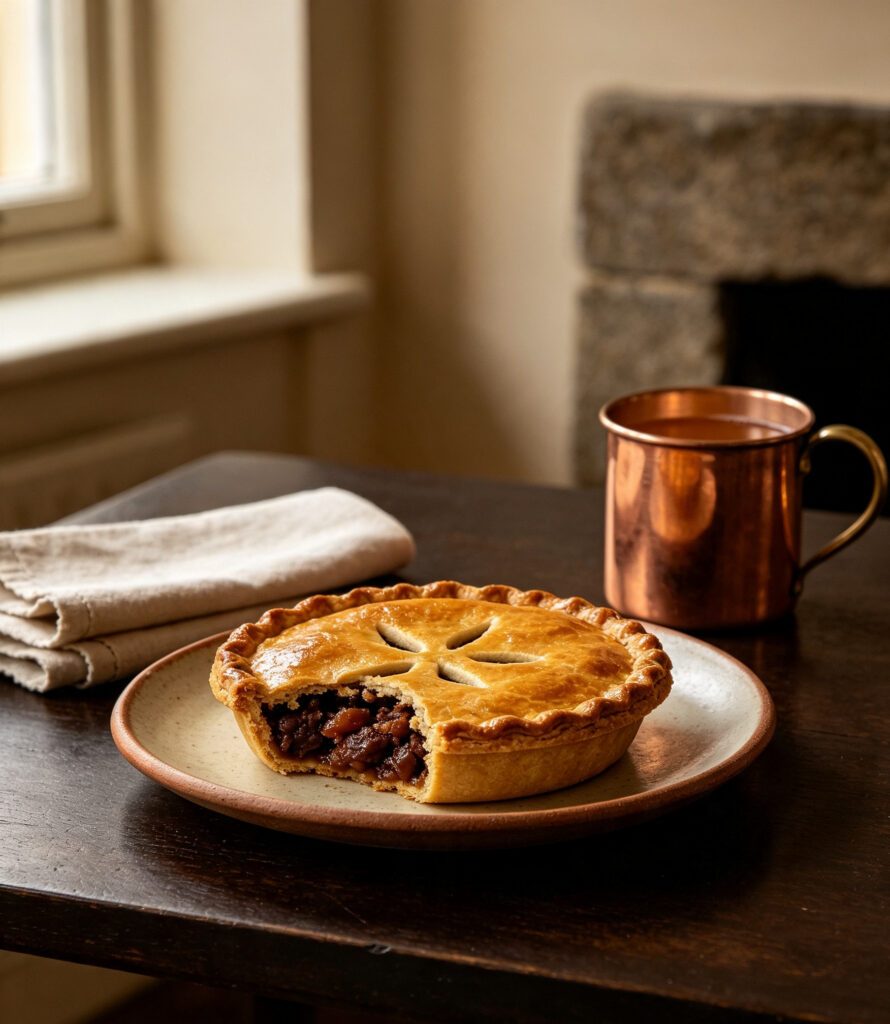
Introduction: Small pastries filled with a rich mixture of minced meat, dried fruit and warming spices, these mince pies were a festive centrepiece of the Tudor Christmas table.
Cultural Background: Tudor mince pies contained genuine minced meat, most often mutton or beef, combined with dried fruit, suet and spices, quite unlike the meat-free sweet mincemeat familiar today. They were traditionally baked in an oval shape said to represent the manger, and eating one on each of the twelve days of Christmas was considered to bring good luck for the coming year.
Tips: (cid:127) Allow the meat filling to cool fully before filling the pastry cases, to prevent the pastry from softening and tearing during assembly. (cid:127) These pies keep and mature well, with the flavour deepening over the first day or two after baking.
Variations: (cid:127) For households observing a meatless fast day, a genuine period alternative used finely chopped dried fruit, spices and suet without any meat, closer to the sweet mincemeat known today. (cid:127) A splash of orange flower water can be added to the filling for a fragrant, festive twist recorded in some period sources.
Storage: Store in an airtight container in the refrigerator for up to 5 days, or freeze unbaked or baked pies for up to 2 months.
Reheating: Reheat in an oven preheated to 170°C (340°F) for 10-12 minutes until warmed through.
Nutrition: Per serving (approx., 1 pie): 310 kcal, 8 g protein, 32 g carbohydrate, 17 g fat, 2 g fibre, 220 mg sodium.
FAQs:
Q: Why did Tudor mince pies contain meat?
A: Meat was a standard ingredient in mince pies throughout the Tudor period and beyond, and the fully sweet, meat-free version familiar today only developed gradually over later centuries. (cid:127) Q: Can I make a meat-free version? A: Yes, omit the minced meat and slightly increase the dried fruit and suet quantities for a closer approximation of a modern sweet mincemeat filling, though this departs from the authentic Tudor recipe.
- Minced mutton or beef — 250 g (9 oz)
- Beef suet, grated — 100 g (3.5 oz)
- Mixed currants and raisins — 150 g (1 cup)
- Chopped candied peel — 50 g (1/3 cup)
- Small apple, peeled and finely chopped — 1
- Ground cinnamon — 1 tsp
- Ground nutmeg — 1/2 tsp
- Ground cloves — 1/4 tsp
- Sugar — 50 g (1/4 cup)
- Brandy or sweet wine — 2 tbsp
- Plain flour — 350 g (2.75 cups)
- Cold unsalted butter, cubed — 175 g (3/4 cup)
- Fine salt, for the pastry — 1/2 tsp
- Cold water — 80-100 ml (1/3-1/2 cup)
- Egg, beaten, for glazing — 1
Please log in to leave a comment.